
Case at a glance
- Surgical plan
- Graft & material details
- Photo timing
These details are excerpts from the original article and captions. Follow a detail to read it in context.
Severe nasal obstruction after multiple rhinoplasty procedures is often caused by septal collapse, nasal valve narrowing, and loss of structural support.
In this case, comprehensive reconstruction using autologous rib cartilage restored airway stability, corrected internal structural damage, and improved both breathing and nasal balance through a closed rhinoplasty approach.
Author: Dr. Cha-Young Kang, Director, NoseLab Clinic
This case involves a patient who experienced severe nasal obstruction after undergoing multiple rhinoplasty surgeries at other clinics.
Despite three previous procedures, the patient continued to suffer from worsening breathing difficulty. The primary goal of this revision surgery was therefore functional restoration—rebuilding the internal nasal framework to restore stable airflow.
In this case, structural correction was achieved through closed rhinoplasty korea, focusing on reconstruction of the septum, internal nasal valve, and overall airway framework.
Severe nasal obstruction after multiple surgeries requires comprehensive structural reconstruction rather than isolated correction of individual components.
If you are experiencing persistent breathing difficulty after previous rhinoplasty or multiple procedures, a detailed structural evaluation is essential before determining the appropriate surgical plan.
📩 International Consultation
→ LINE Consultation (Japan only)
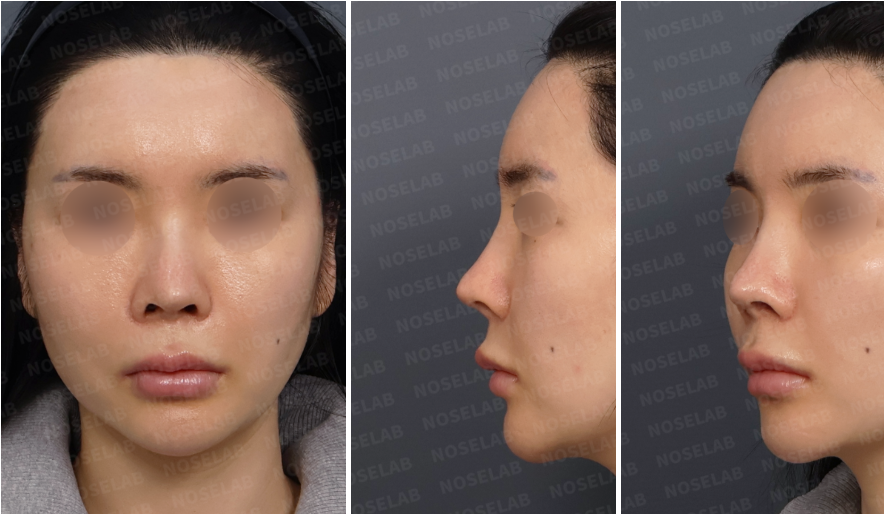
Surgical Background – Closed Rhinoplasty Korea
Revision rhinoplasty for severe nasal obstruction requires reconstruction of damaged internal nasal structures and restoration of airway stability.
For this reason, closed rhinoplasty korea was selected to allow precise internal structural reconstruction without external incisions while minimizing additional soft tissue trauma.
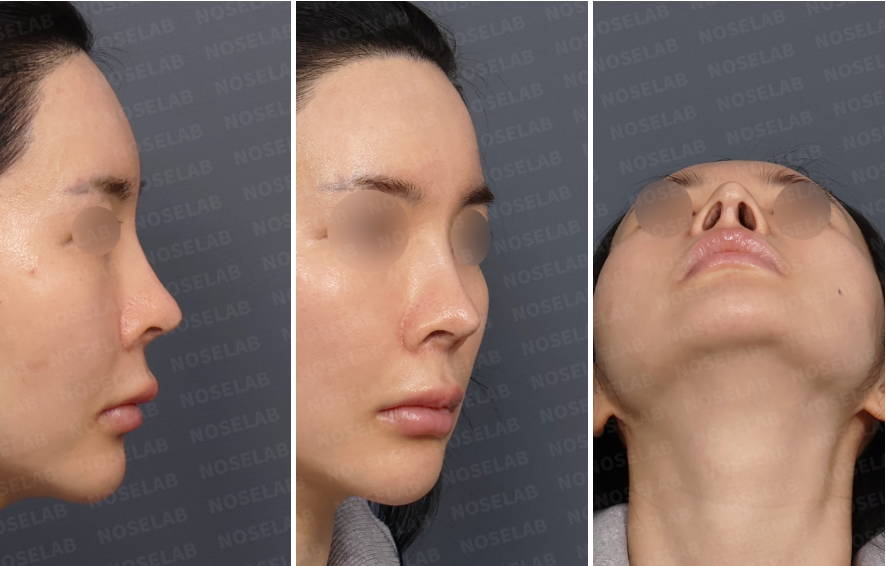
Structural Problems Identified
Detailed examination revealed multiple structural abnormalities:
Septal collapse toward the right side
Internal nasal valve narrowing
Excessive prior osteotomy narrowing the nasal cavity
Depressed mid-dorsum from over-resection
Alar cartilage damage and weakened nasal tip skin
Turbinate adhesion and abnormal positioning
These combined issues required comprehensive structural reconstruction.
Surgical Plan – Comprehensive Structural Reconstruction
Septal Reconstruction
Reconstruction using autologous rib cartilage
Restoration of midline structural support
Expansion of the internal nasal airway
Osteotomy Restoration
Reopening of the narrowed nasal cavity
Rib cartilage grafting for depressed mid-dorsum
Controlled structural overcorrection
Alar Cartilage and Tip Reconstruction
Reconstruction using rib cartilage
Reinforcement of weakened nasal tip
Restoration of stable tip support
Nasal Tip Skin Reinforcement
Use of dermis and perichondrium
Protection of thin soft tissue
Inferior Turbinate Repositioning
Medial repositioning
Adhesion release
Prevention of re-adhesion
Nasolabial Angle Adjustment
Improved facial profile balance
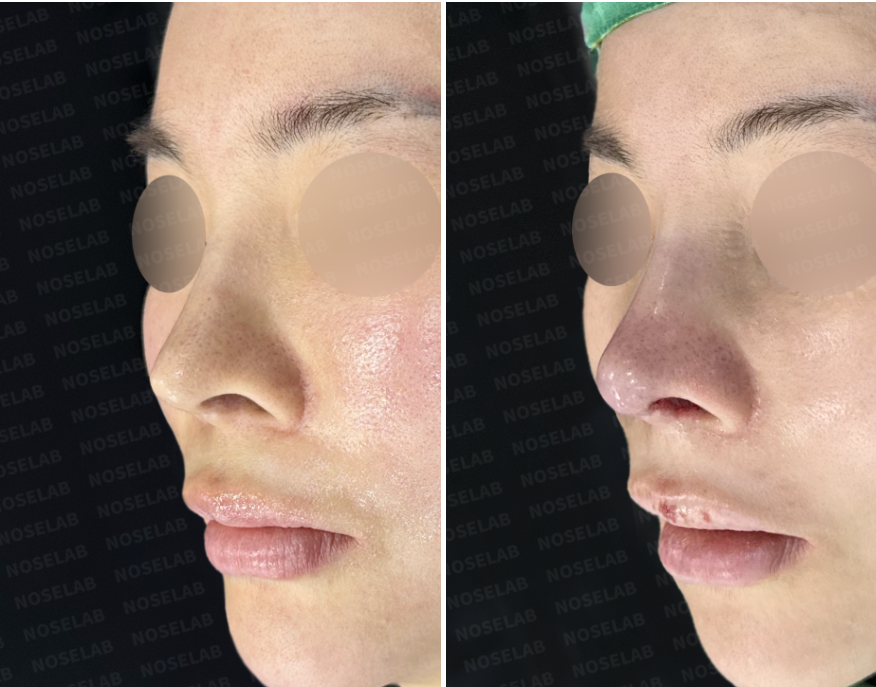
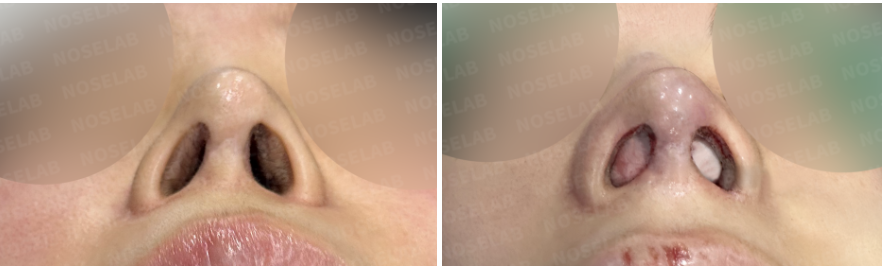
Surgical Results
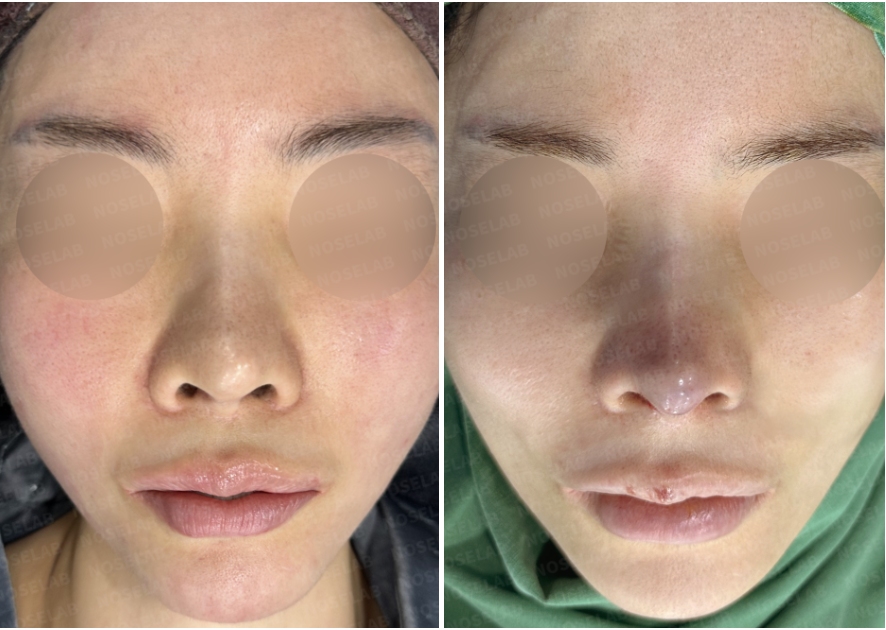
Functional Outcome
Significant improvement in nasal airflow
Relief of chronic obstruction
Restoration of stable airway
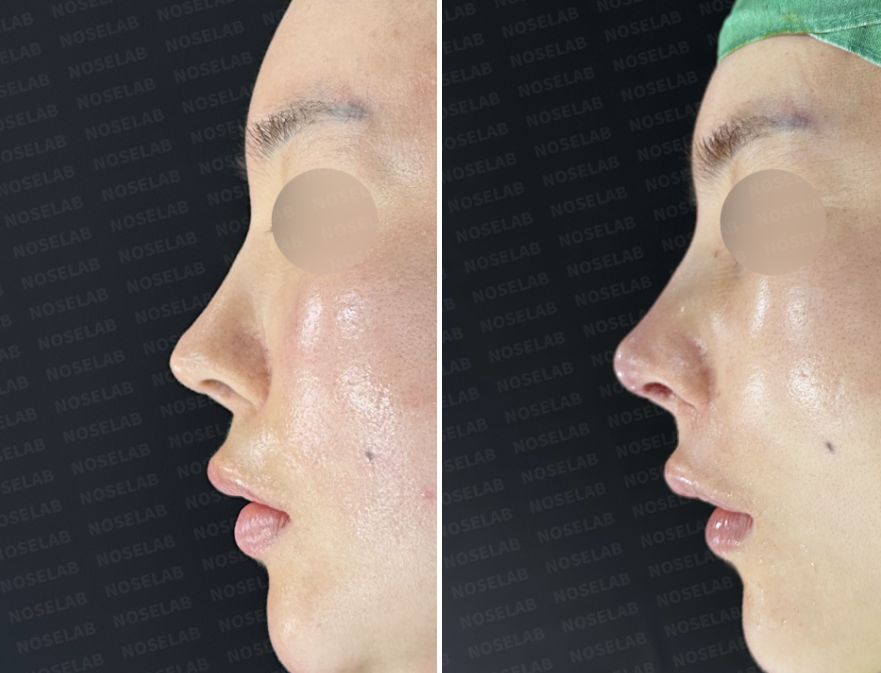
Aesthetic Outcome
Correction of depressed mid-dorsum
Improved nasal symmetry
Stabilized nasal tip
Structural Stability
Strong internal support with rib cartilage
Long-term structural durability
Surgeon’s Commentary
Severe nasal obstruction after multiple rhinoplasty procedures is rarely caused by a single issue.
In this patient, septal collapse, nasal valve narrowing, excessive osteotomy, turbinate abnormalities, and cartilage loss were all contributing factors.
Correction required a comprehensive structural approach addressing all components simultaneously.
Through septal reconstruction, osteotomy restoration, alar cartilage reconstruction, turbinate repositioning, and nasal valve expansion, both airway function and structural stability were restored.
Autologous rib cartilage provides the most reliable structural support in complex revision cases where native cartilage has been significantly compromised.
Revision rhinoplasty involving airway dysfunction requires meticulous planning and advanced reconstructive techniques to achieve stable long-term outcomes.
Because severe nasal obstruction in revision cases involves multiple structural problems, surgical planning must be based on precise anatomical analysis rather than a standardized approach.
If you are considering revision rhinoplasty due to persistent breathing problems or structural collapse, a comprehensive evaluation is essential to determine the most appropriate reconstruction strategy.
📩 International Consultation
→ LINE Consultation (Japan only)
(FAQ)
Q1. Why does nasal obstruction occur after rhinoplasty?
It can result from septal collapse, nasal valve narrowing, excessive osteotomy, or loss of cartilage support.
Q2. Why is rib cartilage used in revision rhinoplasty?
Rib cartilage provides strong and durable structural support when native cartilage is insufficient.
Q3. Can breathing problems be corrected?
Yes. Septal reconstruction, nasal valve correction, and turbinate surgery can significantly improve airflow.
🎥 YouTube Reference
If you’re curious about Dr. Cha-Young Kang’s closed rhinoplasty approach, click to watch the video.
Read the author’s background and the original case context. About these articles
Source updated .


