Case at a glance
- Concerns & goals
- Surgical plan
- Graft & material details
- Photo timing
These details are excerpts from the original article and captions. Follow a detail to read it in context.
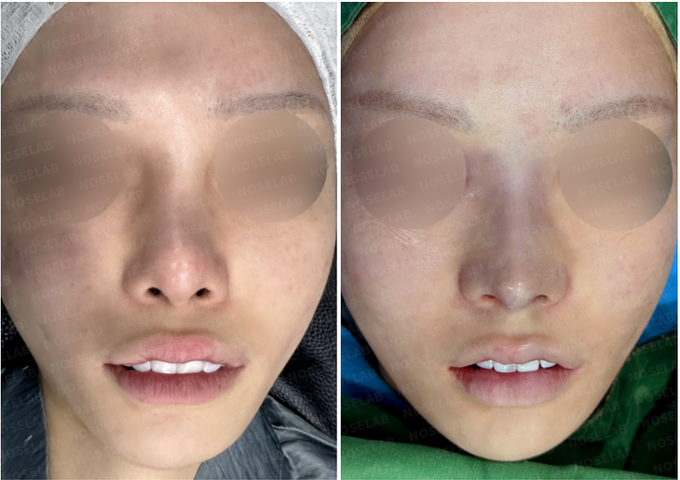
This case demonstrates Closed Rhinoplasty Korea for deviated and upturned nose correction after multiple surgeries. Rib cartilage reconstruction, septal repair, and structural realignment improved symmetry, airflow, and long-term stability.
Author: Dr. Cha-Young Kang, Director, NoseLab Clinic
✅ Case Background
This patient presented with a deviated nasal structure, upturned nasal tip, and nostril asymmetry after multiple previous rhinoplasty procedures.
Despite prior surgeries using rib cartilage, silicone, and alar lifting techniques, the patient continued to experience structural imbalance, cosmetic dissatisfaction, and functional nasal congestion.
In this Closed Rhinoplasty Korea case, the goal was to reconstruct the nasal framework, correct deviation, improve tip rotation, and restore both aesthetic balance and airway function.
Key concerns included:
Deviated nasal bridge
Upturned nasal tip
Wide nasal structure
Nostril asymmetry
Columella deviation
Droopy nasal tip
High nasal starting point
Residual foreign material
Nasal congestion
This case required comprehensive structural reconstruction rather than isolated correction.
If you are experiencing similar issues after previous rhinoplasty, a detailed structural evaluation is essential.
📩 International Consultation


✅ Surgical Approach – Deviated Nose Correction Using Closed Rhinoplasty Korea
Deviated and upturned nose deformities are often caused by structural imbalance, previous surgical alterations, and cartilage instability.
In revision cases, both internal support and external alignment must be corrected simultaneously.
Closed Rhinoplasty Korea allows precise internal reconstruction while minimizing additional tissue trauma and preserving vascular integrity.
✅ Structural Problems Identified
Deviated nasal bridge
Weak septal support
Upturned nasal tip
Nostril asymmetry
Columella deviation
Residual foreign materials
Wide nasal structure
Functional airway obstruction
✅ Surgical Plan
1. Septal Reconstruction
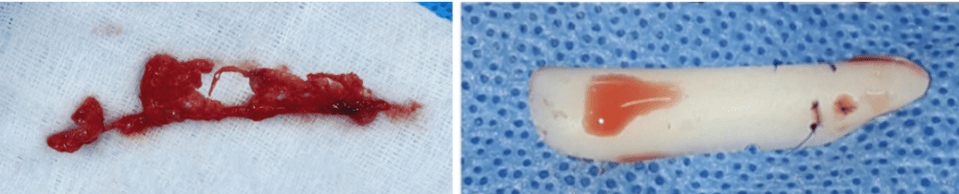
Reinforcement using autologous rib cartilage
Restoration of central support
2. Nasal Tip Reconstruction
Correction of upturned tip
Stabilization of tip projection
3. Deviation Correction
Lateral osteotomy for realignment
Straightening of nasal axis
4. Foreign Material Removal
Removal of residual implant and foreign substances
Safe structural reset
5. Alar and Nostril Correction
Correction of nostril asymmetry
Improvement of alar support
6. Functional Correction
Septoplasty
Turbinate reduction
Airway expansion
✅ Surgical Results

The previously wide nose tip became more sophisticated.
Lowering of the high nasal bridge starting point.
Correction of the deviated nose bridge.
Great improvement of the nostril asymmetry.
The wide nose became overall slimmer.
The Alar Columella Relation (ARC) improved.

The droopy nose tip was appropriately raised to look longer and more sophisticated.
Lowering the nose starting point improved the overall lenght of the nose.
Correcting the protruding mouth enhanced the overall harmony of the face.
The columella was given a softer and rounded appearance.
We gave the nose bridge a slight nose hump appearance giving an individuality direction.

The overall nose shape became more natural.
Improvement of the harmony of the nose as well as its three-dimensionality.

Straightening of the nose tip that was tilted to the right side.
Improvement of the asymmetric nostrils.
Removal of the cartilage that was leaning outwards the columella on the left side, giving the nose a cleaner image.
The rounded area above the nostril from the side view was made straight (as the patient requested).
✅ Surgeon’s Commentary

Correction of deviated and upturned noses in revision cases requires a comprehensive structural approach.
In this case, previous surgeries resulted in structural imbalance and residual foreign materials, making reconstruction essential.
Autologous rib cartilage was used to restore septal support and ensure long-term stability.
Deviation correction, tip reconstruction, and nostril symmetry improvement were performed simultaneously to achieve both functional and aesthetic outcomes.
Closed Rhinoplasty Korea enables precise internal correction while minimizing additional trauma, which is critical in revision surgery.
Long-term success depends on restoring structural integrity and maintaining functional airway stability.
✅ FAQ
Q1. Why does a nose become deviated after surgery?
Due to imbalance in cartilage support and healing.
Q2. Can upturned and deviated nose be corrected together?
Yes, through structural reconstruction.
Q3. Why is rib cartilage used?
It provides strong and stable support for reconstruction.

Read the author’s background and the original case context. About these articles
Source updated .