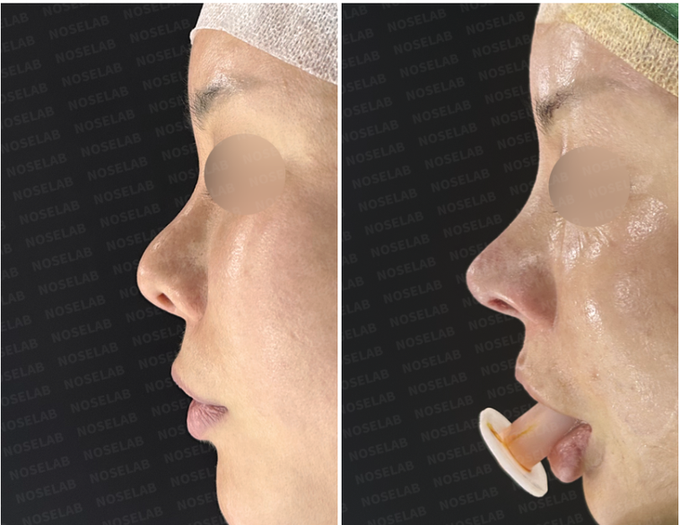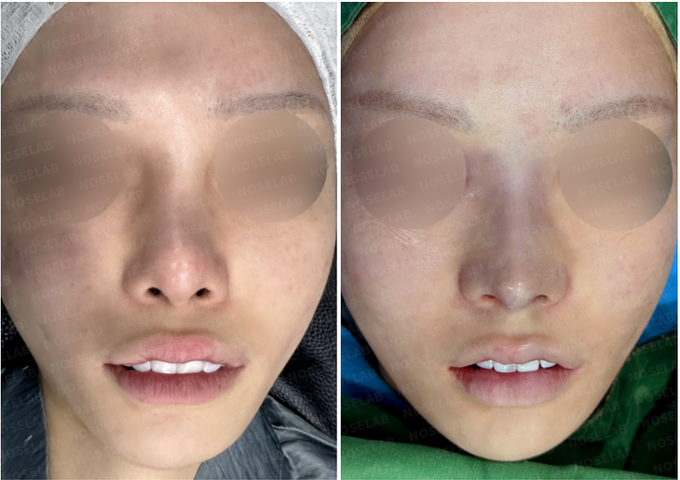
Case at a glance
- Surgical plan
- Graft & material details
- Photo timing
These details are excerpts from the original article and captions. Follow a detail to read it in context.
This case demonstrates Closed Rhinoplasty Korea for nasal collapse caused by septal cartilage damage. Rib cartilage reconstruction restored structural support, improved airflow, and achieved long-term stability and natural nasal balance.
Author: Dr. Cha-Young Kang, Director, NoseLab Clinic
✅ Case Background
This patient presented with nasal collapse, deviation, and functional breathing issues following multiple previous rhinoplasty procedures.
Severe septal cartilage loss resulted in structural instability, causing nasal deformation and airway narrowing.
In this Closed Rhinoplasty Korea case, the goal was to reconstruct the nasal framework, restore structural support, and improve both aesthetic balance and breathing function.
Key concerns included:
Nasal collapse due to septal cartilage loss
Deviated nasal structure
Droopy nasal tip
Upturned nasal appearance
Nostril asymmetry
Retracted columella
Left-sided nasal obstruction
This case required complete structural reconstruction rather than partial correction.
If you are experiencing nasal collapse or breathing difficulty after rhinoplasty, a detailed structural evaluation is essential.
📩 International Consultation
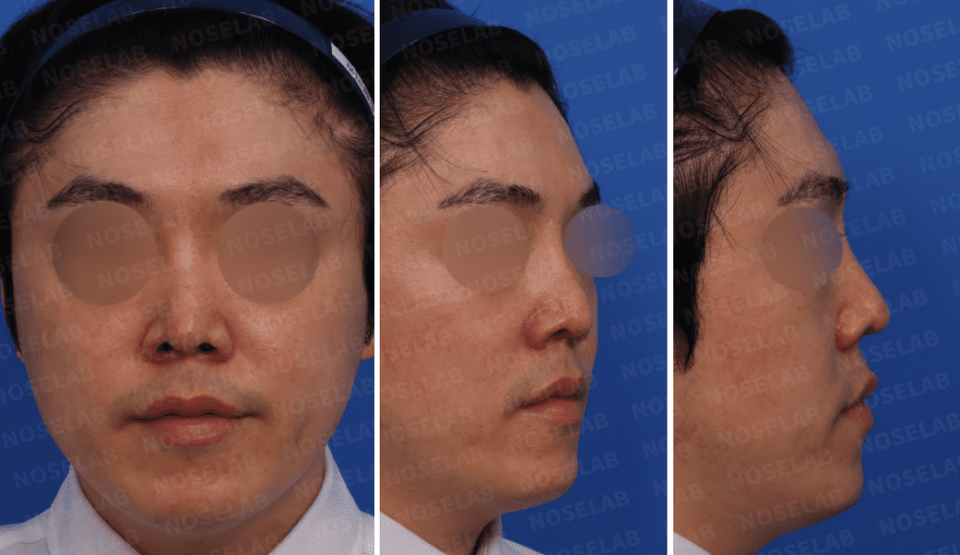

✅ Surgical Approach – Nasal Collapse Reconstruction Using Closed Rhinoplasty Korea
Nasal collapse caused by septal cartilage damage is one of the most complex forms of revision rhinoplasty.
Without sufficient structural support, both nasal shape and airway function are compromised.
Closed Rhinoplasty Korea allows precise internal reconstruction while minimizing additional trauma and preserving soft tissue integrity.
✅ Structural Problems Identified
Severe septal cartilage loss
Weak nasal tip support
Alar cartilage deficiency
Deviated nasal structure
Contracted soft tissue
Narrowed nasal airway
Nostril asymmetry
✅ Surgical Plan
1. Septal Reconstructi
onComplete reconstruction using autologous rib cartilage
Restoration of central support
2. Alar Cartilage Reconstruction
Full reconstruction of alar cartilage
Stabilization of nasal tip
3. Soft Tissue Release
Removal of contractured tissue
Expansion of nasal skin
4. Tip and Columella Correction
Correction of droopy and upturned tip
Realignment of columella
5. Structural Augmentation
Elevation of nasal height
Restoration of dorsal contour
6. Functional Correction
Expansion of narrowed airway
Improvement of nasal airflow
✅ Surgical Results
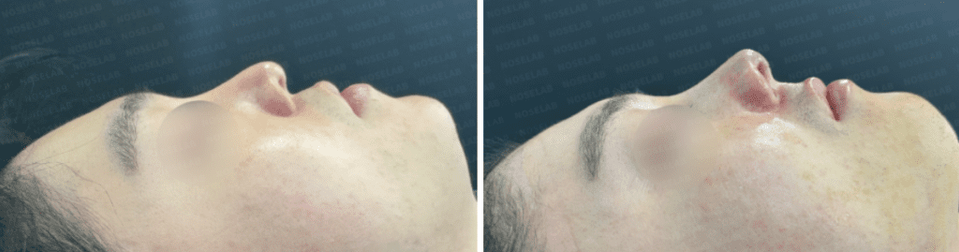
The nasolabial angle was definitely corrected.
The nose tip height was increased to be more than the height of the forehead.
The droopy nose tip was improved.
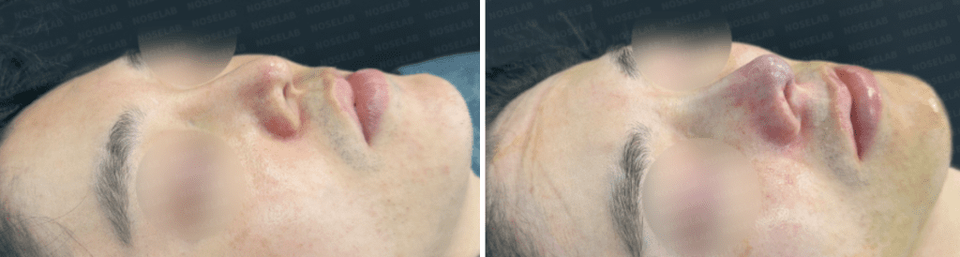
The nose tip became more prominent.

The deviated parts improved.
The thin nose tip and the visible nostrils issue were imporved.
The elevation of the alar is noticeable.
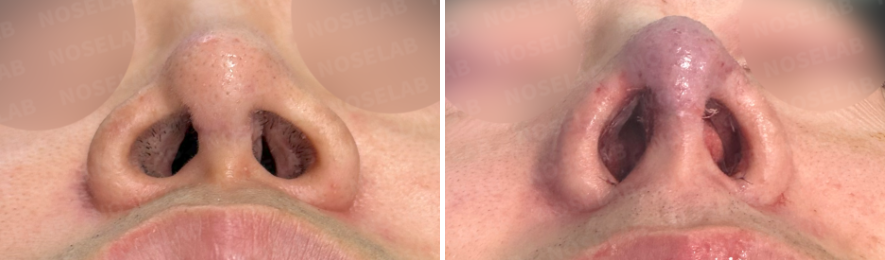
The tilted columella was moved to be straight.
The narrow parts inside the left nasal cavity were improved.
The nostril asymmetry improved greatly.
The nasal base was reduced significantly.
✅ Surgeon’s Commentary

Nasal collapse due to septal cartilage loss requires complete structural reconstruction rather than partial correction.
In this case, the septum was almost completely absent, making rib cartilage reconstruction essential for restoring stability.
Alar cartilage reconstruction was also necessary to support the nasal tip and improve nostril symmetry.
Contracted tissue was carefully released to allow proper structural repositioning.
Closed Rhinoplasty Korea enables precise reconstruction while minimizing additional damage to already compromised tissues.
Long-term success depends on rebuilding the structural framework and restoring airway function simultaneously.
✅ FAQ
Q1. What causes nasal collapse after rhinoplasty?
Loss of septal cartilage and structural support.
Q2. Can nasal collapse be fully corrected?
Yes, through complete structural reconstruction.
Q3. Why is rib cartilage used?
It provides strong and stable support for reconstruction.

Read the author’s background and the original case context. About these articles
Source updated .