Case at a glance
- Concerns & goals
- Surgical plan
- Graft & material details
- Photo timing
These details are excerpts from the original article and captions. Follow a detail to read it in context.
This case demonstrates Closed Rhinoplasty Korea for a high-risk revision rhinoplasty involving nasal deviation, upturned tip, and compromised skin condition. Rib cartilage reconstruction and careful circulation management ensured safe correction, improved structure, and long-term stability.
Author: Dr. Cha-Young Kang, Director, NoseLab Clinic
✅ Case Background
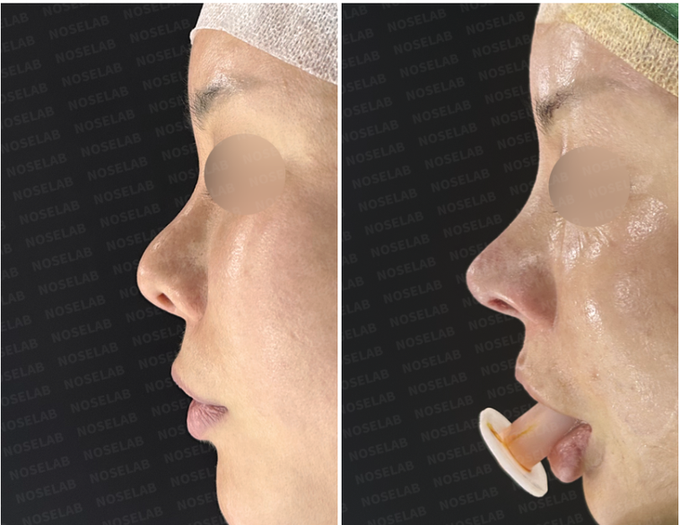
This patient presented with complex nasal deformities following multiple prior rhinoplasty procedures, including rib cartilage grafting and silicone implantation.
The case was complicated by a history of compromised blood circulation and a previous risk of nasal tip necrosis, requiring emergency intervention shortly after surgery.
In this Closed Rhinoplasty Korea case, the goal was to safely reconstruct the nasal framework, correct deviation and tip deformity, and restore both function and aesthetics while minimizing the risk of vascular compromise.
Key concerns included:
Upturned nasal tip
Deviated nasal bridge
Widened nasal structure
Nostril asymmetry
Depressed nasal tip skin with pigmentation
Scar tissue and compromised circulation
High risk of nasal tip necrosis
This case required a safety-first structural reconstruction approach.
If you have experienced complications or high-risk conditions after previous rhinoplasty, a detailed structural and vascular evaluation is essential.
📩 International Consultation
✅ Surgical Approach – High-Risk Revision Rhinoplasty Using Closed Rhinoplasty Korea
High-risk revision rhinoplasty cases often involve compromised blood supply, scar tissue, and structural instability.
In such cases, aggressive dissection or open approaches may increase the risk of tissue necrosis.
Closed Rhinoplasty Korea allows precise structural correction while preserving vascular integrity and minimizing additional trauma.
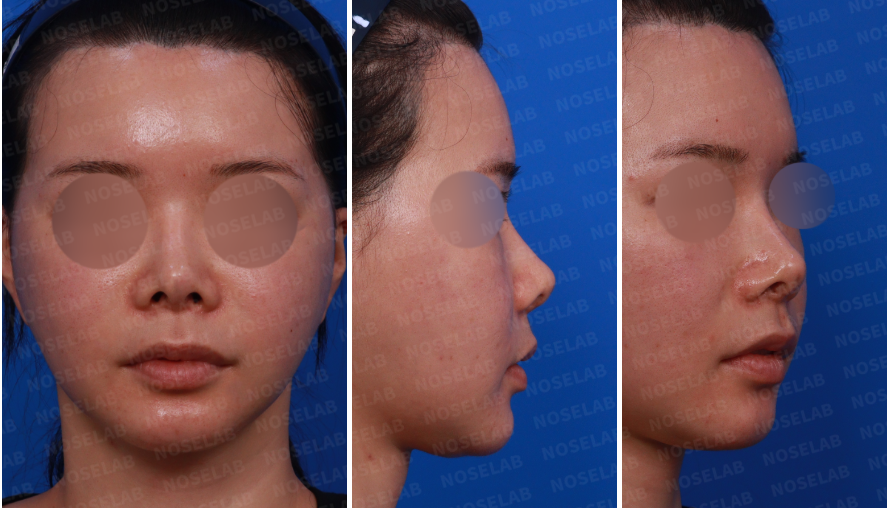
✅ Structural Problems Identified
Deviated nasal structure
Upturned nasal tip
Widened nasal framework
Scar tissue and fibrosis
Depressed nasal skin and pigmentation
Compromised vascular supply
Risk of necrosis
Nostril asymmetry
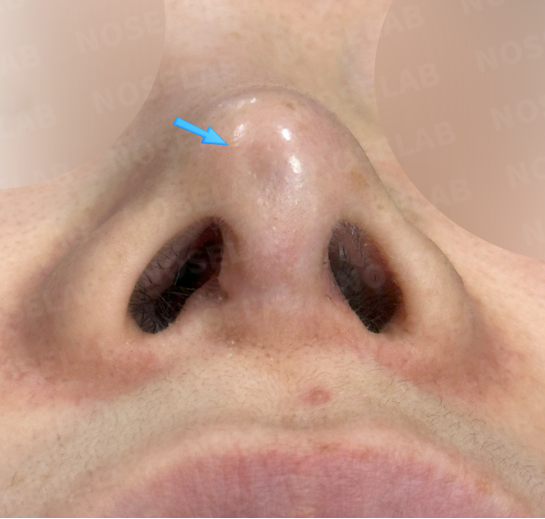
✅ Surgical Plan
1. Septal Reconstruction
Autologous rib cartilage reconstruction
Restoration of central nasal support
2. Tip and Columella Correction
Septal extension graft
Tip de-rotation
Nasolabial angle correction
3. Nasal Bone Correction
Lateral osteotomy
Realignment of deviated nasal structure
4. Soft Tissue Restoration
Dermal and cartilage grafting
Correction of skin depression and pigmentation
5. Circulation Management
Intraoperative monitoring of blood flow
Use of vasodilators to stabilize perfusion
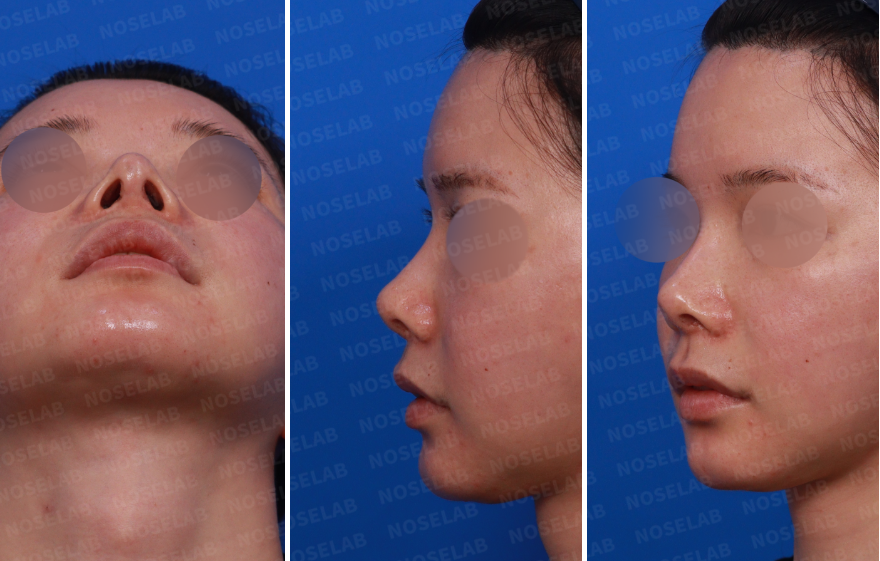
✅ Surgical Results
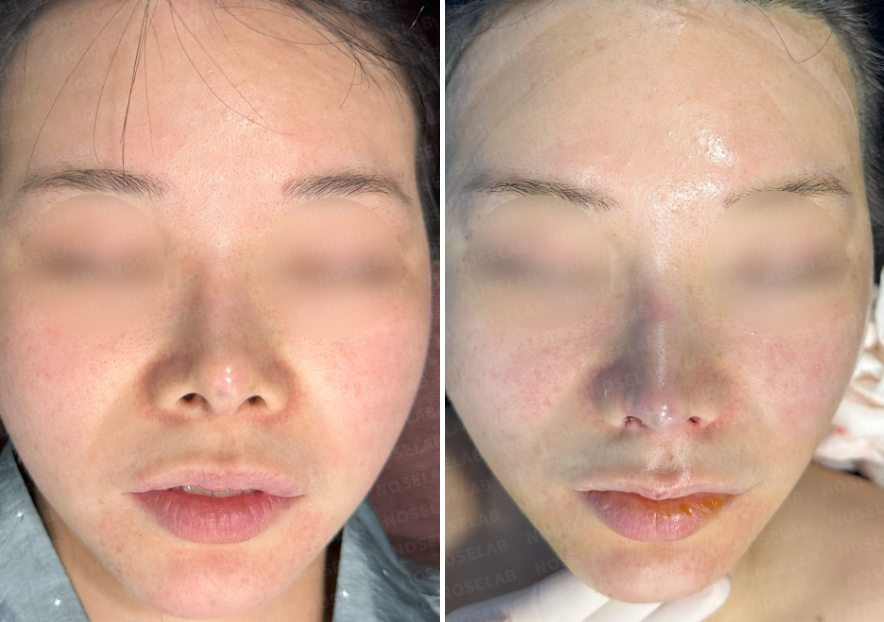
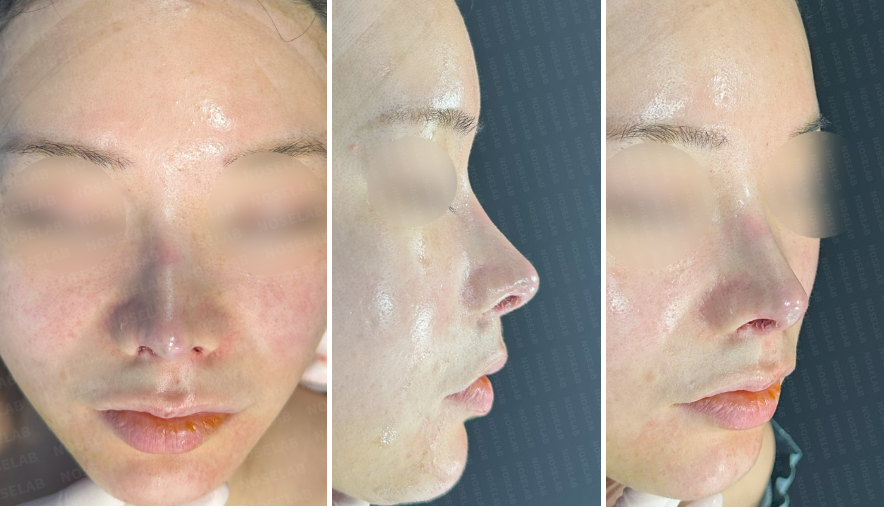
Frontal View
Reduced nostril exposure
Improved symmetry
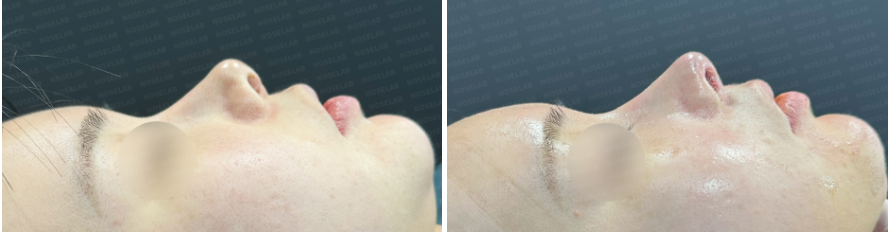
Lateral View
Natural tip position
Balanced nasolabial angle
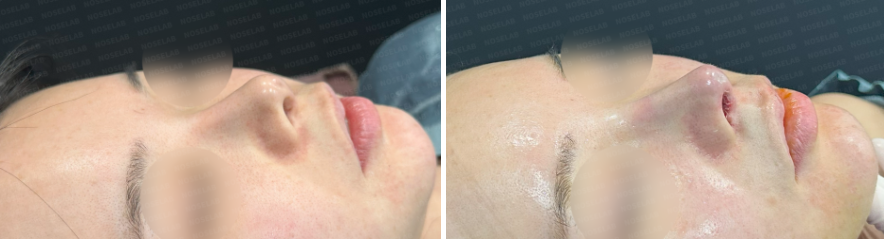
Oblique View
Improved contour
Reduced scar visibility
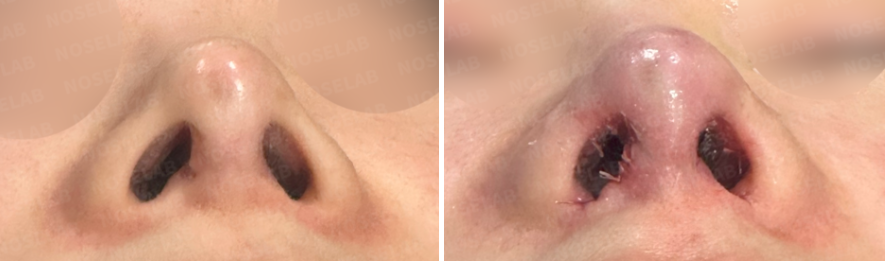
Nasal Base View
Improved nostril symmetry
Restored soft tissue balance
✅ Surgeon’s Commentary
High-risk revision rhinoplasty requires a fundamentally different surgical strategy focused on vascular preservation and structural stability.
In this case, previous surgeries had significantly compromised the blood supply to the nasal tip, increasing the risk of necrosis.
A closed approach was selected to minimize disruption to the vascular network while allowing precise internal reconstruction.
Autologous rib cartilage was used to rebuild structural support, while careful intraoperative circulation management ensured tissue viability.
Correction of skin depression and scar tissue required combined use of cartilage and dermal grafting techniques.
Closed Rhinoplasty Korea enables safe correction even in complex, high-risk revision cases by balancing structural reconstruction with vascular preservation.
Long-term success depends on maintaining both blood flow and structural stability.
📩 International Consultation
✅ FAQ
Q1. Why is closed rhinoplasty safer in high-risk cases?
It preserves blood circulation and reduces tissue damage.
Q2. What causes nasal tip necrosis?
Compromised blood supply due to prior surgeries or excessive dissection.
Q3. Can high-risk revision rhinoplasty be safely performed?
Yes, with careful planning and vascular management.
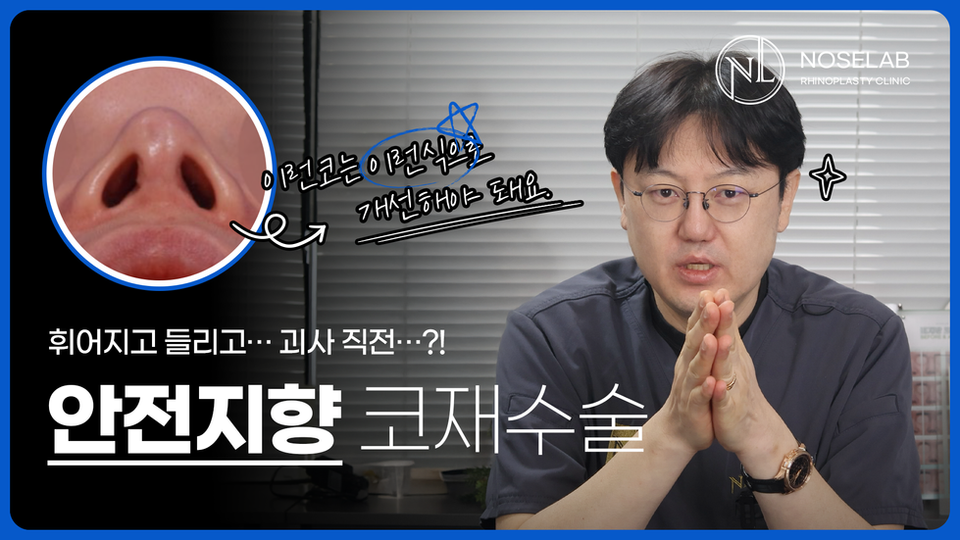
Revision Rhinoplasty Korea – Safe and Closed Approach for Deviated and Upturned NoseAt NoseLab Clinic, we specialize in safe revision rhinoplasty for patients facing risks such as nasal tip necrosis, deviated bridge, and upturned nose after multiple surgeries. Using a closed approach with autologous rib cartilage, we correct asymmetry and restore both function and natural beauty.
👉 Watch the full video here:
Read the author’s background and the original case context. About these articles
Source updated .