Case at a glance
- Surgical plan
- Graft & material details
- Photo timing
These details are excerpts from the original article and captions. Follow a detail to read it in context.
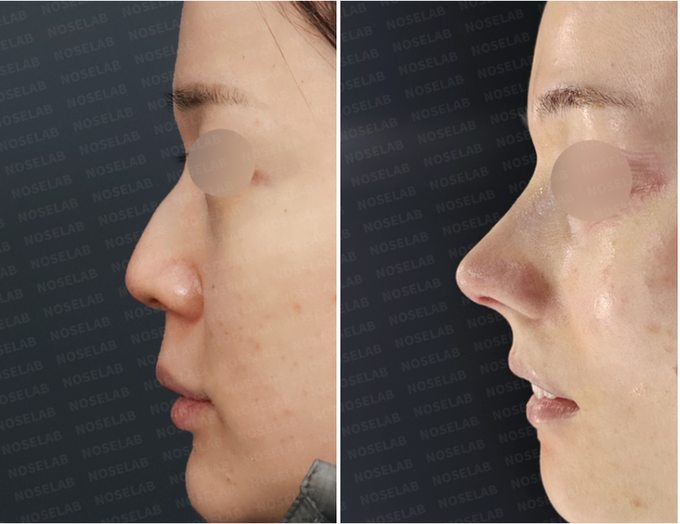
A slim and refined nasal bridge requires structural narrowing of nasal bones and stable tip support rather than simple augmentation.
In this case, lateral osteotomy, custom implant placement, and rib cartilage reconstruction created a straight dorsal line, refined the nasal tip, and achieved natural facial harmony through a closed rhinoplasty approach.
Author: Dr. Cha-Young Kang, Director, NoseLab Clinic
This case involves a patient undergoing primary rhinoplasty who wished to achieve a thinner, straighter nasal bridge and a refined nasal tip without an exaggerated or artificial appearance.
The patient presented with a relatively wide nasal bridge, mild dorsal irregularities, and insufficient tip support.
The aesthetic goal was increased nasal height, improved dorsal smoothness, and a nasal tip that does not appear upturned.
In this case, structural correction was achieved through closed rhinoplasty korea, focusing on controlled narrowing of the nasal bones and stable tip support reconstruction.
A slim nasal bridge requires structural bone realignment and internal support rather than simple implant augmentation alone.
If you are considering rhinoplasty for a slimmer nasal bridge or a more refined and natural nasal contour, a detailed structural evaluation is essential before determining the appropriate surgical plan.
📩 International Consultation
→ LINE Consultation (Japan only)

Surgical Background – Closed Rhinoplasty Korea
Primary bridge refinement requires controlled narrowing of nasal bones and reinforcement of internal support structures.
For this reason, closed rhinoplasty korea was selected to allow precise internal modification while preserving soft tissue and minimizing surgical trauma.
Structural Problems Identified
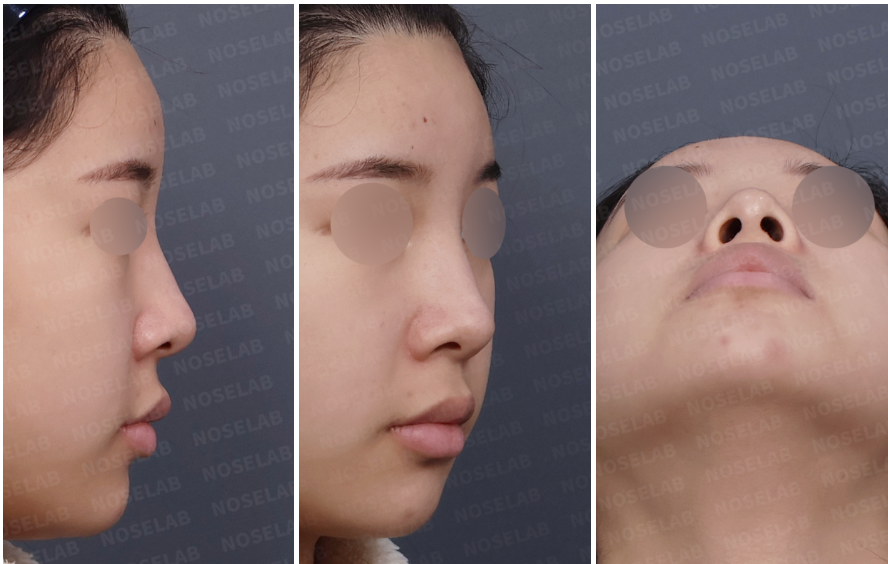
Preoperative evaluation revealed:
Wide nasal bones
Mild dorsal irregularities
Insufficient tip support
Risk of tip over-rotation
Need for balanced nasal proportion
These issues required coordinated structural correction.
Surgical Plan – Structural & Functional Refinement
Removal of Previous Materials
Removal of dorsal foreign material
Establishment of a clean surgical foundation
Lateral Osteotomy
Controlled narrowing of nasal bones
Realignment toward midline
Dorsal Augmentation
Custom-carved silicone implant
Smooth and straight dorsal contour
Nasal Tip Reconstruction
Reinforcement using donated rib cartilage and septal cartilage
Stable tip projection
Prevention of over-rotation
Nasolabial Angle Adjustment
Balanced tip position
Natural facial harmony
Surgical Results
Frontal View
Slimmer nasal bridge
Sharper yet natural contour

Lateral View
Straight and smooth dorsal line
Balanced nasal height
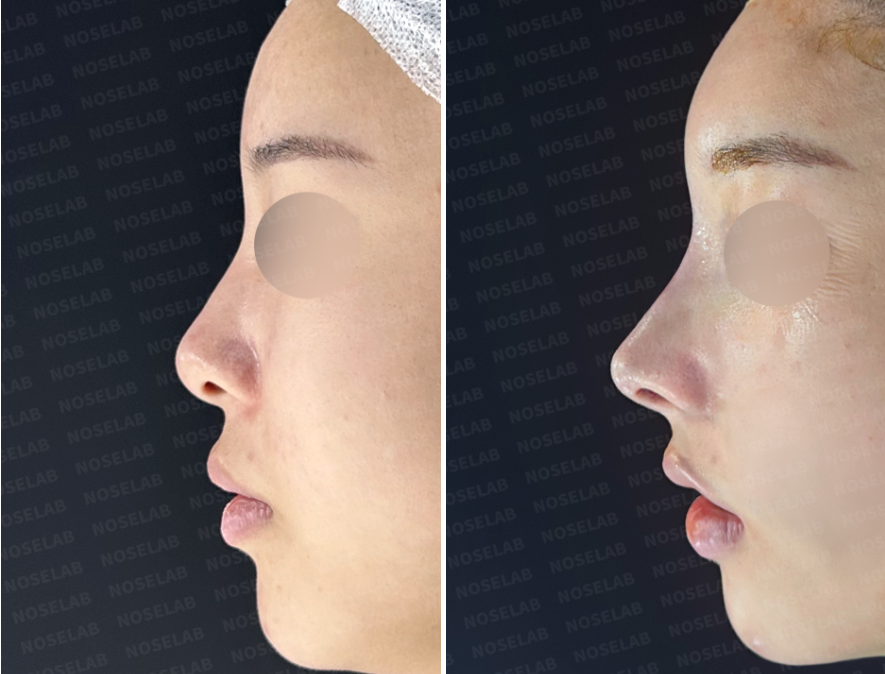
Tip Contour
Refined, non-upturned nasal tip
Stable projection
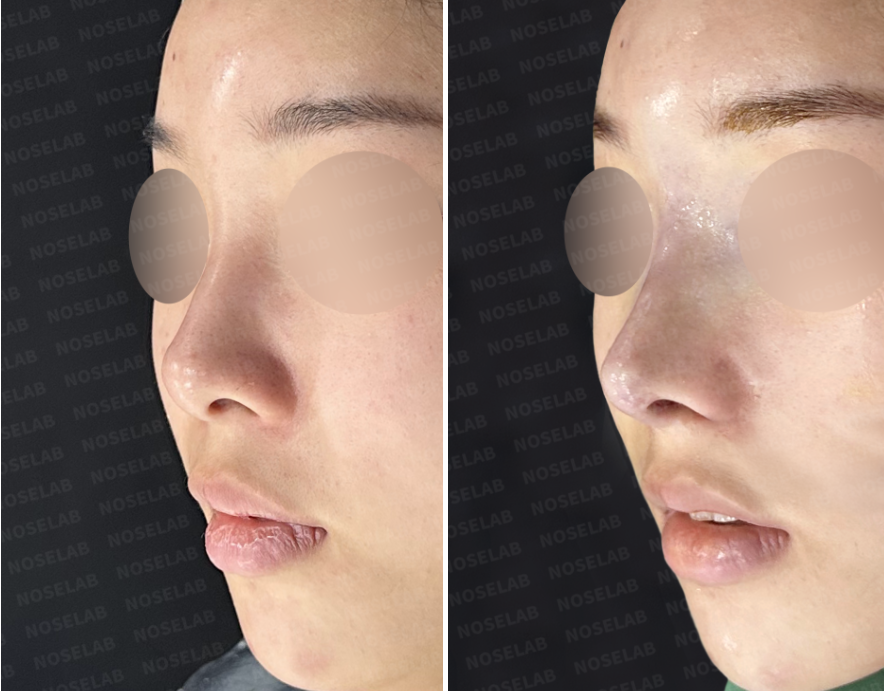
Overall Outcome
Improved facial harmony
Natural and proportionate appearance

Surgeon’s Commentary
A slim nasal bridge cannot be achieved through implant placement alone.
In this case, lateral osteotomy allowed controlled narrowing of the nasal bones, while precise implant carving created a smooth dorsal line.
Donated rib cartilage combined with septal cartilage provided strong and reliable tip support without requiring rib harvest from the patient.
Rhinoplasty should focus on structural balance and natural proportions rather than excessive sharpness or height.
Because each patient has different anatomical characteristics, surgical planning must be based on precise structural analysis rather than a standardized approach.
If you are considering rhinoplasty for bridge refinement and natural contour improvement, a comprehensive evaluation is essential to determine the most appropriate surgical strategy.
📩 International Consultation
→ LINE Consultation (Japan only)
FAQ
Q1. Can donated rib cartilage be used in primary rhinoplasty?
Yes. It can be used when additional structural support is required.
Q2. Why is osteotomy necessary for a wide nasal bridge?
It narrows the nasal bones and creates the foundation for a slim bridge.
Q3. How is an upturned nasal tip prevented?
By reinforcing tip support and adjusting the nasolabial angle.
🎥 YouTube Reference
If you’re curious about Dr. Cha-Young Kang’s closed rhinoplasty approach, click to watch the video.

Read the author’s background and the original case context. About these articles
Source updated .