Closed Rhinoplasty Korea for High Radix Correction and Tip Reconstruction
- Dr. Chayoung Kang
- 2024년 7월 29일
- 3분 분량
최종 수정일: 2일 전
This case demonstrates closed rhinoplasty Korea for correcting an excessively high nasal bridge starting point and droopy nasal tip. Structural reconstruction using rib cartilage restored nasal balance, improved airway function, and achieved a natural, stable result.
✅ Author / Published / Updated
Dr. Cha-Young Kang , NoseLab Clinic
Published: 2024
Last Updated: 2026
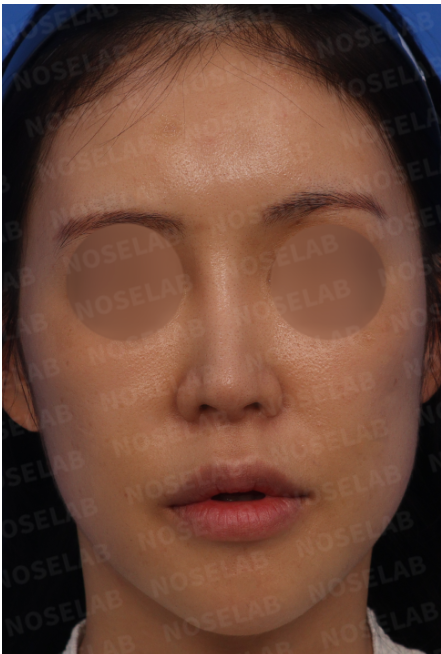
This patient presented with an excessively high nasal bridge starting point (high radix), droopy nasal tip, and structural imbalance following multiple previous rhinoplasty procedures.
The patient had undergone two prior rhinoplasties and nostril reduction surgery, resulting in structural limitations and asymmetry.
In this closed rhinoplasty Korea case, the goal was to lower the nasal starting point, reconstruct the nasal tip, and restore both functional and aesthetic balance.
Key concerns included:
Excessively high nasal bridge starting point
Nasal deviation
Droopy and under-projected nasal tip
Nostril asymmetry due to prior alar reduction
Depressed alar region
Functional airway narrowing on the left side
Weak septal support
This case required full structural reconstruction rather than simple cosmetic refinement.
If you are experiencing similar issues after previous surgeries, a structural evaluation is essential.
📩 International Consultation
✅ Surgical Background – Closed Rhinoplasty Korea
Closed rhinoplasty Korea allows precise correction of complex deformities without external incisions.
In high radix cases, simply lowering the bridge is insufficient. Structural balance between the dorsum and nasal tip must be restored.
This approach is especially important in revision cases where cartilage damage and scar tissue are present.

✅ Structural Problems Identified
Preoperative analysis revealed:
Excessively high radix creating an unnatural profile
Droopy and under-supported nasal tip
Nasal deviation
Nostril asymmetry from prior surgery
Depressed alar cartilage region
Weak septal support
Left-sided airway constriction
These findings required both structural and functional correction.

✅ Surgical Plan
1. Septal Reconstruction with Rib Cartilage
Reinforcement of weakened septal support using autologous rib cartilage.
2. Nasal Tip Reconstruction
Septal extension graft used to elevate and stabilize the nasal tip.
3. High Radix Correction
Lowering of the nasal starting point through implant repositioning and reshaping.
4. Alar Cartilage Reconstruction
Restoration of right alar cartilage and correction of depressed areas.
5. Adhesion Release
Removal of severe scar adhesions to restore mobility of soft tissue.
6. Functional Correction
Correction of septal deviation and turbinate reduction to improve airflow.
✅ Surgical Results
Frontal View
Lowered nasal starting point
Improved symmetry
Refined nasal contour

Lateral View
Balanced relationship between bridge and tip
Improved tip projection
Natural nasolabial angle

Oblique View
Smoother dorsal line
Reduced deformity
Improved overall harmony

Nasal Base View
Improved nostril symmetry
Partial limitation due to previous alar reduction
Better airway opening on left side

Functional Outcome
Improved airflow
Reduced nasal obstruction
Stabilized nasal structure
✅ Surgeon’s Commentary
Correction of a high radix requires careful structural planning.
Simply lowering the nasal bridge without addressing tip support can lead to imbalance or recurrence.
In this case, rib cartilage reconstruction was essential to restore stable support and correct the droopy nasal tip.
Severe adhesions and previous surgical damage made the procedure more complex, requiring precise internal reconstruction.
Closed rhinoplasty Korea allows these corrections while minimizing additional trauma.
Although perfect symmetry is difficult in revision cases with prior nostril reduction, significant functional and aesthetic improvement can still be achieved.
If you are considering revision rhinoplasty, a structural approach is essential for long-term stability.
📩 International Consultation
✅ FAQ
Q1. What causes a high nasal bridge starting point?I
t is often due to improper implant placement or over-augmentation in previous surgeries.
Q2. Can high radix be corrected without removing the implant?
In most cases, implant adjustment or replacement is necessary.
Q3. Why is rib cartilage used in revision cases?
It provides strong structural support when native cartilage is insufficient.

Messenger(WhatsApp) : +82 1057360302
Home page : www.noselab.co.kr
Instagram : noselab_global
Email : noselab@naver.com


댓글