Case at a glance
- Concerns & goals
- Surgical plan
- Graft & material details
- Photo timing
These details are excerpts from the original article and captions. Follow a detail to read it in context.
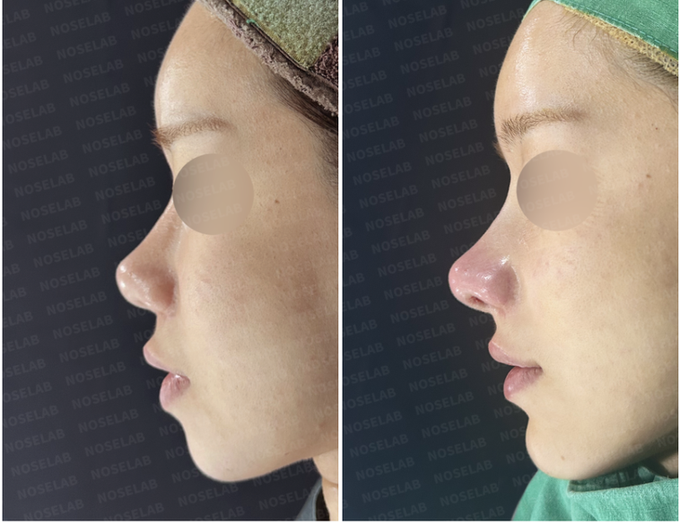
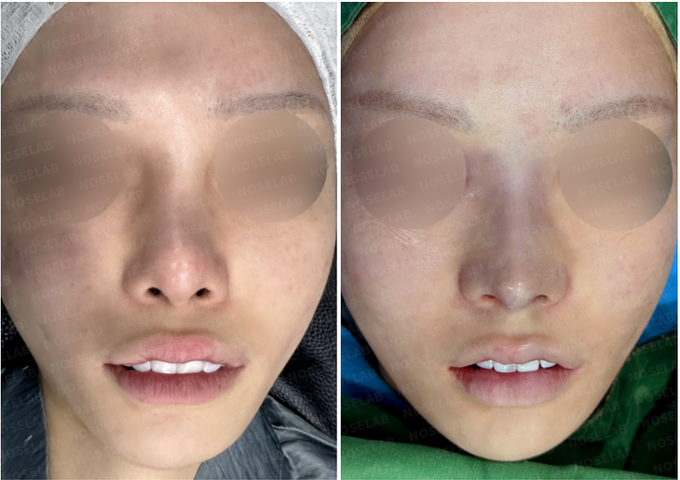
This case demonstrates closed rhinoplasty Korea for correcting a deviated nose combined with nostril asymmetry and nasal airway obstruction. Structural reconstruction using rib cartilage and septal correction restored alignment, improved breathing, and achieved long-term stability.
✅ Author / Published / Updated
Dr. Cha-Young Kang
Published: 2024
Last Updated: 2026
This patient presented for revision rhinoplasty after previous surgeries involving silicone implant and cartilage grafting.
Over time, the patient developed persistent nasal deviation, asymmetry, and functional airway obstruction.
In this closed rhinoplasty Korea case, the goal was to correct both structural deviation and functional impairment while maintaining the patient’s preferred nasal height.
Key concerns included:
Deviated nasal tip and bridge
Nostril asymmetry
Upturned nasal tip with excessive nostril exposure
Columella deviation
Nasal obstruction due to mucosal adhesion
Functional breathing discomfort
This case required structural reconstruction combined with airway correction rather than simple cosmetic adjustment.
If you are experiencing similar issues, a detailed structural and functional evaluation is essential.
📩 International Consultation
✅ Surgical Background – Closed Rhinoplasty Korea
Closed rhinoplasty Korea enables precise internal correction of both structural deformities and functional airway issues.
In deviated nose cases, failure to reconstruct the septal support and nasal framework can lead to recurrence.
This approach allows controlled correction while preserving soft tissue.
✅ Structural Problems Identified
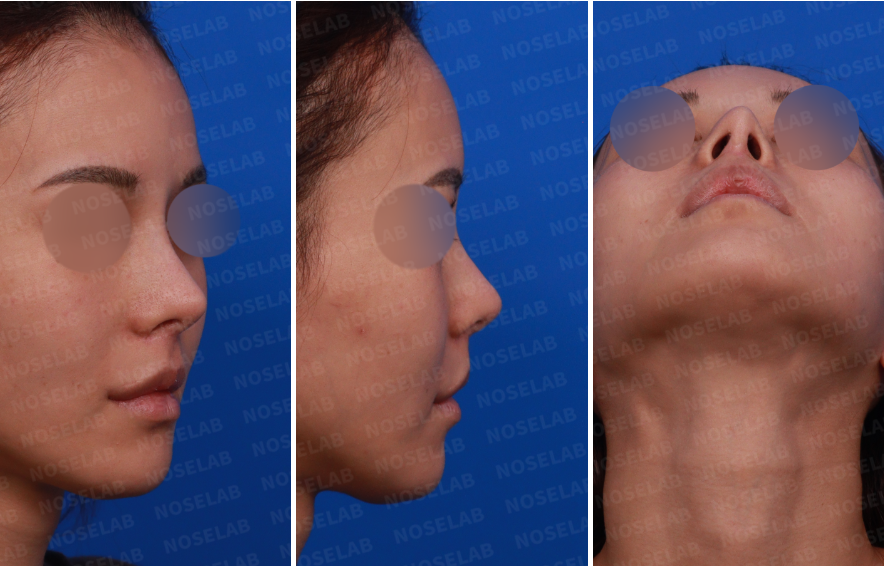
Preoperative analysis revealed:
Nasal tip deviation toward the left
Asymmetrical nostril shape
Upturned tip with excessive nostril exposure
Columella deviation
Septal instability
Adhesion between septal mucosa and inferior turbinate
Functional airway obstruction
These findings required both structural and functional correction.
✅ Surgical Plan
1. Septal Extension Graft (Rib Cartilage)
Donor rib cartilage was used to reconstruct septal support and stabilize nasal alignment.
2. Septal Reconstruction
Structural reinforcement of the septum to prevent recurrence of deviation.
3. Nostril Lowering and Symmetry Correction
Adjustment of nostril position to improve symmetry and reduce nostril exposure.
4. Nasolabial Angle Adjustment
Correction of tip rotation to achieve a more natural facial balance.
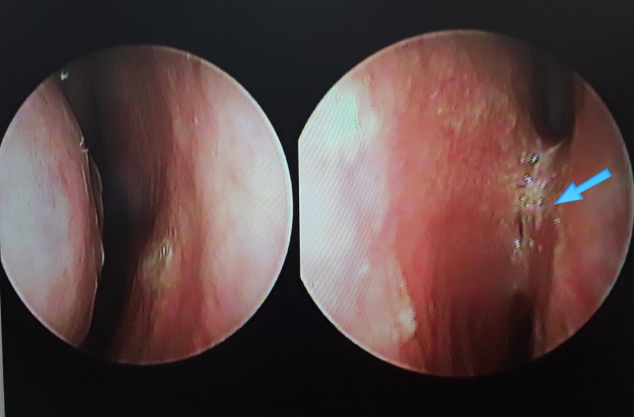
5. Adhesion Release (Functional Correction)
Separation of mucosal adhesion to restore normal airflow.
✅ Surgical Results

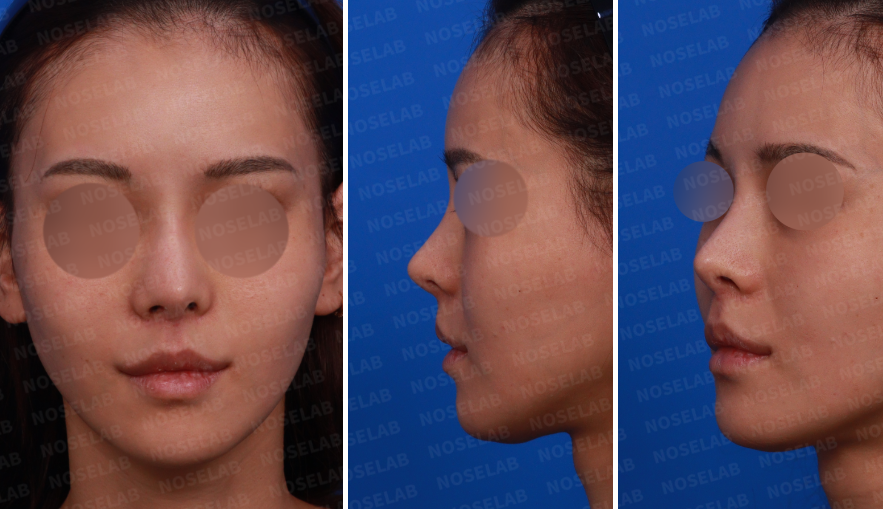
Lateral View
Controlled tip rotation
Improved nasolabial angle
Natural profile

Oblique View
Smooth nasal contour
Harmonized proportions
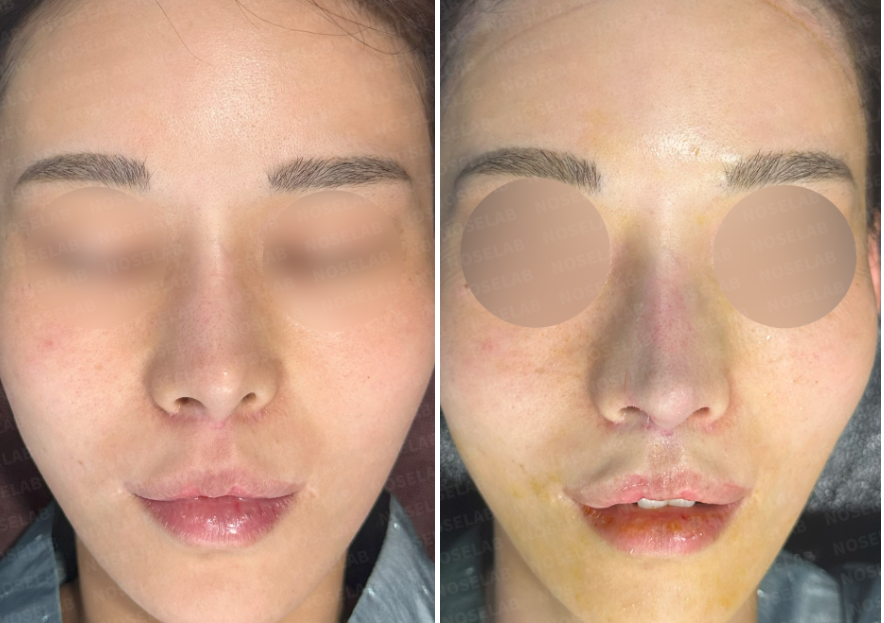
Frontal View
Improved alignment of nasal tip
Reduced asymmetry
Balanced nasal structure

Functional Outcome
Improved nasal airflow
Reduced obstruction
Stabilized airway structure
✅ Surgeon’s Commentary
Deviated nose correction is not simply a matter of straightening the nasal bridge.
Without proper structural reconstruction, deviation often recurs.
In this case, septal extension using rib cartilage was essential to establish stable support.
Functional correction was equally important. Adhesion within the nasal cavity can significantly impair breathing and must be addressed during surgery.
Closed rhinoplasty Korea allows precise correction of both structure and function while minimizing tissue trauma.
If you are considering deviated nose correction, a structural approach is essential for long-term results.
📩 International Consultation
✅ FAQ
Q1. Why does a deviated nose recur after surgery?
Without proper structural support, the nose can shift back over time.
Q2. Is functional correction necessary?
Yes. Addressing airway obstruction improves both breathing and surgical stability.
Q3. Why use rib cartilage in deviation cases?
It provides strong support needed to maintain alignment long-term.
🎥 YouTube Reference
If you’re curious about Dr. Cha-Young Kang’s closed rhinoplasty approach, click to watch the video.
✅ Mandatory Disclosure
This case is for educational purposes and represents a clinical example.
Results may vary depending on individual anatomy and surgical history.
All procedures were performed by a qualified specialist.
Read the author’s background and the original case context. About these articles
Source updated .