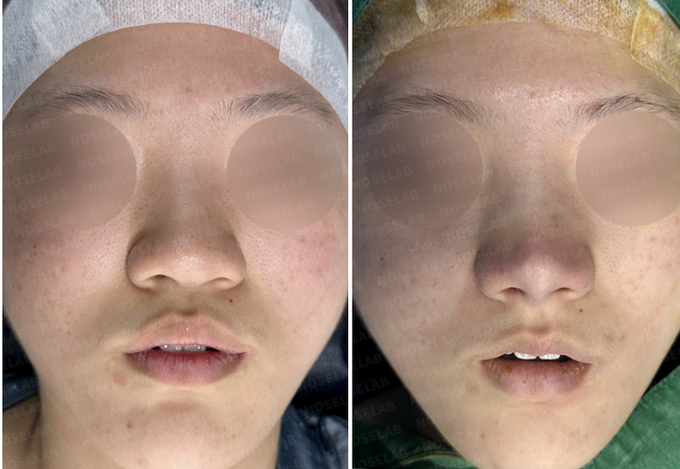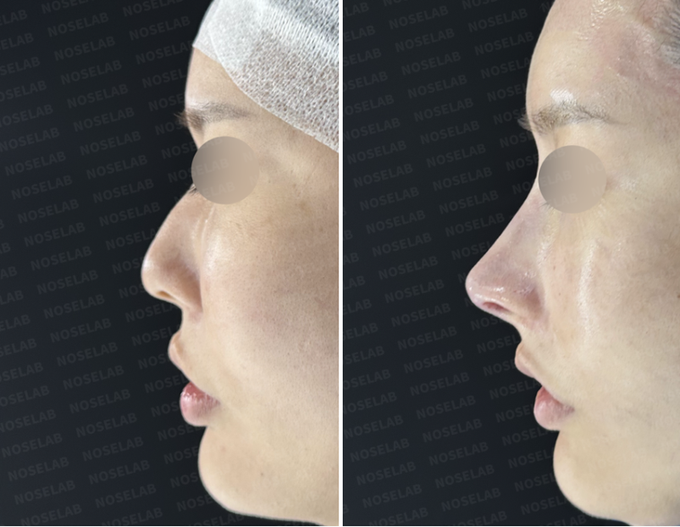
Case at a glance
- Photo timing
These details are excerpts from the original article and captions. Follow a detail to read it in context.
A low nasal bridge combined with a wide nasal tip is a common structural nasal pattern that requires both dorsal augmentation and tip support reconstruction.
In this case, donor rib cartilage was used to reinforce the nasal tip while a custom silicone implant elevated the nasal bridge. Functional nasal surgery was performed simultaneously to correct septal deviation and improve breathing through a closed rhinoplasty approach.
Case Background
This case involves a patient who visited NoseLab Clinic due to concerns about a low nasal bridge and a wide nasal tip.
The patient had no prior history of nasal surgery, making this a primary rhinoplasty case. In addition to aesthetic concerns, the patient also experienced nasal obstruction related to septal deviation and rhinitis. Therefore, the surgical plan focused on improving both nasal structure and breathing function.
In this case, structural correction was achieved through closed rhinoplasty korea, focusing on balanced dorsal augmentation and structural tip support reconstruction.
Low nasal bridge combined with a wide nasal tip requires simultaneous structural reinforcement rather than isolated augmentation.
If you are experiencing similar concerns such as a low nasal bridge, wide nasal tip, or breathing discomfort, a detailed evaluation of your nasal structure is essential before determining the appropriate surgical plan.
📩 International Consultation
→ LINE Consultation (Japan only)
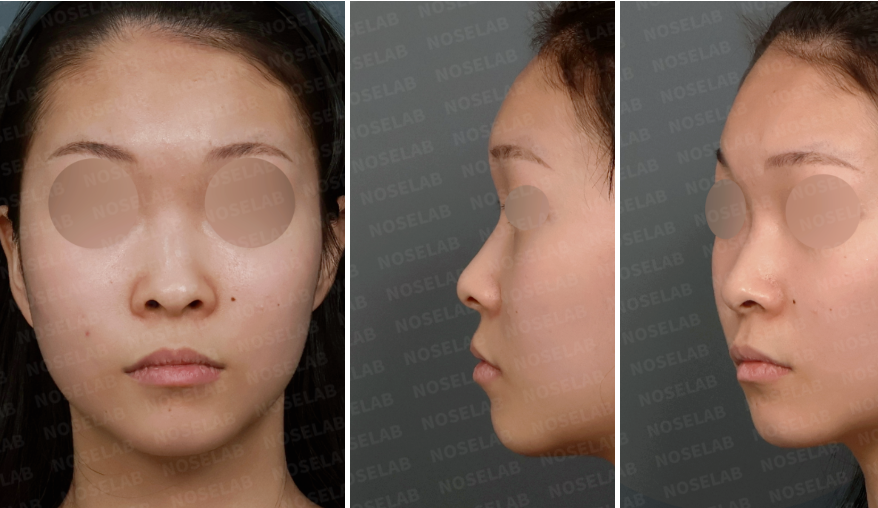
Surgical Background – Closed Rhinoplasty Korea
Correction of a low and wide nose requires both structural reinforcement of the nasal tip and controlled augmentation of the nasal bridge.
For this reason, closed rhinoplasty korea was selected to allow precise internal structural reconstruction while avoiding external incisions and minimizing soft tissue disruption.
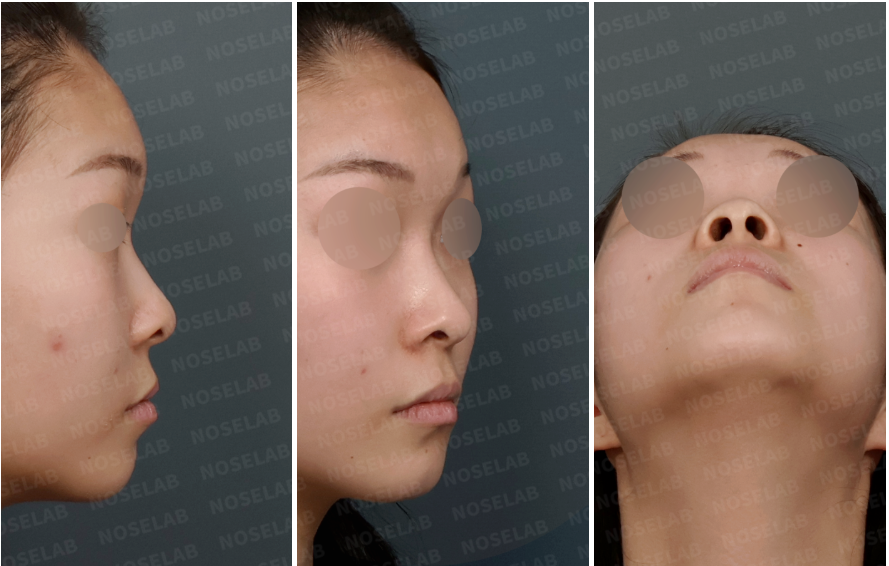
Structural Problems Identified
Preoperative evaluation revealed several anatomical factors contributing to both aesthetic and functional concerns:
Low nasal bridge
Wide nasal tip with reduced projection
Septal deviation causing nasal obstruction
Inferior turbinate hypertrophy associated with rhinitis
These combined conditions required simultaneous structural and functional correction.
Surgical Plan – Structural Reinforcement and Functional Improvement
Nasal Tip Reinforcement with Donor Rib Cartilage
The nasal tip support structure was reinforced using donor rib cartilage.
Key objectives included:
Strengthening the nasal tip support framework
Refining and narrowing the wide nasal tip
Achieving natural tip projection and definition
Donor rib cartilage provides strong structural stability while avoiding cartilage harvesting from the patient.
Nasal Bridge Augmentation with Silicone Implant
A custom-carved silicone implant was used to augment the nasal bridge.
Surgical principles included:
Precise carving to match the patient’s nasal bone anatomy
Placement limited to the nasal dorsum
Smooth transition from forehead → bridge → tip
The goal was to create a natural dorsal line rather than excessive height.
Functional Nasal Surgery
Functional nasal surgery was performed to improve breathing.
Procedures included:
Septoplasty to correct septal deviation
Inferior turbinate reduction to treat turbinate hypertrophy
These procedures restored normal nasal airflow while stabilizing the internal nasal framework.
Surgical Results
Frontal View
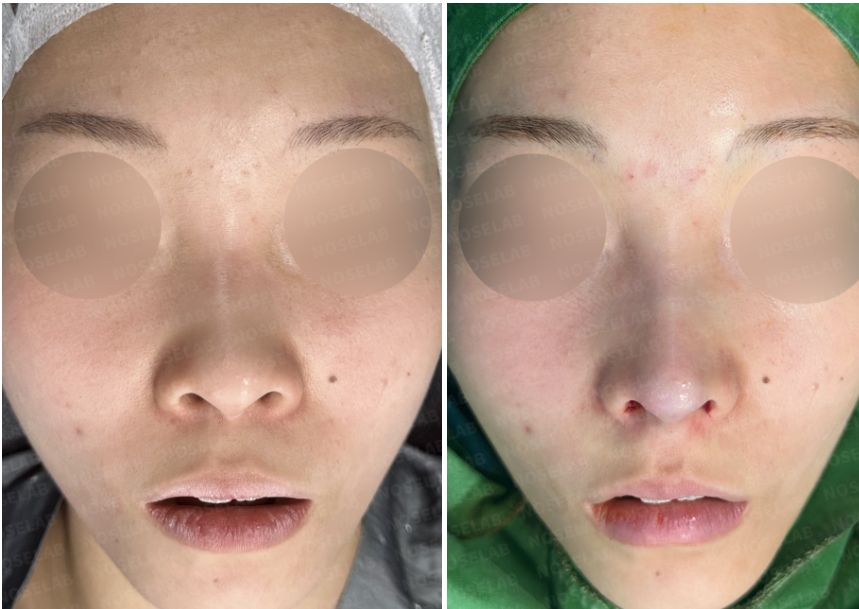
The wide nasal tip became more refined and defined
Overall nasal width appeared naturally reduced
Balanced nasal proportions were achieved
Lateral View
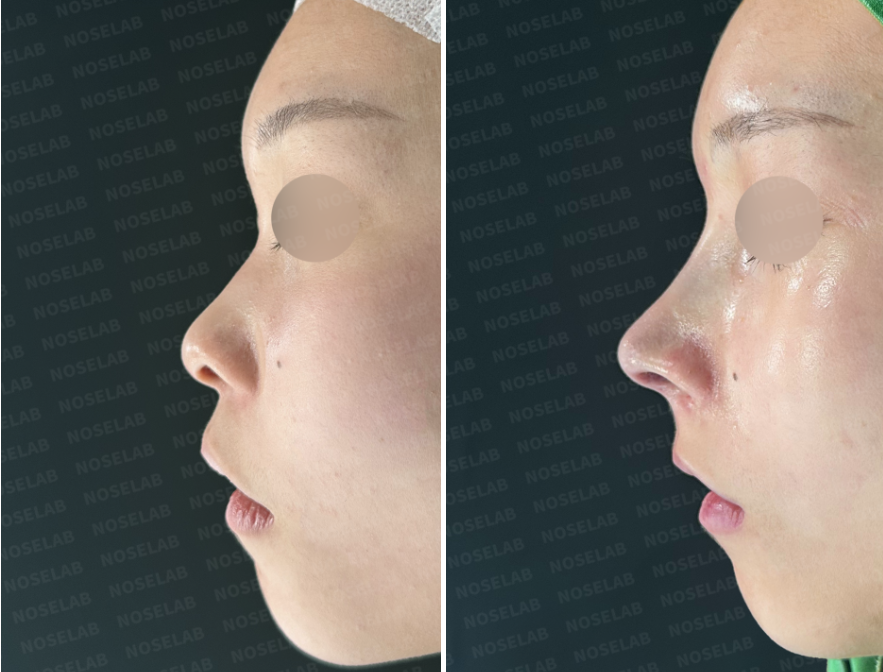
The low nasal bridge was elevated to a natural height
A smooth dorsal line formed from forehead to nasal tip
Nasal tip projection improved the side profile
Oblique (45°) View
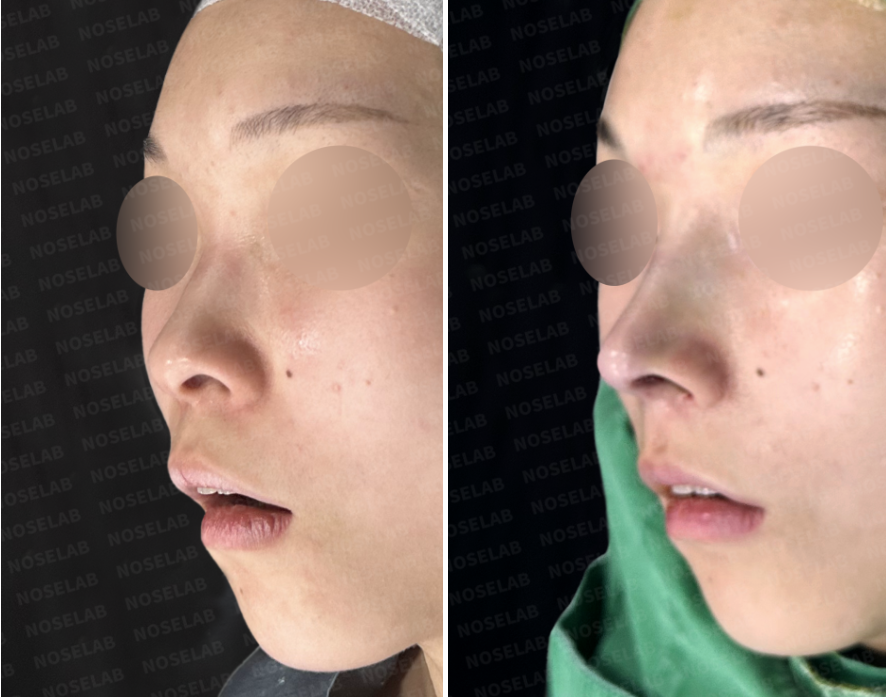
Natural nasal contours were visible from multiple angles
Harmonious balance between the nasal bridge and tip
Basal (Nostril) View
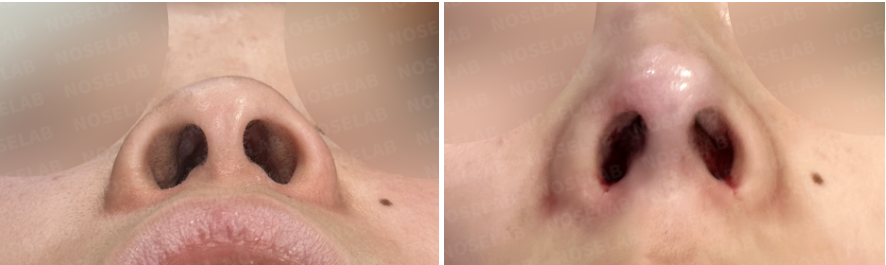
Refined nasal tip improved nostril shape naturally
Improved nostril symmetry and nasal base contour
Surgeon’s Commentary – Structural Strategy for Low and Wide Nose
A low nasal bridge combined with a wide nasal tip cannot be corrected by bridge augmentation alone.
In these cases, structural reinforcement of the nasal tip is essential to create a balanced and natural nasal contour.
In this patient, donor rib cartilage was used to reconstruct the nasal tip support structure, allowing refinement of the wide tip while maintaining strong structural stability. Donor cartilage avoids the need for rib harvesting while still providing reliable long-term support.
For the nasal bridge, a silicone implant was carefully carved to match the patient’s anatomy and positioned only along the nasal dorsum. Rather than focusing on excessive height, the surgical design emphasized a smooth transition from the forehead to the nasal tip.
Because the patient also experienced nasal obstruction due to septal deviation and rhinitis, septoplasty and inferior turbinate reduction were performed simultaneously. Addressing both functional and aesthetic concerns in a single procedure can significantly improve both breathing comfort and facial harmony.
Because low and wide nose deformities involve both structural and functional components, surgical planning must be based on precise anatomical analysis rather than a standardized approach.
If you are considering rhinoplasty for both aesthetic improvement and functional correction, a comprehensive evaluation is essential to determine the most appropriate surgical strategy.
📩 International Consultation
→ LINE Consultation (Japan only)
(FAQ)
Q1.Can a low nasal bridge and wide nasal tip be corrected together?
Yes. Structural rhinoplasty can simultaneously augment the bridge and refine the nasal tip.
Q2.Why is rib cartilage used for nasal tip reconstruction?
Rib cartilage provides strong structural support and long-term stability for nasal tip projection.
Q3.Can rhinoplasty improve nasal breathing?
Yes. Functional procedures such as septoplasty and turbinate reduction can be performed during rhinoplasty to improve airflow.
Read the author’s background and the original case context. About these articles
Source updated .