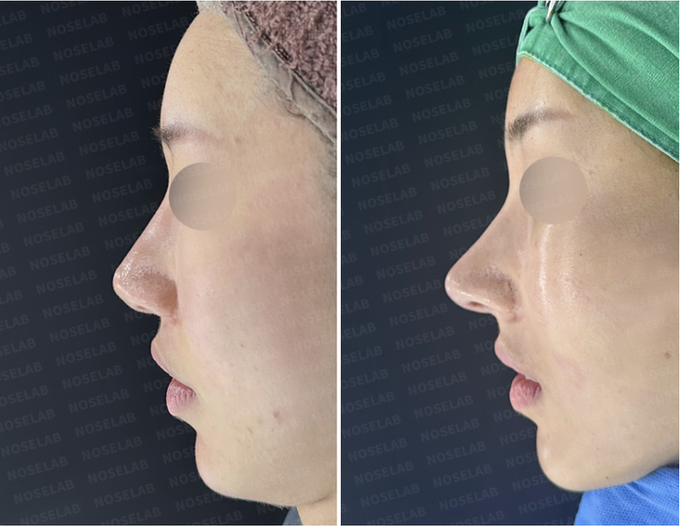
Case at a glance
- Concerns & goals
- Surgical plan
- Graft & material details
- Photo timing
These details are excerpts from the original article and captions. Follow a detail to read it in context.
This case demonstrates closed rhinoplasty Korea for removing mesh implants and restoring nasal structure using rib cartilage reconstruction. The procedure improved nasal symmetry, reduced inflammation risk, and achieved a natural, balanced result.
Author: Dr. Chayoung Kang, Director, NoseLab Rhinoplasty Clinic
This patient presented with nasal deformity and structural imbalance following previous rhinoplasty involving mesh implantation.
The initial surgery included septal cartilage, mesh insertion, and osteotomy. Over time, the patient developed a bulbous nasal tip, asymmetry, and unnatural contour.
In this closed rhinoplasty Korea case, the goal was to remove the mesh, reconstruct the nasal structure, and achieve a natural, subtle nasal appearance.
Key concerns included:
Bulbous nasal tip
Wide nasal bridge
Nostril asymmetry
High nasion
Drooping columella
Structural damage from mesh adhesion
Mesh-related complications required careful removal and full structural reconstruction.
📩 International Consultation
✅ Surgical Background – Closed Rhinoplasty Korea
Closed rhinoplasty Korea allows safe removal of foreign materials and precise structural reconstruction without external incision.
In mesh cases, the primary challenge is adhesion to surrounding tissue and cartilage damage.
✅ Structural Problems Identified
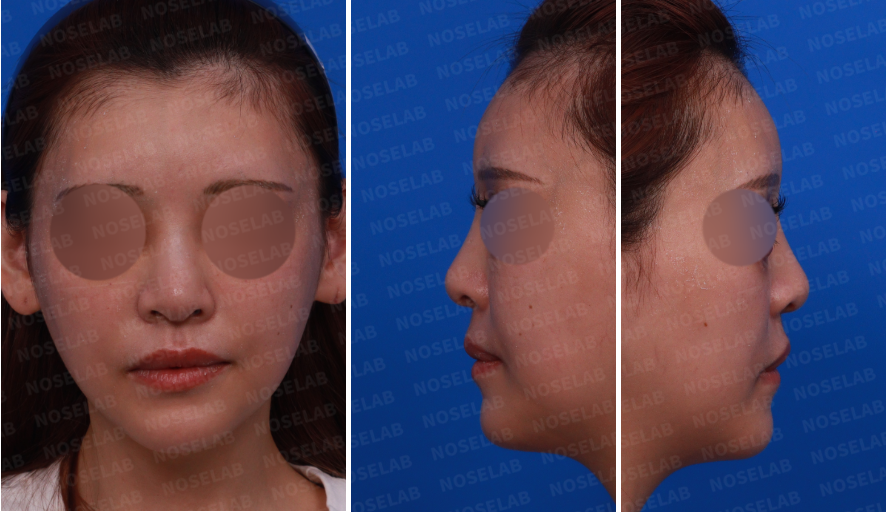
Preoperative findings included:
Mesh embedded within soft tissue
Severe adhesion between mesh and surrounding structures
Loss of septal cartilage support
Bulbous and blunt nasal tip
Nostril asymmetry
Unnatural nasal contour
✅ Surgical Plan

1. Mesh Removal
Complete removal of all mesh fragments while minimizing tissue damage
2. Adhesion Release
Careful dissection to free surrounding tissue
3. Septal Reconstruction
Reinforcement using autologous rib cartilage
4. Nasal Tip Refinement
Reconstruction of tip shape and support
5. Dorsal Adjustment
Correction of bridge height and contour
6. Nostril Symmetry Correction
Balancing nasal base structure
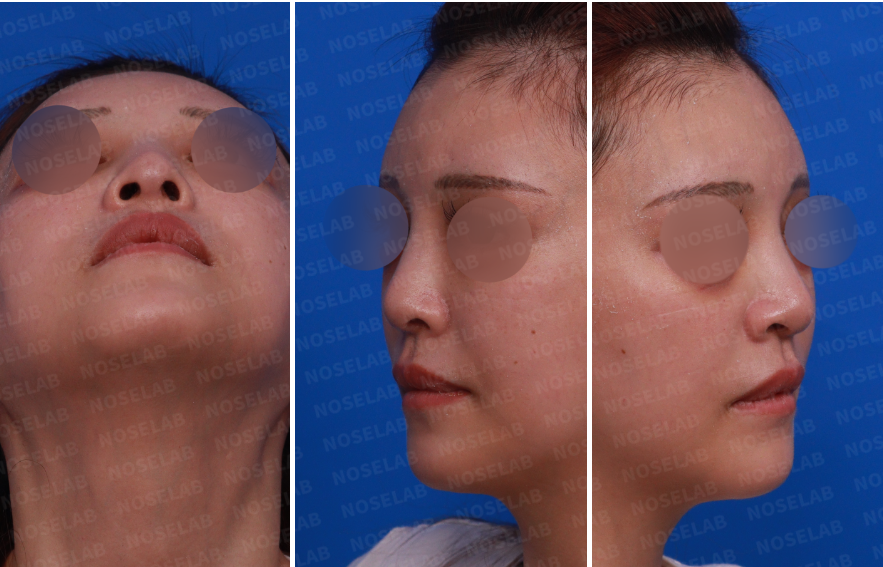
✅ Surgical Results
Frontal View
Reduced nasal width
Improved symmetry
Refined tip
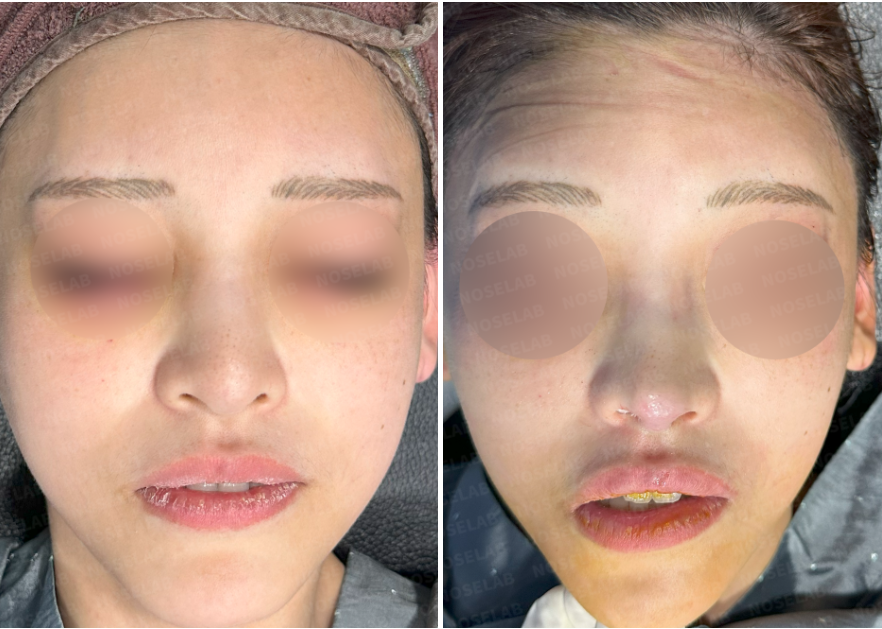
Oblique View
Smooth nasal contour
Improved harmony
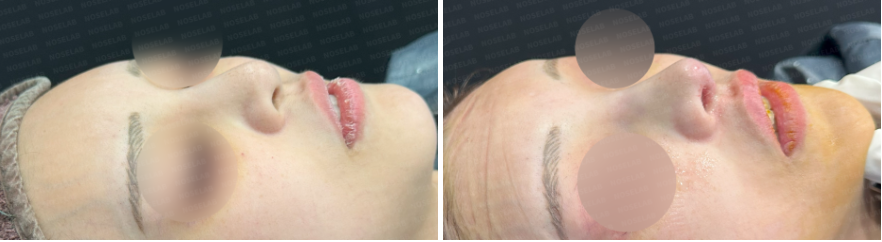
Lateral View
Lowered nasion
Natural profile
Balanced tip projection

Nasal Base View
Improved nostril symmetry
Corrected columella

Functional Outcome
Reduced inflammation risk
Stabilized nasal structure
✅ Surgeon’s Commentary
Mesh is not an ideal material for nasal augmentation due to its tendency to cause inflammation and adhesion.
In revision cases, removal of mesh is often necessary to restore healthy tissue conditions.
In this case, rib cartilage reconstruction was essential due to the damage caused by the previous surgery.
Closed rhinoplasty Korea allows safe removal and precise reconstruction with minimal additional trauma.
Achieving a natural and subtle result requires careful balance rather than excessive augmentation.
If you are experiencing complications from mesh or other implants, a structural approach is critical for long-term stability.
📩 International Consultation
✅ FAQ
Q1. Why is mesh problematic in rhinoplasty?
It can cause inflammation, adhesion, and long-term complications.
Q2. Is mesh removal difficult?
Yes, due to strong adhesion to surrounding tissue.
Q3. What is used after mesh removal?
Autologous cartilage is preferred for safe reconstruction.

Read the author’s background and the original case context. About these articles
Source updated .