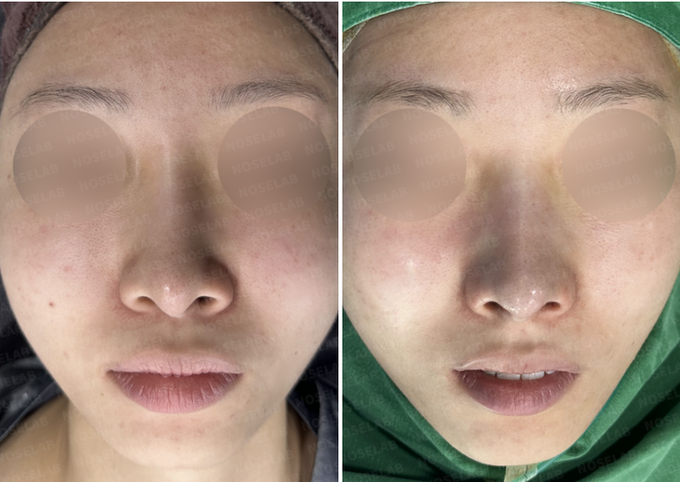
Case at a glance
- Previous treatment
- Surgical plan
- Graft & material details
- Photo timing
These details are excerpts from the original article and captions. Follow a detail to read it in context.
Contracted nose revision is a reconstructive rhinoplasty procedure that addresses scar-related capsule tightening and structural collapse following previous implant-based surgery.
In this case, complete capsule release and nasal tip reconstruction using autologous rib cartilage were performed to correct an upturned tip, excessive nostril show, and asymmetry while ensuring long-term stability without external scars.
Author: Dr. Cha-Young Kang, Director, NoseLab Clinic
Published: 2026-01-27
Hello, this is Dr. Cha-Young Kang from NoseLab Clinic.
This case involves a patient who developed progressive nasal deformity several years after primary rhinoplasty and sought a safer, more durable reconstructive solution.
Patient Condition and Key Problems
The patient presented with progressive nasal contracture caused by capsular tightening around a previous silicone implant.
This resulted in an upturned nasal tip, columella retraction, excessive nostril show, deviation of the nasal bridge, and both aesthetic and structural imbalance.
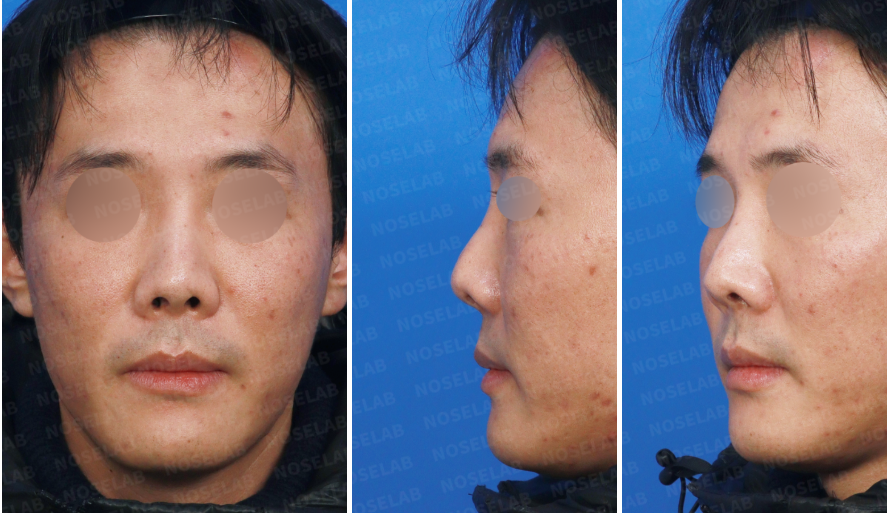
Surgical Background – Contracted Nose Revision with Closed Rhinoplasty Korea
Contracted nose deformity occurs when fibrotic capsule formation gradually distorts nasal structures after implant-based surgery.
For this reason, closed rhinoplasty korea was selected to allow full capsule release and internal reconstruction while preserving soft tissue circulation and avoiding external incisions.
Surgical history
7 years ago: Silicone implant rhinoplasty with septal cartilage graft
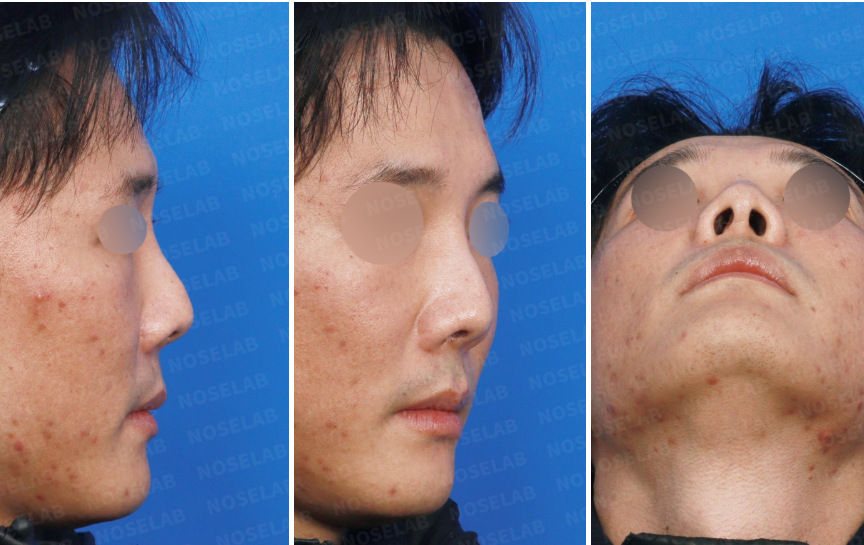
Surgical Plan – Capsule Release and Structural Reconstruction
The surgical plan focused on eliminating the root cause of contracture and rebuilding a stable nasal framework.
Key procedures included:
Complete removal of the contracted fibrotic capsule
Replacement of the dorsal implant with a custom-carved silicone implant
Tip reconstruction using autologous rib cartilage
Adjustment of columella position and nasolabial angle
Full capsule release was essential to reduce skin tension and allow proper redraping of the soft tissue.
Tip Reconstruction – Why Autologous Rib Cartilage Matters
Autologous rib cartilage was used to reconstruct the nasal tip after capsule removal.
Its advantages include:
Excellent biocompatibility with no risk of rejection
Strong and durable support for long-term stability
Reduced risk of recurrent contracture
Reliable correction of upturned tip and columella malposition
The reconstructed tip maintained stable projection while restoring a natural nasal contour.
Surgical Results – Natural Shape with Long-Term Stability
Postoperative evaluation confirmed both aesthetic and structural improvement.
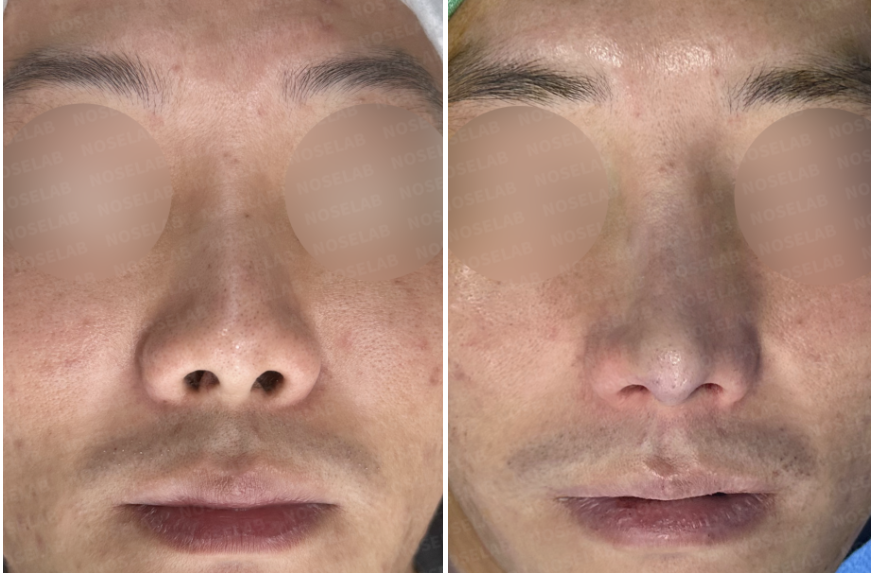
Frontal view:
The deviated bridge was realigned, restoring symmetry and facial balance.
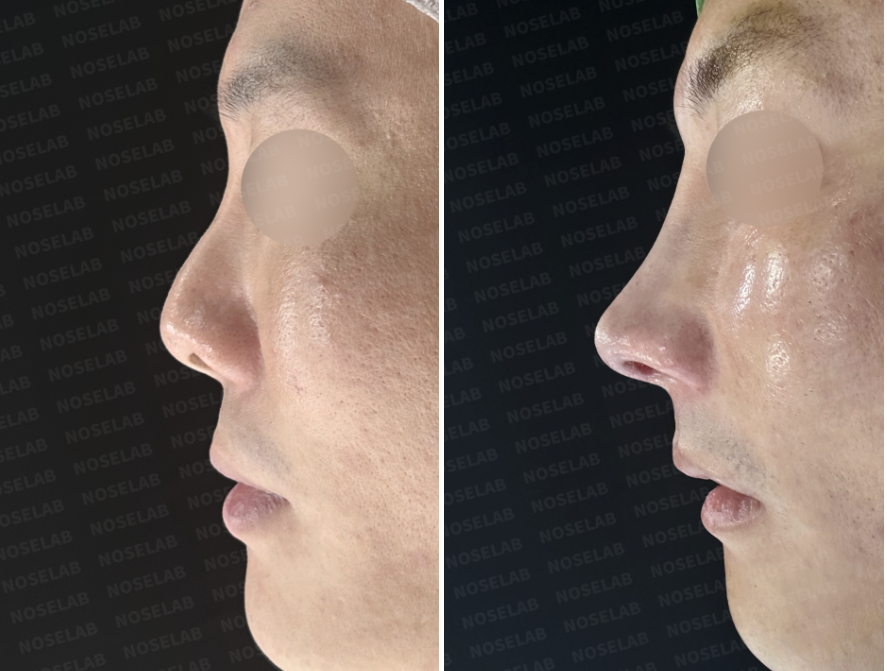
Side profile:
The upturned tip was repositioned downward, creating a smoother bridge-to-tip transition and improved nasolabial angle.
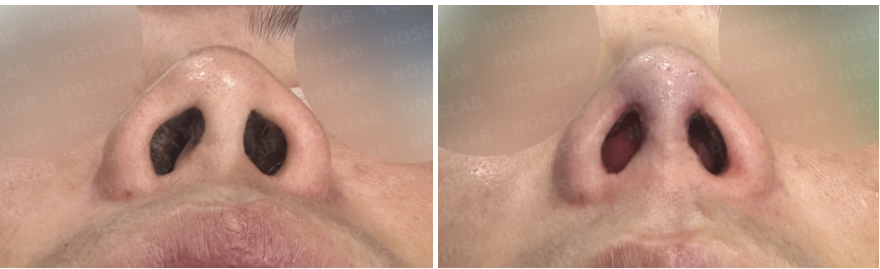
Nostril view:
Excessive nostril show was reduced, and columella position was stabilized, resulting in a more symmetrical nasal base.
Surgeon’s Commentary – The Core Principle of Contracted Nose Revision
Contracted nose revision cannot be resolved by implant replacement alone.
In this case, complete capsule removal followed by rib cartilage reconstruction was essential to prevent recurrence and achieve long-term stability. Although early swelling may be more noticeable, this structure-first approach is critical for safe and durable outcomes.
This surgery was performed by Dr. Cha-Young Kang, Chief Director of NoseLab Clinic, following a long-term safety–oriented reconstructive philosophy.
FAQ – Contracted Nose Revision Surgery
Q1. What causes a contracted nose after rhinoplasty?
Contracture is usually caused by fibrotic capsule formation around implants, leading to progressive tightening and distortion of nasal structures.
Q2. Why is capsule removal necessary in contracted nose revision?
Without complete capsule removal, residual tension can cause recurrent deformity even after implant replacement.
Q3. Why is rib cartilage preferred for tip reconstruction in contracture cases?
Rib cartilage provides strong, biologically stable support that reduces the risk of tip collapse and re-contracture over time.
🎥 YouTube Reference
If you’re curious about Dr. Cha-Young Kang’s closed rhinoplasty approach, click to watch the video.
Read the author’s background and the original case context. About these articles