Case at a glance
- Surgical plan
- Graft & material details
- Photo timing
These details are excerpts from the original article and captions. Follow a detail to read it in context.
This case demonstrates Closed Rhinoplasty Korea for correcting nostril asymmetry following alar base reduction. Rib cartilage reconstruction restored nasal structure, improved symmetry, and achieved long-term stability and functional balance.
Author: Dr. Cha-Young Kang, Director, NoseLab Clinic
✅ Case Background
This patient presented with nostril asymmetry, upturned nasal tip, and structural imbalance following multiple previous surgeries, including alar base reduction and philtrum shortening.
Alar reduction procedures can significantly alter the nasal base structure, and in revision cases, they often lead to asymmetry, scar contracture, and imbalance between the nostrils.
In this Closed Rhinoplasty Korea case, the goal was not to directly revise the scar—which could worsen the condition—but to correct the underlying structural imbalance and restore symmetry through internal reconstruction.
Key concerns included:
Nostril asymmetry after alar base reduction
Upturned nasal tip
Bulbous nasal tip
Visible scar tissue at nostril base
Deviated nasal structure
Step deformity from previous implant
Functional issues including rhinitis and narrowed airway
This case required structural correction rather than superficial scar revision.
If you are experiencing asymmetry or dissatisfaction after alar reduction or multiple rhinoplasty procedures, a detailed structural evaluation is essential.

✅ Surgical Approach – Nostril Asymmetry Correction Using Closed Rhinoplasty Korea
2014: Deviated septum correction + rhinitis surgery + silicone dorsal implant + septal extension (later TP revision)
2015: Nose bridge, tip, and philtrum filler injection (dissolved 3 years later)
2018: Alar base reduction
2021: Philtrum shortening surgery

✅ Structural Problems Identified
Nostril asymmetry due to prior alar reduction
Scar contracture at nasal base
Upturned and bulbous nasal tip
Deviated nasal structure
Step deformity from previous implant
Narrowed nasal airway
Functional rhinitis symptoms
✅ Surgical Plan
1. Structural Realignment
Correction of deviated nasal framework
Restoration of overall nasal symmetry
2. Rib Cartilage Reconstruction
Reinforcement of nasal tip support
Stabilization of septal and tip structure
3. Tip and Alar Balance Correction
Adjustment of nasal tip rotation
Improvement of nostril symmetry
Correction of alar rim contour
4. Dorsal Refinement
Smoothing of irregular implant-related contour
Correction of step deformity
5. Functional Correction
Improvement of nasal airway
Treatment of rhinitis and obstruction
✅ Surgical Results
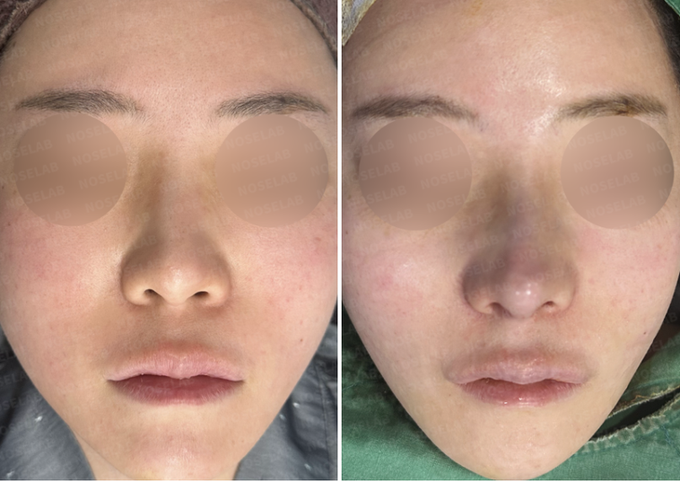
Frontal View
Improved nasal alignment
Balanced nostril shape

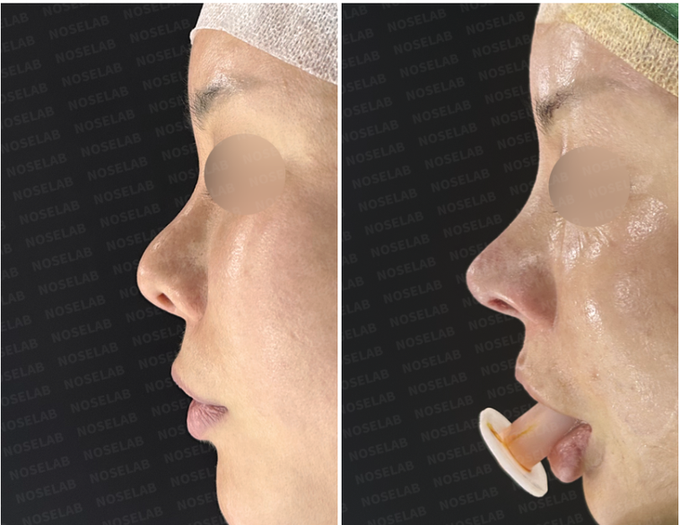
Lateral View
Lowered nasal tip
Smoother nasal profile

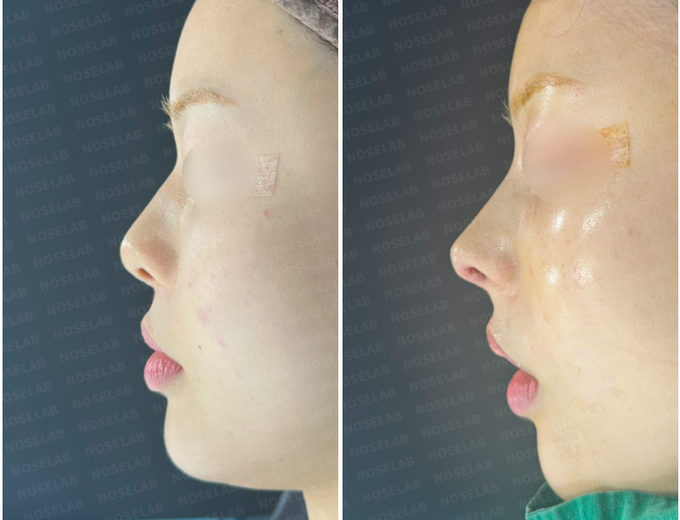
Side View
Reduced bulbosity
Improved contour balance

Nostrils View
Improved nostril symmetry
Refined alar rim contour

👨⚕️ Surgeon’s Commentary
Nostril asymmetry after alar reduction is a structurally complex problem that cannot be corrected by simple scar revision alone.
In this case, structural repositioning was prioritized over direct scar excision to avoid worsening the scar and deformity.
Rib cartilage reconstruction provided the necessary support to stabilize the nasal tip and improve symmetry.
Correction of internal structural imbalance allowed for natural improvement in nostril shape and overall nasal harmony.
Closed Rhinoplasty Korea enables precise internal correction while minimizing additional external scarring.
Long-term success depends on correcting structural imbalance rather than focusing solely on surface appearance.
📩 International Consultation
✅ FAQ
Q1. Can nostril asymmetry after alar reduction be corrected?
Yes, but structural correction is usually required rather than simple scar revision.
Q2. Why is scar revision not recommended in some cases?
It may worsen scarring and asymmetry.
Q3. Why is rib cartilage used in revision cases?
It provides stable structural support when native cartilage is insufficient.

Read the author’s background and the original case context. About these articles
Source updated .