Case at a glance
- Concerns & goals
- Surgical plan
- Graft & material details
- Photo timing
These details are excerpts from the original article and captions. Follow a detail to read it in context.
This case demonstrates Closed Rhinoplasty Korea for nostril stenosis reconstruction after multiple prior surgeries. Rib cartilage reconstruction and local flap technique restored nasal airway function, improved symmetry, and achieved long-term structural stability.
Author: Dr. Cha-Young Kang, Director, NoseLab Clinic
✅ Case Background
This patient presented with severe nostril stenosis and nasal obstruction following multiple previous procedures, including nostril reduction and philtrum shortening.
Nostril stenosis is a complex condition caused by excessive tissue removal, scar contracture, and structural collapse of the nasal base.
In this Closed Rhinoplasty Korea case, the goal was to reconstruct the narrowed nostril, restore airway function, and correct structural imbalance while maintaining a natural appearance.
Key concerns included:
Nostril stenosis (collapsed nasal opening)
Severe nostril asymmetry
Internal scar tissue obstruction
Nasal valve collapse
Columella deviation
Bulbous and pinched nasal tip
Functional breathing difficulty
This case required structural reconstruction and functional correction rather than simple aesthetic revision.
If you are experiencing breathing difficulty or nostril collapse after previous surgery, a detailed structural evaluation is essential.
📩 International Consultation

✅ Surgical Approach – Nostril Stenosis Reconstruction Using Closed Rhinoplasty Korea
Nostril stenosis occurs when scar contracture and structural damage narrow the nasal airway.
In many revision cases, both the internal nasal valve and external nostril structure are compromised, requiring comprehensive reconstruction.
Closed Rhinoplasty Korea allows precise internal correction, reconstruction of cartilage support, and expansion of the nasal airway without external scarring.

✅ Structural Problems Identified
Severe nostril stenosis
Scar contracture and internal obstruction
Nasal valve collapse
Nostril asymmetry
Columella deviation
Weak or damaged alar cartilage
Functional airway compromise
✅ Surgical Plan
1. Septal and Structural Reconstruction
Rib cartilage reconstruction of septum and columella
Restoration of structural support
2. Nostril Expansion (Flap Technique)
Rotation flap to expand collapsed nostril
Restoration of nasal opening

3. Scar Tissue Removal
Removal of internal contracture tissue
Improvement of airway space
4. Alar Cartilage Reconstruction
Reinforcement of nasal base
Improvement of symmetry
5. Nasal Valve Repair
Correction of internal airway collapse
Functional breathing improvement
6. Nasolabial Angle Adjustment
Restoration of natural profile
✅ Surgical Results
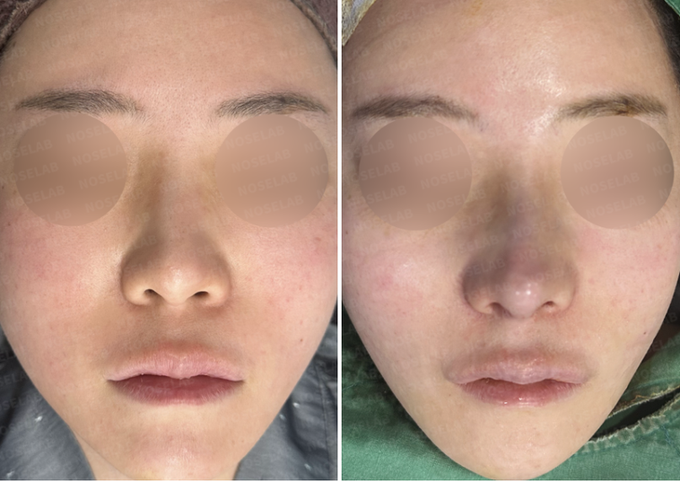
Frontal View
Improved nostril symmetry
Balanced nasal structure

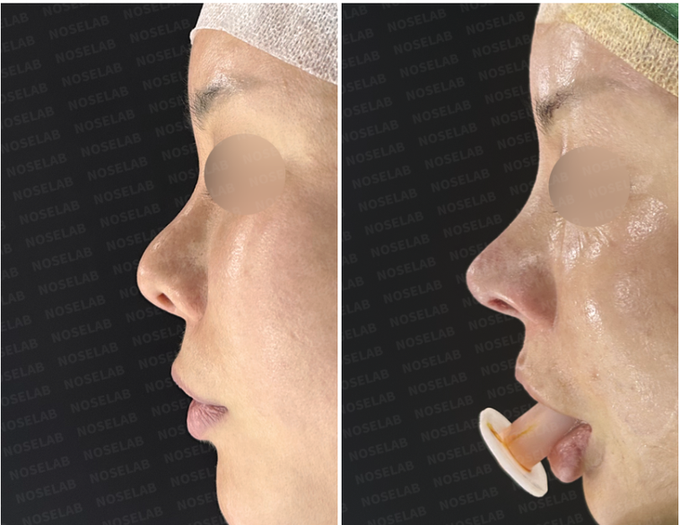
Lateral View
Improved tip projection
Balanced nasolabial angle

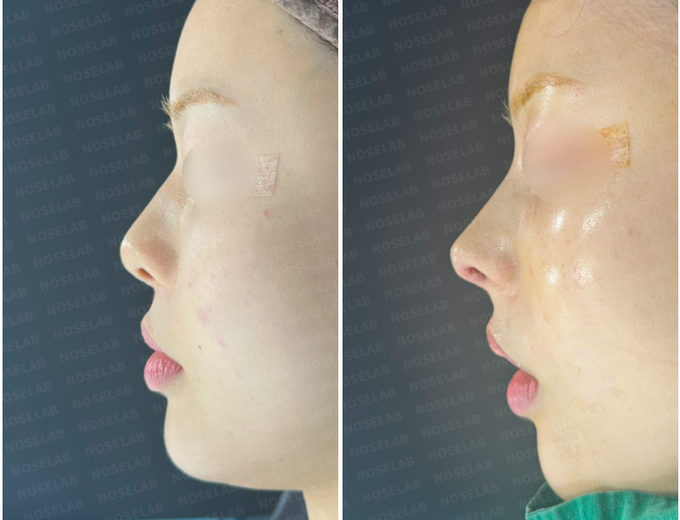
Oblique View
Harmonized contour
Reduced pinching

Nasal Base View
Expanded nostril opening
Improved airway

✅ Functional Outcome
Improved nasal airflow
Reduced obstruction
Stabilized nasal valve function
✅ Surgeon’s Commentary

Nostril stenosis is one of the most challenging complications in revision rhinoplasty.
Excessive tissue removal and scar contracture can significantly narrow the nasal airway, leading to both functional and aesthetic problems.
In this case, structural reconstruction with rib cartilage was essential to restore stability, while the rotation flap technique allowed expansion of the collapsed nostril.
Direct scar removal alone is insufficient; proper structural support must be restored to prevent recurrence.
Closed Rhinoplasty Korea enables precise reconstruction while minimizing additional trauma and preserving soft tissue integrity.
Long-term success depends on balancing airway function with structural stability.
✅ FAQ
Q1. What causes nostril stenosis after rhinoplasty?
It is caused by excessive tissue removal and scar contracture.
Q2. Can nostril stenosis be reversed?
Yes, through structural reconstruction and flap techniques.
Q3. Why is rib cartilage used?
It provides strong support to prevent recurrence.

Read the author’s background and the original case context. About these articles
Source updated .