Case at a glance
- Concerns & goals
- Surgical plan
- Graft & material details
- Photo timing
These details are excerpts from the original article and captions. Follow a detail to read it in context.
This case demonstrates closed rhinoplasty Korea for correcting nostril asymmetry and severe nasal obstruction following previous surgeries. Structural reconstruction using rib cartilage and septal correction restored nasal symmetry, improved airflow, and achieved a natural, balanced nasal appearance with long-term stability.
✅ Author / Published / Updated
Dr. Cha-Young Kang
NoseLab Clinic
Published: 2025
Last Updated: 2026
This patient presented for revision rhinoplasty with persistent nostril asymmetry and severe nasal obstruction despite multiple prior surgeries.
In this closed rhinoplasty Korea case, the primary goal was not only to correct the external asymmetry but also to restore nasal airway function through structural reconstruction.
The patient had undergone:
Implant-free rhinoplasty using septal and ear cartilage
Nostril lowering surgery using ear cartilage
Despite these procedures, the patient continued to experience:
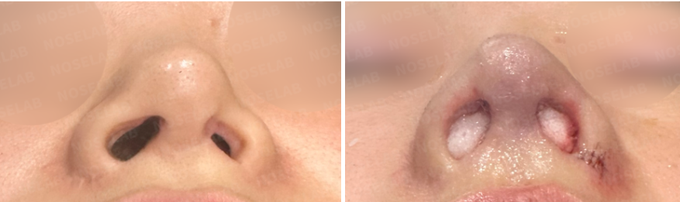
Nostril asymmetry, especially visible from the basal view
Nasal tip deviation
Short nasal appearance
Bulbous nasal tip
Chronic nasal obstruction and congestion
This case required comprehensive structural correction rather than isolated aesthetic adjustment.
If you are experiencing similar asymmetry or breathing issues after previous surgery, a detailed structural evaluation is essential.
📩 International Consultation

✅ Surgical Background – Closed Rhinoplasty Korea
Closed rhinoplasty Korea enables precise internal structural correction without external incisions.
In revision cases involving nostril asymmetry and airway obstruction, preserving soft tissue and rebuilding structural support are critical.
This approach allows simultaneous correction of both functional and aesthetic problems.
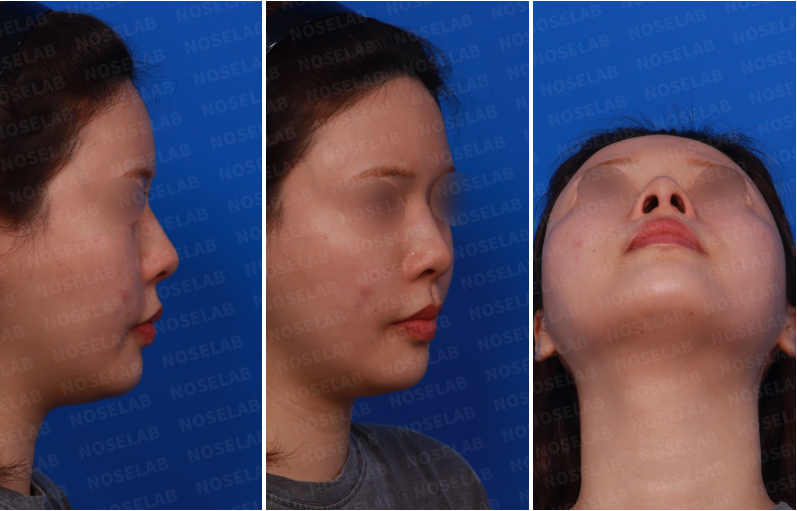
✅ Structural Problems Identified
Preoperative analysis revealed:
Asymmetry of nostril shape and position
Nasal tip deviation from the midline
Short nasal length with insufficient projection
Weak structural support of the nasal tip
Septal deviation contributing to airway obstruction
Chronic inflammation affecting nasal function
These findings indicated the need for structural reconstruction and functional correction.
✅ Surgical Plan
1. Septal Reconstruction with Rib Cartilage
Autologous rib cartilage was used to reconstruct the septum, correct deviation, and restore structural stability.
2. Nasal Tip Realignment
The nasal tip was repositioned to the midline and structurally reinforced to maintain symmetry.
3. Nostril Symmetry Correction
Alar structure was adjusted to balance nostril height, width, and shape while preserving nasal airway function.
4. Nasal Length and Profile Adjustment
The nose was lengthened and the nasolabial angle adjusted to create a natural profile.
5. Functional Airway Correction
Septal correction and treatment of rhinitis improved airflow and resolved obstruction.
6. Implant-Free Structural Approach
Rib cartilage was used exclusively to avoid implant-related complications and ensure long-term stability.
✅ Surgical Results
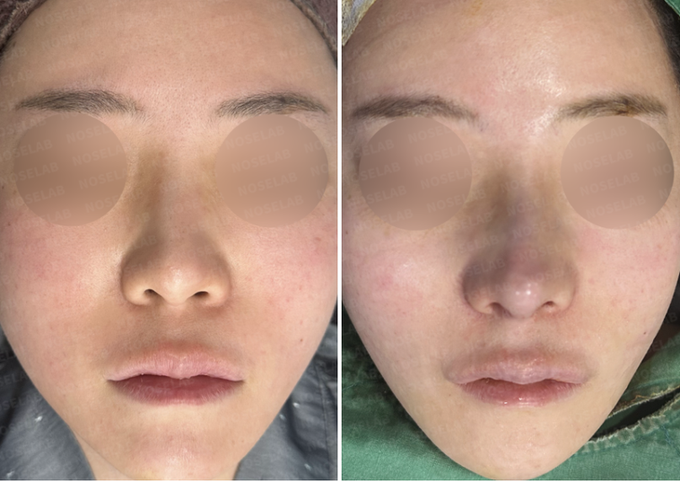
Frontal View
Nostril asymmetry corrected
Nasal tip centered
Balanced nasal structure

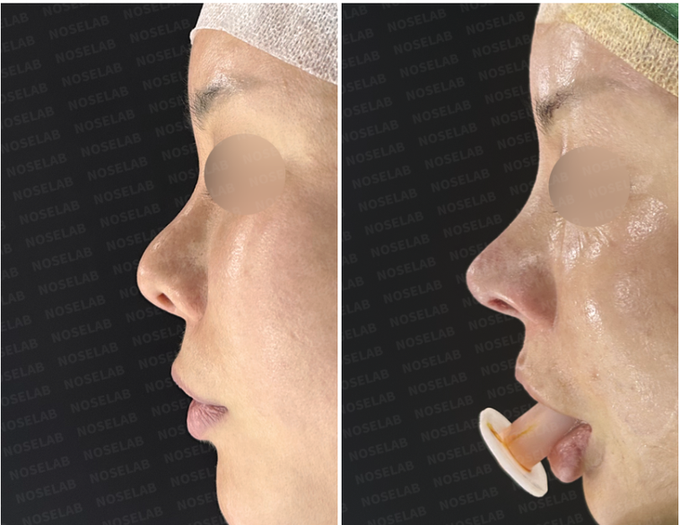
Lateral View
Improved nasal length
Natural dorsal line
Harmonized profile

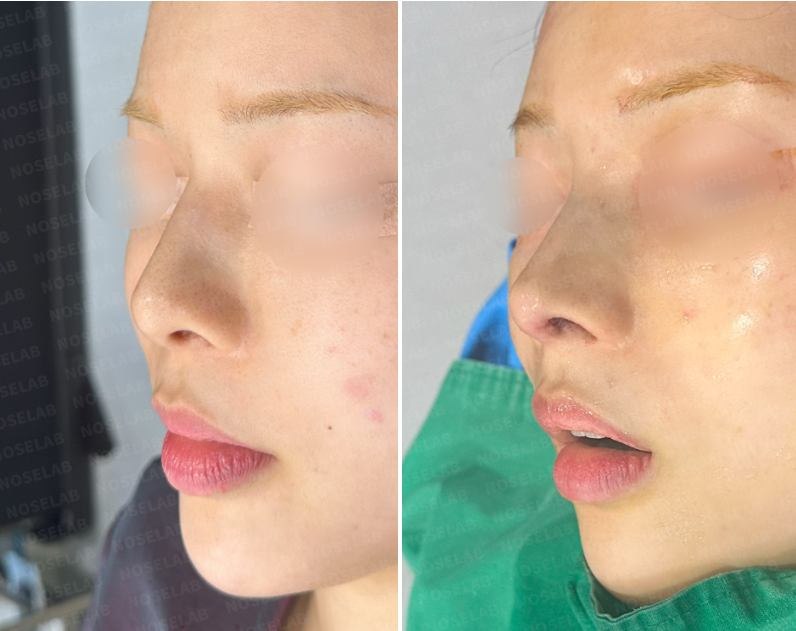
Oblique View
Smooth nasal contour
Improved structural alignment
Functional Outcome
Nasal obstruction resolved
Improved airflow
Reduced chronic congestion

✅ Surgeon’s Commentary
Nostril asymmetry is often not just a surface issue but a reflection of underlying structural imbalance.
In revision rhinoplasty, especially after multiple prior surgeries, rebuilding the nasal framework is essential for achieving stable results.
Rib cartilage provides strong structural support, allowing precise correction of asymmetry while maintaining long-term stability.
Functional improvement is equally important, as nasal obstruction significantly affects quality of life.
Closed rhinoplasty Korea enables comprehensive correction while preserving soft tissue integrity, which is critical in revision cases.
If you are considering revision rhinoplasty for asymmetry or breathing problems, a structural approach is essential.
📩 International Consultation
✅ FAQ
Q1. Why does nostril asymmetry occur after rhinoplasty?
It is often due to structural imbalance or improper healing affecting the alar and tip support.
Q2. Can nostril asymmetry be fully corrected?
Improvement is possible through structural reconstruction, but results depend on tissue condition and prior surgeries.
Q3. Why is rib cartilage used in revision cases?
Rib cartilage provides strong and stable support, which is essential when previous structures are weakened.

Read the author’s background and the original case context. About these articles
Source updated .