Closed Rhinoplasty Korea for Columella Retraction Correction and Contracted Nose Reconstruction
- Dr. Chayoung Kang
- 2024년 10월 27일
- 3분 분량
최종 수정일: 4월 9일
This case demonstrates closed rhinoplasty Korea for correcting columella retraction in a severely contracted nose. Structural reconstruction using rib cartilage and septal rebuilding restored nasal support, improved airway function, and achieved long-term stability.
✅ Author / Published / Updated
Dr. Cha-Young Kang , NoseLab ClinicPublished: 2024Last Updated: 2026This patient presented with a severely contracted nose following previous surgeries and removal of inflamed nasal tissue.
The loss of septal support resulted in significant columella retraction, nasal shortening, and functional airway compromise.
In this closed rhinoplasty Korea case, the goal was not only to improve nasal shape but to rebuild the structural framework and restore nasal function.
Key concerns included:
Severe columella retraction
Contracted and shortened nose
Loss of septal support
Nostril asymmetry
Drooping alar base
Functional breathing difficulty
Preoperative preparation included multiple sessions of stem cell therapy to improve tissue condition before reconstruction.
This case required full structural reconstruction rather than simple aesthetic correction.
If you are experiencing similar conditions, a structural evaluation is essential.
📩 International Consultation

✅ Surgical Background – Closed Rhinoplasty Korea
Closed rhinoplasty Korea allows complete structural reconstruction without external incision.
In contracted nose cases, the primary issue is structural collapse due to septal damage.
Without rebuilding the septum and tip support, columella retraction will recur.
This approach enables precise reconstruction while preserving soft tissue.

✅ Structural Problems Identified
Preoperative findings included:
Severe loss of septal cartilage (approximately 70% damaged)
Columella not visible on lateral view
Flattened nasal profile with insufficient projection
Wide nasal bridge and asymmetry
Nostril deformity due to structural collapse
Functional airway compromise
These conditions required full septal and tip reconstruction.
✅ Surgical Plan
1. Removal of Residual Foreign Material
Complete removal of remaining filler and silicone to eliminate inflammation risk.
2. Rib Cartilage Harvesting
Autologous rib cartilage was harvested to provide sufficient structural material.
3. Septal Reconstruction
Rebuilding the septum using rib cartilage to restore central support.
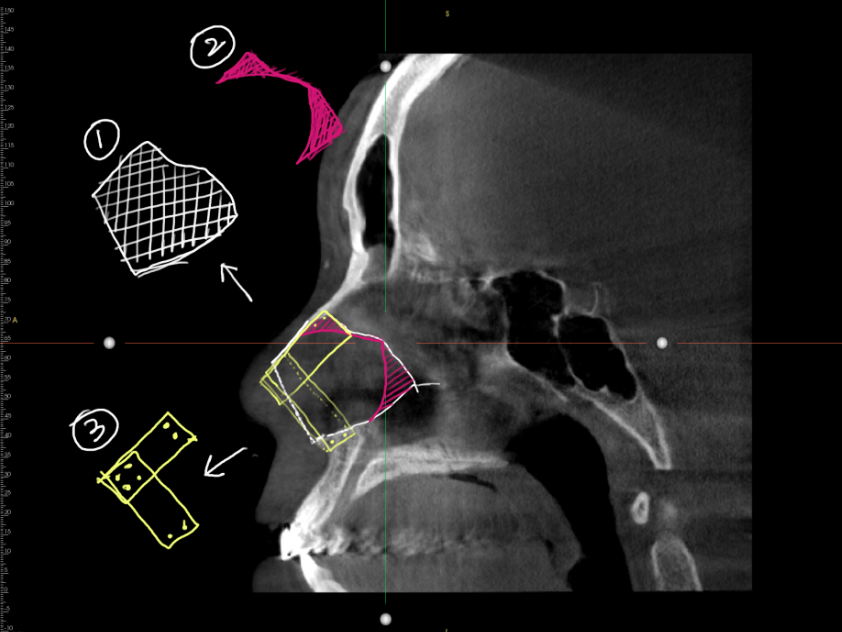
4. Septal Extension Graft
Establishing stable tip support and correcting nasal length.
5. Columella and Nostril Reconstruction
Reconstruction of columella and nostril rims using cartilage and soft tissue grafts.
6. Dermal and Skin Grafting
Use of retroauricular dermis to reinforce soft tissue and improve contour.
✅ Surgical Results

Oblique View
Natural nasal contour
Improved structural balance

Frontal View
Improved symmetry
Stabilized nasal structure
Balanced nasal width

Functional Outcome
Improved nasal airflow
Reduced obstruction
Stable internal nasal structure
✅ Surgeon’s Commentary
Columella retraction is not simply a cosmetic issue.
It is a structural problem caused by loss of septal support.
Without proper septal reconstruction, the condition will recur even after correction.
In this case, rib cartilage was essential to rebuild the nasal framework and provide long-term stability.
Soft tissue reinforcement using dermal grafting was also necessary due to severe tissue deficiency.
Closed rhinoplasty Korea allows precise reconstruction while minimizing additional tissue damage.
If you are considering contracted nose reconstruction, structural rebuilding is the most critical factor.
📩 International Consultation
✅ FAQ
Q1. Why does columella retraction occur?
It occurs due to loss of septal support or excessive previous surgery.
Q2. Can contracted nose be fully corrected?
Yes, but it requires full structural reconstruction rather than simple cosmetic adjustment.
Q3. Why is rib cartilage necessary in these cases?
It provides strong support required to rebuild the nasal framework.
🎥 YouTube Reference
✅ Mandatory Disclosure
This case is for educational purposes and represents a clinical example.
Results may vary depending on individual anatomy and surgical history.
All procedures were performed by a qualified specialist.

Messenger(WhatsApp) : +82 1057360302
Home page : www.noselab.co.kr
Instagram : noselab_global
Email : noselab@naver.com


댓글