Case at a glance
- Previous treatment
- Surgical plan
- Graft & material details
- Photo timing
These details are excerpts from the original article and captions. Follow a detail to read it in context.
This case reviews contracted nose reconstruction rhinoplasty in a patient with a 22-year history of multiple nasal surgeries, contracted nasal structure, crooked nasal axis, pinched alar base, nostril asymmetry, overly high radix, indented nasal tip, elongated nose appearance, columellar deviation, scar tissue from previous alar extension, nasal obstruction, and functional discomfort. Surgery focused on autologous rib cartilage reconstruction, ear cartilage reuse, dermal grafting, nasal tip realignment, alar support reconstruction, dorsal contour refinement, septoplasty, inferior turbinate reduction, and closed rhinoplasty structural correction.
Author: Dr. Cha-Young Kang
Clinic: NoseLab Clinic
Published: 2025
Last Updated: 2026
Introduction
Hello, this is Dr. Cha-Young Kang of NoseLab Clinic.
This case involves contracted nose reconstruction rhinoplasty in a patient who had undergone multiple rhinoplasty procedures over 22 years.
The patient presented with a contracted nasal structure, visible deviation, nostril asymmetry, pinched alar base, indented nasal tip, and scar tissue from previous surgery. Functional symptoms, including nasal obstruction and dryness, were also considered during planning.
The surgery was performed using a closed rhinoplasty / endonasal approach. The goal was to rebuild nasal support, improve the crooked nasal axis, correct nostril asymmetry, soften the indented nasal tip, reinforce the alar base, and address functional airway concerns.
Surgical History and Deformity Overview
The patient had a long history of previous nasal surgeries. Because multiple materials and grafts had been used over time, the surgical plan needed to account for scar tissue, remaining cartilage, implant history, and tissue flexibility.
Patient’s Surgical History
The surgical history included:
22 years ago: L-shaped silicone implant
21 years ago: Revision with silicone implant and ear cartilage
10 years ago: Rib cartilage, silicone implant, and alar extension graft
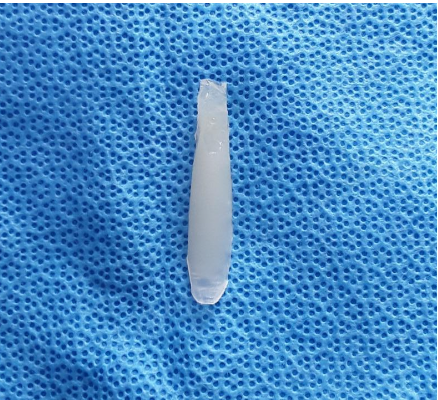
The previous silicone implant was removed during revision surgery. The remaining nasal framework and scar tissue were carefully evaluated before reconstruction.
Preoperative Evaluation
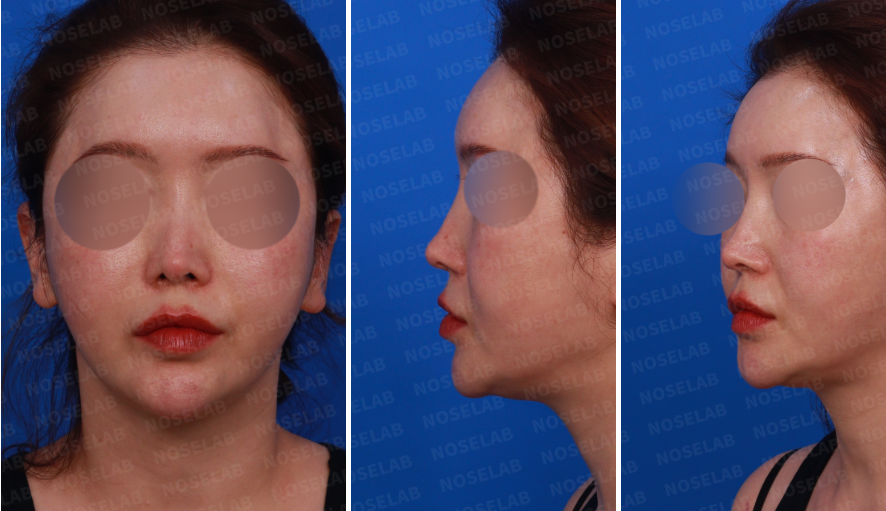
Preoperative design consultation photos were reviewed from the frontal, side, oblique, and nasal base views.
Frontal View
The frontal view showed a deviated nasal axis, pinched alar base, and nostril asymmetry.
The lower nasal structure appeared uneven, and the nasal width required controlled refinement rather than excessive narrowing.
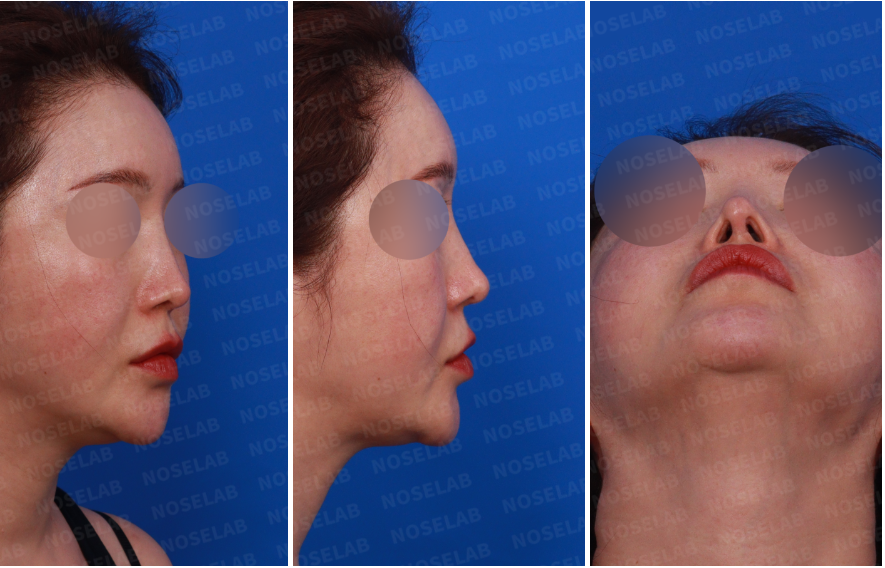
Side View
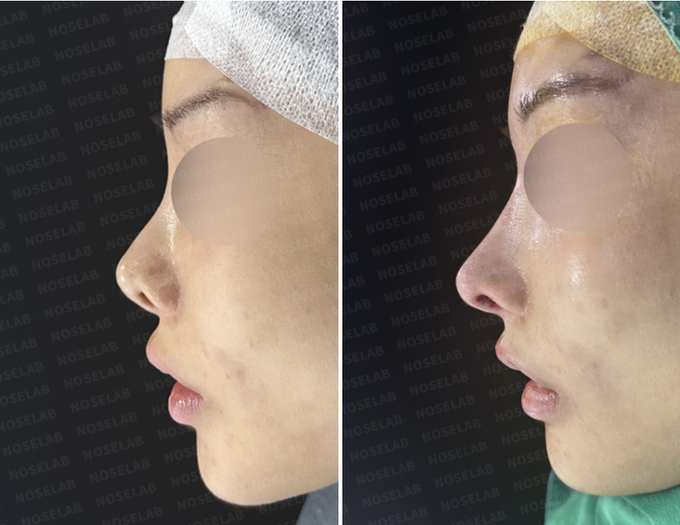
The side view showed an overly high radix, indented nasal tip, elongated nose appearance, and mild upper lip protrusion impression.
The relationship between the radix, nasal tip, columella, and upper lip was evaluated together.
Nasal Base View
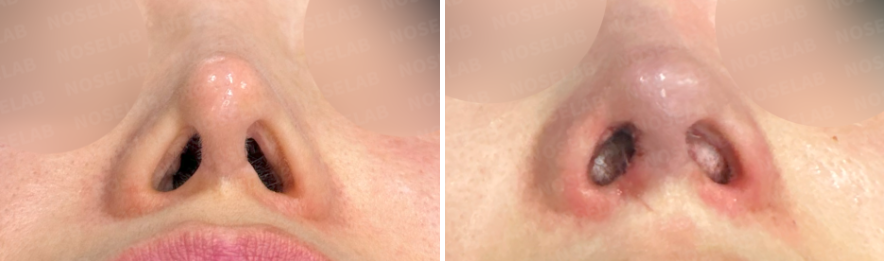
The nasal base view showed rightward columellar deviation, scarring from prior alar extension, and uneven nostril shape.
Because the nostril asymmetry was related to both scar tissue and structural imbalance, correction required framework reconstruction and soft tissue planning together.
Surgical Goals
The patient wanted correction of the contracted and deviated nasal structure while maintaining a soft and understated appearance.
Main Goals
The main goals included:
Improve contracted nasal structure
Straighten the deviated nasal bridge and axis
Correct nostril asymmetry
Soften the pinched alar base
Improve the indented nasal tip
Create a softer nasal definition
Improve breathing and dryness-related discomfort
Maintain a balanced nasal appearance rather than an overly sharp result
The surgical plan was designed according to the patient’s previous surgical history, scar tissue, cartilage condition, and functional symptoms.
Contracted Nose Reconstruction Surgical Plan
The surgical plan included structural restoration, volume support, soft tissue reinforcement, and functional correction.
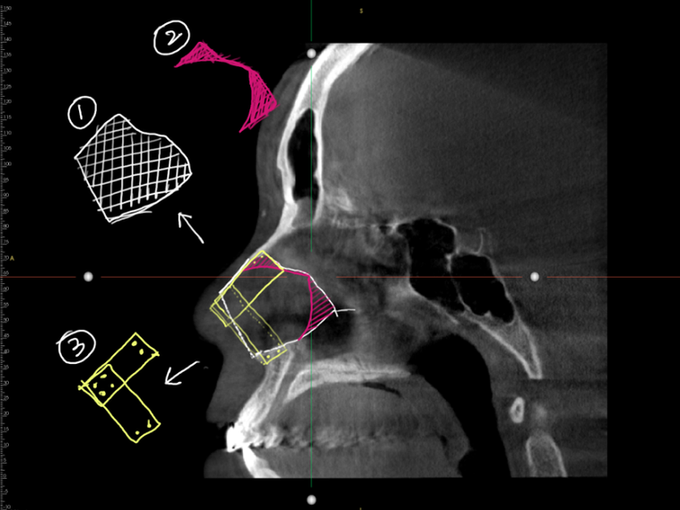
Structural Restoration with Rib Cartilage
Autologous rib cartilage was used to realign and support the nasal tip.
This was important because the patient had a contracted nasal structure and weakened lower nasal support after multiple previous surgeries.
Ear Cartilage Reuse for Alar Support
Available ear cartilage was reused for alar support where appropriate.
This helped reinforce the alar base and improve the pinched appearance.
Pinched Alar Base Correction
The pinched alar base was reshaped and supported to improve lower nasal balance.
Because the alar base had been affected by scar tissue and previous surgery, correction was performed carefully within the limits of tissue flexibility.
Dermal Grafting for Indentation
Dermal grafting was used to fill areas of indentation and improve soft tissue coverage.
This helped soften the nasal tip contour and reduce visible irregularity.
Dorsal Contour Refinement
The nasal dorsum was refined to create a smoother bridge contour after evaluating the previous implant space and scar tissue.
The goal was to improve bridge-tip balance without creating excessive height.
Septoplasty and Inferior Turbinate Reduction
Septoplasty was performed to improve internal nasal support and address septal deviation.
Radiofrequency inferior turbinate reduction was performed to address turbinate-related obstruction.
Functional correction was included because the patient had nasal obstruction and dryness-related discomfort.
Results After Contracted Nose Reconstruction Rhinoplasty
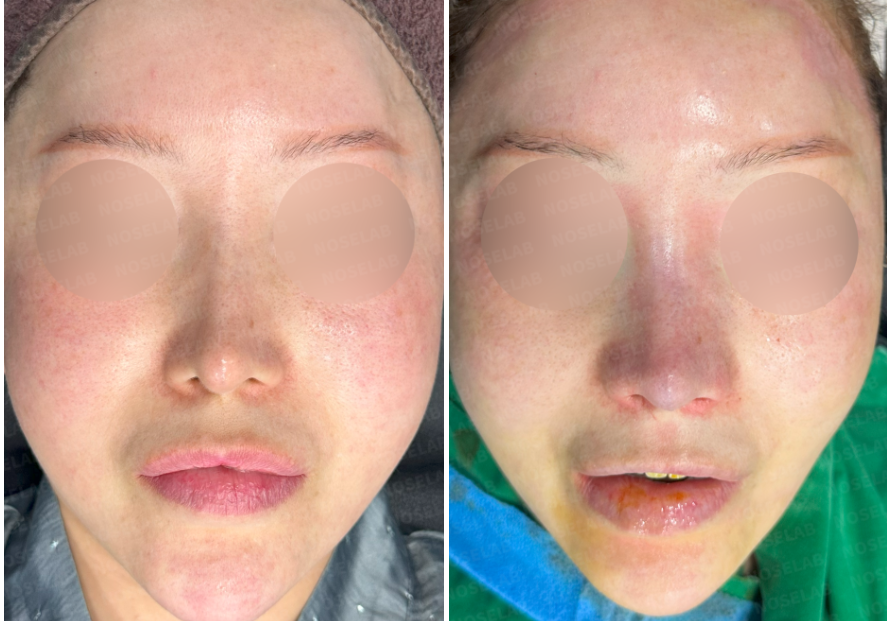
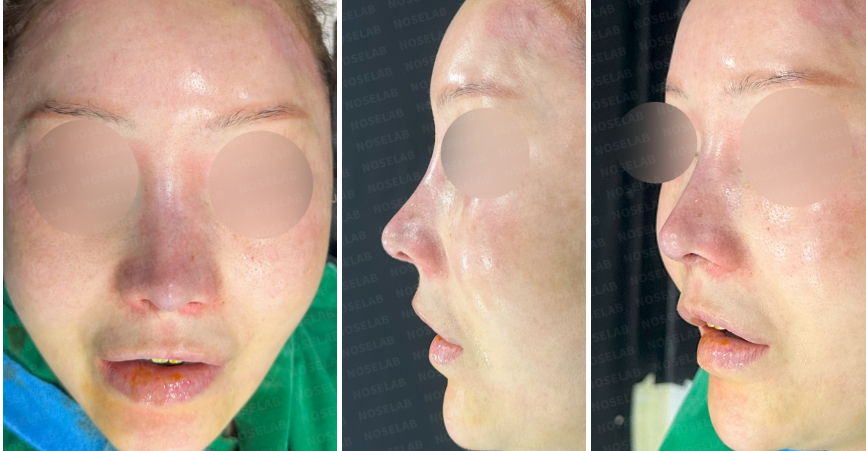
Frontal View
From the frontal view, the nasal bridge and nasal axis appeared more aligned after structural correction.
The nostrils appeared more balanced, and the nasal width was refined within a controlled range.
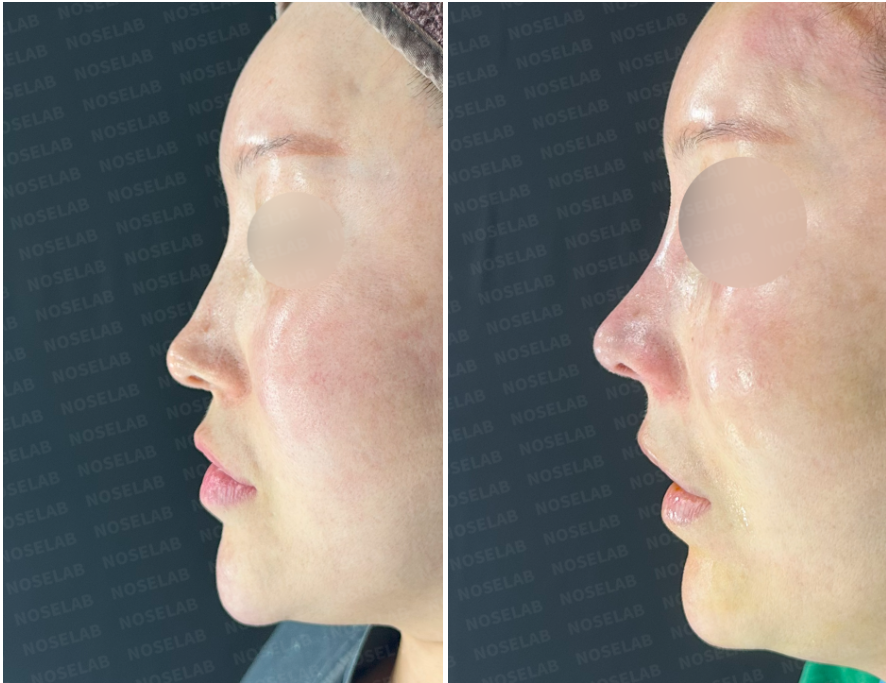
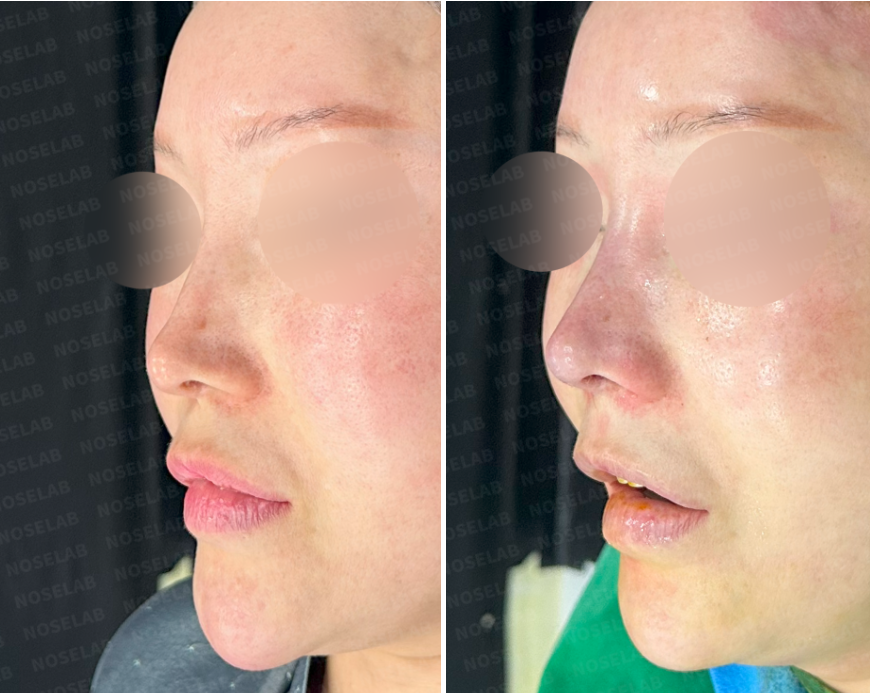
Side View
From the side view, the radix appeared softer, and the nasolabial angle appeared more balanced.
The dorsal contour appeared smoother after bridge refinement and soft tissue support.
Nasal Base View
From the nasal base view, nostril asymmetry improved after columella correction, alar support reconstruction, and scar tissue release.
The columella appeared straighter, and the lower nasal base appeared more balanced.
Functional Outcome
Nasal airflow and nighttime breathing discomfort were addressed through septoplasty, turbinate reduction, and structural support.
Because breathing changes depend on internal anatomy, swelling, mucosal condition, dryness, scar tissue, and healing response, functional improvement should be evaluated over time.
Structural Outcome
The contracted nasal structure, crooked nasal axis, pinched alar base, indented nasal tip, nostril asymmetry, and functional concerns were corrected together.
Because this case involved more than 20 years of previous surgical changes, the outcome was planned within the limits of scar tissue, skin condition, cartilage availability, implant history, and healing response.
Surgeon’s Commentary
This was a complex revision rhinoplasty case involving long-term scar tissue, multiple previous surgeries, structural imbalance, and functional symptoms.
In contracted nose reconstruction, the priority is not only to reshape the visible nose but also to rebuild support where the framework has weakened or shifted.
Autologous rib cartilage was used to reconstruct and support the lower nasal framework. Available ear cartilage was reused to reinforce the alar base when appropriate.
Dermal grafting was added to improve soft tissue coverage and fill indentations. This helped soften the nasal tip and reduce visible contour irregularity.
Nostril asymmetry and columellar deviation were corrected together because the nasal base was affected by scar tissue and prior alar extension.
Functional correction was also included. Septoplasty and inferior turbinate reduction were performed to address nasal obstruction and breathing-related discomfort.
This case shows that contracted nose reconstruction rhinoplasty may require combined correction of nasal support, nostril shape, alar base structure, soft tissue coverage, and functional airway concerns.
FAQ
What is contracted nose reconstruction rhinoplasty?
Contracted nose reconstruction rhinoplasty is revision surgery planned to correct a nose that has become shortened, tightened, distorted, or structurally restricted after previous surgery, inflammation, infection, or scar tissue formation.
Why is rib cartilage used in contracted nose reconstruction?
Rib cartilage may be used when strong structural support is needed to rebuild the nasal framework, support the tip, correct deviation, or reconstruct weakened areas after previous surgery.
Can nostril asymmetry improve after contracted nose reconstruction?
Nostril asymmetry can improve when columellar deviation, alar support, scar tissue, and nasal base alignment are corrected together. The degree of improvement depends on scar tissue and tissue flexibility.
Why is dermal grafting used in revision rhinoplasty?
Dermal grafting may be used to improve soft tissue coverage, fill areas of indentation, soften contour irregularity, or reduce visible sharpness in thin or scarred tissue.
Can breathing improve after contracted nose reconstruction?
Breathing may improve when septal deviation, turbinate enlargement, internal narrowing, or structural collapse is addressed. The degree of improvement depends on airway anatomy, mucosal condition, and healing.
International Consultation
For international patients, a photo-based consultation may help clarify whether contracted nose reconstruction rhinoplasty, rib cartilage reconstruction, nostril asymmetry correction, alar support reconstruction, dermal grafting, septoplasty, or inferior turbinate reduction may be needed.
Medical Disclosure
Surgical before-and-after photos show individual patient cases, and results may vary depending on each patient’s anatomy, scar tissue, skin condition, cartilage availability, implant history, previous surgical changes, airway condition, and healing process. Please consult your doctor for an individualized assessment.
After surgery, complications may occur, including infection, bleeding, allergic reaction, asymmetry, limited aesthetic or functional improvement, excessive scarring, skin problems, necrosis, graft visibility, cartilage warping, recurrent contracture, persistent nostril asymmetry, persistent nasal obstruction, contour irregularity, or other complications.
Read the author’s background and the original case context. About these articles