Case at a glance
- Concerns & goals
- Previous treatment
- Surgical plan
- Graft & material details
- Photo timing
These details are excerpts from the original article and captions. Follow a detail to read it in context.
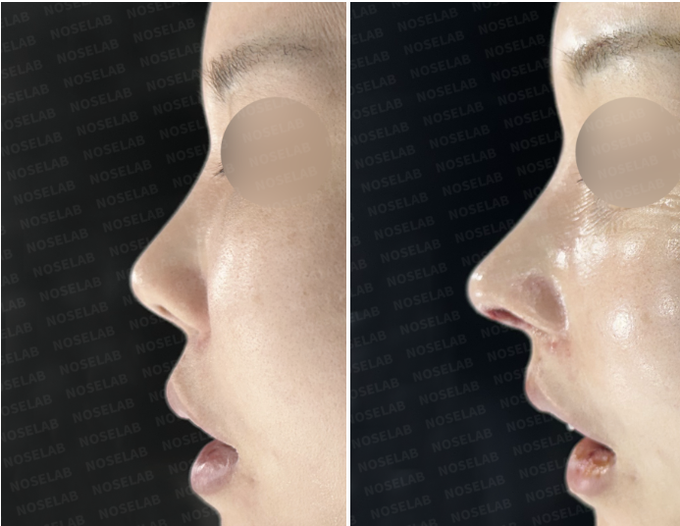
This case reviews nasal tip skin depression revision rhinoplasty in a patient who developed nasal tip skin depression, implant visibility, weakened nasal support, and functional nasal obstruction after multiple previous rhinoplasty procedures and inflammatory complications. Surgery focused on damaged skin management, dermal grafting, cartilage grafting, rib cartilage septal reconstruction, implant replacement, and functional airway correction.
Author: Dr. Cha-Young Kang
Clinic: NoseLab Clinic
Published: 2026
Last Updated: 2026
Introduction
Hello, this is Dr. Cha-Young Kang of NoseLab Clinic.
This case involves nasal tip skin depression revision rhinoplasty in a patient who had undergone several previous nasal surgeries and later developed depression of the nasal tip skin, implant visibility along the nasal bridge, weakened nasal support, and nasal obstruction.
The surgery was performed using a closed rhinoplasty / endonasal approach. The goal was to manage the damaged nasal tip skin, restore soft tissue thickness, reconstruct weakened nasal support with autologous rib cartilage, replace the visible implant, and address functional breathing problems.
Patient Background and Surgical History
The patient had a long and complex history of previous rhinoplasty procedures. The nasal tissue had already been affected by repeated surgeries, inflammation, implant removal, dermal grafting, and cartilage grafting.
Previous Surgical History
The surgical history included:
Approximately 10 years ago: Rhinoplasty using silicone implant and artificial dermis at another medical institution
Previous septal surgery
Postoperative inflammation with nasal tip swelling and drainage of pus
Later revision surgery with removal of previous implant and dermal tissue reinforcement
Approximately 5 years ago: Revision rhinoplasty using ear cartilage and silicone implant
Recent revision surgery using dermal tissue only
After these repeated procedures, the patient developed depression of the nasal tip skin and visible implant show-through along the nasal bridge.
Because the case involved previous inflammation and multiple operations, the surgical plan needed to address both the damaged soft tissue and weakened nasal framework.
Patient Concerns Before Revision Surgery
The patient visited NoseLab Clinic with concerns related to both appearance and function.
Main Concerns
The main concerns included:
Depression of the nasal tip skin after previous surgery
Visible implant show-through along the nasal bridge
Weak nasal support after repeated revision surgeries
Need for structural stabilization
Desire for a clearer but natural nasal line
Nasal obstruction and functional discomfort
This was not a simple contour correction case. The main challenge was to restore damaged tissue coverage, rebuild structural support, and reduce visible implant-related irregularity.

Preoperative Design and Structural Assessment
Preoperative design consultation photos were reviewed from the frontal, side, oblique, and nostril views.
Frontal View
The frontal view showed irregularity around the nasal tip and visible contour issues related to the previous implant and soft tissue changes.
Side View
The side view showed an unstable nasal bridge line and nasal tip depression. The relationship between the bridge and tip appeared weakened due to previous surgeries and tissue damage.
Oblique View
The oblique view showed implant visibility and surface irregularity along the nasal bridge and tip area.
Nostril View
The nostril view showed asymmetry and lower nasal imbalance related to weakened support and previous surgical changes.
These findings confirmed that the revision surgery needed to include skin depression repair, soft tissue reinforcement, nasal tip reconstruction, septal support reconstruction, and implant replacement.

Surgical Plan for Nasal Tip Skin Depression Revision Rhinoplasty
The surgical plan focused on restoring soft tissue coverage, reconstructing nasal support, and improving the nasal bridge and tip contour.
Damaged Nasal Tip Skin Management
The depressed portion of the nasal tip skin, which had been affected by previous tissue damage, was carefully managed. The compromised depressed area was refined and closed in a way that allowed better connection with surrounding healthier tissue.
This step was important because nasal tip skin depression after inflammation or tissue injury cannot be corrected by simple implant exchange alone.
Dermal Grafting for Soft Tissue Thickness
Dermal grafting was used to reinforce the soft tissue layer and improve thickness in the depressed area.
The goal was to provide additional tissue coverage and reduce the visible depression at the nasal tip.
Cartilage Grafting for Three-Dimensional Support
Cartilage grafting was added to support the depressed area structurally. This helped restore three-dimensional contour and provide internal support beneath the skin.
In this case, both dermal grafting and cartilage grafting were needed because the problem involved both soft tissue deficiency and structural weakness.
Nasal Tip Reconstruction with Autologous Rib Cartilage
Autologous rib cartilage was used to reconstruct the nasal tip. Rib cartilage was selected because stronger structural support was needed after multiple previous surgeries.
The nasal tip was reconstructed to create clearer support while maintaining a rounded and balanced contour.
Septal Reconstruction with Rib Cartilage
The septal structure had been weakened by repeated surgery. Autologous rib cartilage was used to reinforce the septal framework and improve nasal tip support.
This step was important for maintaining the position of the nasal tip and reducing the risk of recurrent drooping or collapse.
Implant Replacement for Nasal Bridge Contour
The previous implant that caused visible show-through was removed. A new silicone implant was carved to match the patient’s nasal bone contour more closely.
The goal was to create a smoother nasal bridge line while reducing the visibility and edge-related irregularity of the implant.
Functional Airway Correction
Functional correction was also considered because the patient had nasal obstruction. The surgical plan addressed both the external nasal structure and internal breathing-related problems.
Surgical Results
Frontal View
From the frontal view, the depressed nasal tip skin improved after soft tissue and cartilage reinforcement. The implant visibility along the nasal bridge was reduced, and the nasal line appeared more balanced.

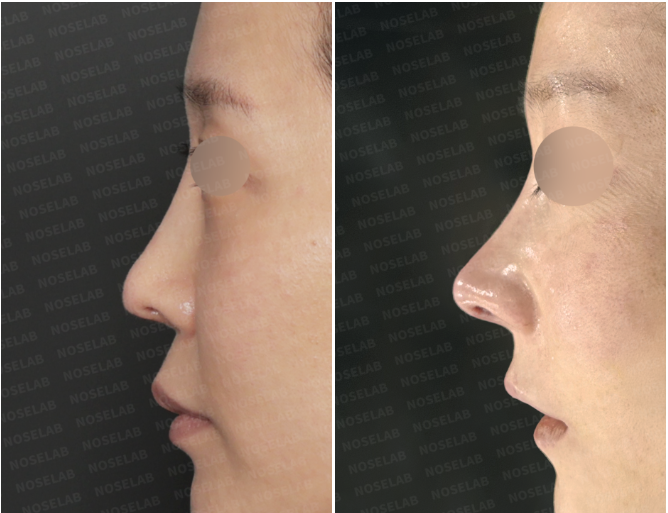
Side View
From the side view, the unstable bridge line improved after implant replacement and structural support. The nasal tip appeared better supported after rib cartilage reconstruction.
The nasolabial angle also appeared more organized after correction of the nasal tip position.
Oblique View
The oblique view showed improved transition between the nasal bridge and nasal tip. Surface irregularity and implant-related visibility were reduced after reconstruction.

Nostril View
From the nostril view, nostril asymmetry improved, and the nasal base appeared more balanced after tip support reconstruction.

Structural Outcome
The nasal tip was reinforced with dermal grafting, cartilage grafting, and rib cartilage support. The septal framework was also strengthened to improve long-term structural stability within the limits of the patient’s tissue condition.
Surgeon’s Commentary
Revision rhinoplasty after multiple previous surgeries and inflammation requires a reconstructive approach. In these cases, the nasal tissue may be thin, scarred, weakened, or partially damaged.
When nasal tip skin depression occurs after previous inflammation or tissue injury, the problem cannot be solved by simply changing the implant or lifting the tip. The damaged soft tissue itself must be carefully evaluated and reinforced.
In this case, dermal grafting and cartilage grafting were used together to improve both thickness and three-dimensional support in the depressed nasal tip area.
Autologous rib cartilage was also used for septal reconstruction and nasal tip support. This was important because the previous surgeries had weakened the internal framework of the nose.
The visible nasal bridge implant was removed and replaced with a newly carved implant adjusted to the patient’s nasal bone contour. In revision rhinoplasty, careful implant shaping is important because a poorly fitted implant can contribute to show-through, irregularity, or an unnatural contour.
This case shows that nasal tip skin depression revision rhinoplasty should be planned as a combined soft tissue, cartilage, septal, implant, and functional airway correction procedure.
FAQ
Why can nasal tip skin depression occur after revision rhinoplasty?
Nasal tip skin depression can occur when previous surgery, inflammation, infection, tissue thinning, or scar contracture damages the soft tissue. Repeated operations may also weaken the nasal framework and reduce tissue coverage.
Can implant visibility and nasal tip skin depression be corrected together?
Yes, they can be addressed together when the surgical plan includes implant management, soft tissue reinforcement, and structural reconstruction. The exact plan depends on skin thickness, scar tissue, implant position, and previous surgical history.
Why is dermal grafting used in nasal tip skin depression?
Dermal grafting may be used to increase soft tissue thickness and improve coverage in areas where the skin has become thin or depressed. It can help reduce visible depression and provide a more stable soft tissue layer.
Why is rib cartilage used in complex revision rhinoplasty?
Rib cartilage may be used when stronger support is needed after multiple previous surgeries. It can help reconstruct the septum, support the nasal tip, and stabilize the nasal framework.
Can breathing problems be treated during revision rhinoplasty?
Breathing problems can be addressed when septal deviation, valve weakness, turbinate hypertrophy, or structural narrowing is present. Functional correction should be planned based on internal nasal findings.
International Consultation
For international patients, a photo-based consultation may help clarify whether nasal tip skin depression revision rhinoplasty, implant visibility correction, rib cartilage reconstruction, dermal grafting, or functional airway correction may be needed.
Medical Disclosure
Surgical before-and-after photos show individual patient cases, and results may vary depending on each patient’s anatomy, tissue condition, surgical history, and healing process. Please consult your doctor for an individualized assessment.
After surgery, complications may occur, including infection, bleeding, allergic reaction, asymmetry, limited aesthetic or functional improvement, excessive scarring, skin problems, necrosis, or other complications.
Read the author’s background and the original case context. About these articles