Case at a glance
- Surgical plan
- Graft & material details
- Photo timing
These details are excerpts from the original article and captions. Follow a detail to read it in context.
Hello, I am Dr. Chayoung Kang, Director of Noselab Rhinoplasty Clinic. Today we will introduce the case of a patient that underwent several procedures such as nose filler, threads, thread-embedding therapy, and others in the span of 10 years, and underwent fillers and thread removal as well as a rhinoplasty surgery.
In today’s case we will discuss the importance of a safe rhinoplasty method to remove a foreign body.
Preoperative Design Consultation

Wide glabella
Broad nose bridge
Blunt nose tip and an overall plain appearance
Noticeable nostril asymmetry

High starting point of the nose bridge
Retracted columella
Protruding mouth appearance amplified by the long philtrum
Unnatural nose shape due to the retracted columella

More prominent wide nose
Definite bluntness of the nasal tip

Prominent asymmetry
Surgical Techniques for Safe Foreign Body Removal
The surgery proceeded through the closed rhinoplasty approch, as follows:
a) Foreign body removal
Removed several kinds of fillers (calcium fillers, hyaluronic fillers, etc.) from the nose bridge and tip.
Thread removal (non-dissolving threads, embedded threads, etc.)
Photography and classification of the foreign substances removed from the nose bridge, tip and columella.

Foreign substance removed from the nose bridge and tip (above) / foreign substance removed from the columella (below)
b) Nose tip reconstruction
Intricate nose tip reconstruction using autologous costal cartilage.
Raising the nose tip while maintaining its roundness.
c) Septal extension graft
Improvement of the retracted columella and strenghtening of the nasal tip support.
Adjusting the width of the nose tip.
d) Outer osteotomy of the nasal bone
Improvement of the wide and plain nasal bone
e) Adjustment of the glabella starting point
Lowering the starting point avoiding the nose from looking long.
f) Nasolabial angle correction
Reducing the appearance of the mouth protrusion.
Before and After Surgery Photos

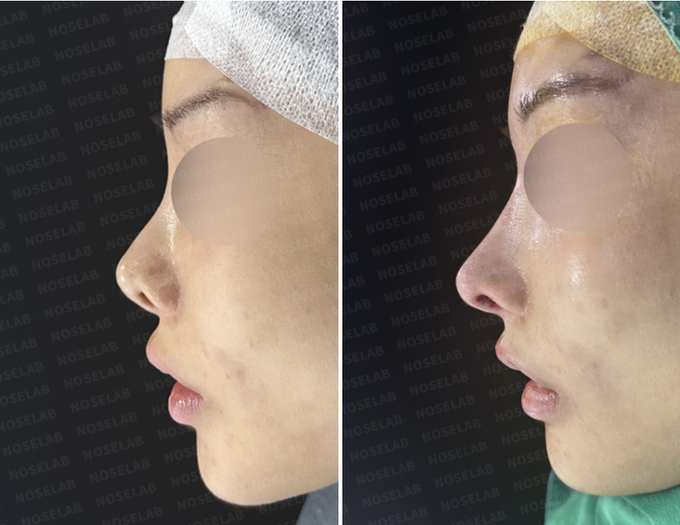
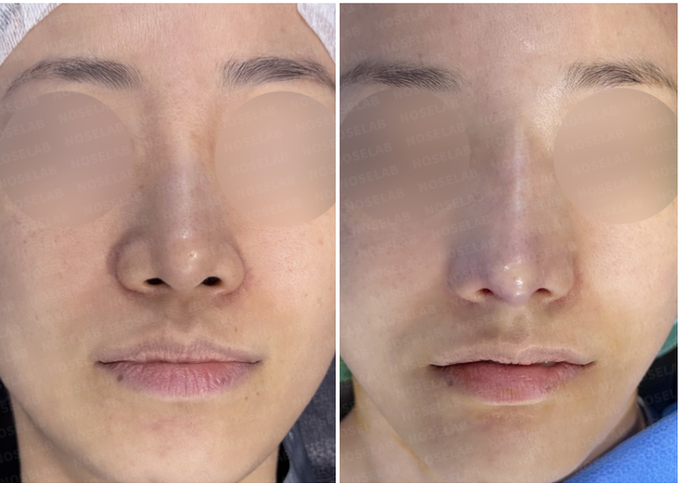
Both the wide glabella and the broad nose bridge were adjusted.
The blunt nose tip appearance was improved in a naturally-looking manner.
Improvemed nostril symmetry.

The nose bridge starting point was lowered to appear natural.
Corrected the retracted columella by adjusting it.
By improving the appearance of the protrusing mouth the overall balance of the face was also enhanced.

The wide contour of the nose became slimmer.
The overall balance improved as the nose became more three-dimensional.

The asymmetry improved significantly, and the nostrils acquired a more balanced appearance.
Retracted columella correction achieved overall harmony.
After Surgery Table Photos


Overview – Filler and Thread Removal
This case is a good example of the problems that may occur after receiving multiple filler and thread treatments over a long period of time, and the process of resolving them. Removing foreign substances is not a simple process, and requires the meticulous skills of a specialist.
In particular, in this surgery, various types of fillers and threads were safely removed, and reconstructive surgery was performed using autologous costal cartilage at the same time. This is not simply to remove foreign substances, but to secure structural stability of the nose while also achieving cosmetically satisfactory results.
Correcting a wide nose bridge through outer nasal bone osteotomy and improving a retracted columella through septal extension graft surgery were important parts for achieving the overall balance of the nose and harmony of the face.
Even though there is swelling immediately after surgery, you can see a much more natural and refined nose shape than before. As time passes and the swelling goes down, you will be able to see even more beautiful and harmonious results.
I hope this case can become an important lesson for those considering rhinoplasty. It may not be a big issue to get a simple filler injection once or twice to try before undergoing rhinoplasty. However, you should be very careful about getting fillers and threads too frequently, as it will not only be difficult to make the shape of your nose satisfactory, but it can also be a issue to future rhinoplasty.
Foreign bodies removal, such as filler or thread removal, is never a simple surgery. Because there is a risk of blood vessel or nerve damage, you must get surgery from an experienced specialist. Noselab Clinic provides safe and effective foreign body removal and rhinoplasty surgeries based on our extensive experience and the latest technology.
Noselab Rhinoplasty Clinic
Dr. Chayoung Kang.

Read the author’s background and the original case context. About these articles
Source updated .