Closed Rhinoplasty Korea for Revision Deviated Nose and Structural Reconstruction
- Dr. Chayoung Kang
- 2025년 2월 3일
- 5분 분량
최종 수정일: 4일 전
This case reviews deviated nose revision rhinoplasty in a patient with nasal deviation, implant translucency, unstable dorsal support, bulbous and asymmetrical nasal tip, drooping tip, nasolabial angle imbalance, and functional discomfort after previous rhinoplasty. Reconstruction focused on implant removal, rib cartilage support, septal extension, dorsal realignment, nasal tip refinement, and functional improvement.
Author: Dr. Cha-Young Kang
Clinic: NoseLab Clinic
Published: 2025
Last Updated: 2026
Introduction
Hello, this is Dr. Cha-Young Kang of NoseLab Clinic.
This case involves deviated nose revision rhinoplasty in a patient who developed nasal deviation, implant translucency, nasal tip asymmetry, and functional discomfort after previous rhinoplasty using a silicone implant and septal cartilage graft.
The surgery was performed using a closed rhinoplasty / endonasal approach with autologous rib cartilage reconstruction. The goal was to remove compromised materials, rebuild structural support, correct nasal deviation, improve tip balance, and adjust the nasolabial angle to create a more balanced nose-to-upper-lip relationship.
Case Background
The patient presented for revision rhinoplasty after a previous silicone implant and septal cartilage graft procedure.
Over time, the patient developed nasal deviation, implant-related instability, and facial imbalance related to a drooping nasal tip and unfavorable nasolabial angle. The patient also experienced functional discomfort, including mucus retention.
Key Concerns
The key concerns included:
Deviated nasal bridge
Implant translucency and instability
Bulbous and asymmetrical nasal tip
Pinched nasal tip on one side
Drooping nasal tip
Protruding mouth appearance related to nasolabial angle imbalance
Functional discomfort, including mucus retention
This case required removal of compromised materials and reconstruction of the nasal framework rather than simple cosmetic reshaping.
Preoperative Design and Structural Assessment
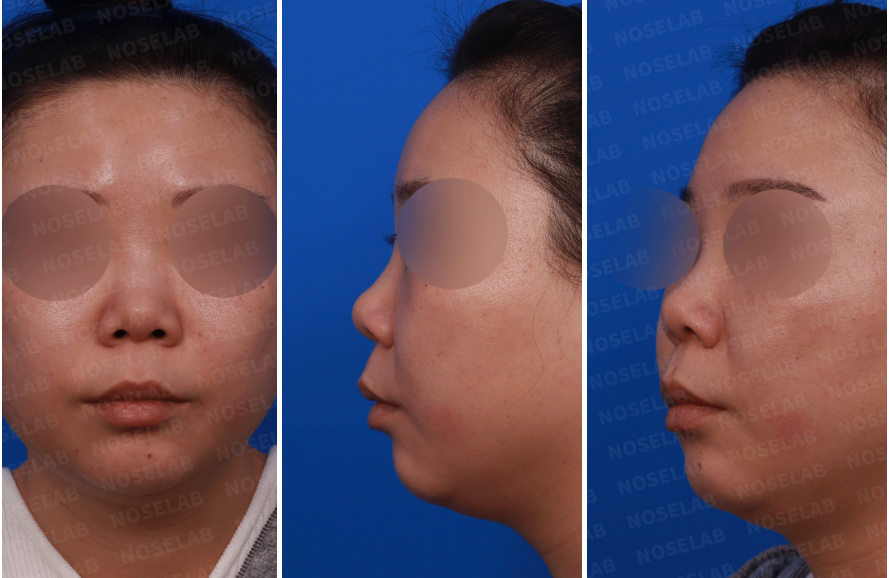
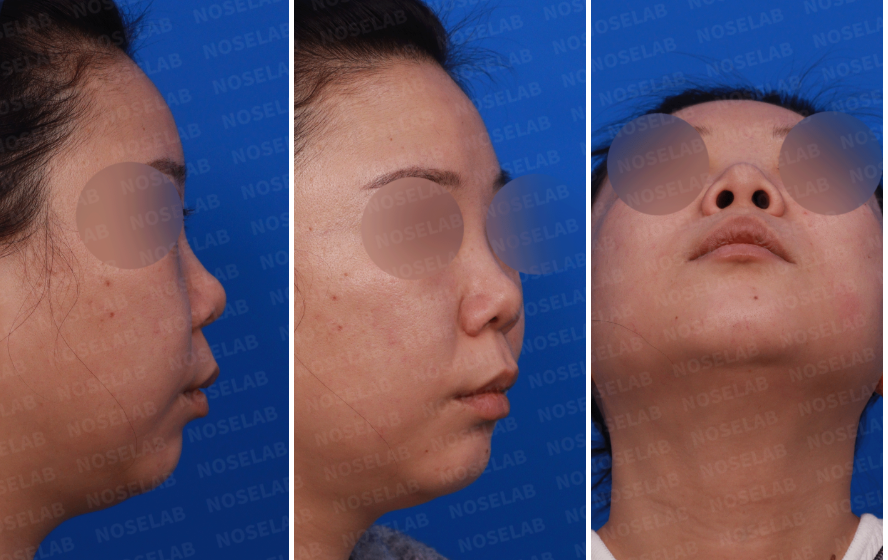
Preoperative design consultation photos were reviewed from the frontal, side, oblique, and nostril views.

Frontal View
The frontal view showed nasal deviation, asymmetry of the nasal tip, and imbalance of the dorsal line.
Side View
The side view showed a drooping nasal tip and an unfavorable nasolabial angle. This contributed to a stronger impression of upper lip protrusion when viewed in profile.
Oblique View
The oblique view showed contour irregularity and imbalance between the nasal bridge and tip.
Nostril View
The nostril view showed asymmetry and internal irregularity that were related to the patient’s functional discomfort.
These findings indicated that the surgery needed to address the bridge, septal support, nasal tip, nasolabial angle, and internal nasal condition together.

Surgical Background – Deviated Nose Revision Rhinoplasty
In revision rhinoplasty, nasal deviation is often related to unstable structural support, previous implant position, scar tissue, or cartilage imbalance. If the internal framework is weak, reshaping the surface alone may not create stable correction.
A closed rhinoplasty Korea approach was selected to allow internal reconstruction without adding an external columellar incision. The surgical plan focused on removing compromised materials, rebuilding support with rib cartilage, and correcting both structural and functional issues.
Structural Problems Identified
Preoperative analysis revealed several problems involving the nasal framework and soft tissue coverage.
Main Structural Findings
The main findings included:
Nasal deviation caused by unstable structural support
Implant translucency suggesting thin soft tissue coverage
Bulbous and asymmetrical nasal tip
Localized tip pinching due to uneven cartilage support
Drooping nasal tip
Nasolabial angle imbalance contributing to protruding mouth appearance
Functional discomfort due to internal irregularities
These findings confirmed the need for structural reconstruction rather than isolated contour correction.
Surgical Plan
Removal of Previous Implant and Compromised Tissue
Gore-Tex and compromised materials were removed to reduce instability and allow a clearer foundation for reconstruction.

Structural Reconstruction with Rib Cartilage
Autologous rib cartilage was used to rebuild the nasal framework. Rib cartilage provided support for the septum, nasal tip, and dorsal structure in a revision setting.
Septal Extension Graft
A septal extension graft was created to stabilize the nasal tip and help correct deviation. This step was important for improving tip position and support.
Dorsal Line Realignment
The nasal bridge was realigned to improve symmetry and create a more balanced dorsal line.
Nasal Tip Refinement
The nasal tip was reshaped and reinforced to reduce pinching and improve contour. Tip support was rebuilt to address asymmetry and drooping.
Nasolabial Angle Adjustment
The relationship between the nose and upper lip was adjusted by repositioning the nasal tip and improving structural support. This helped reduce the impression of upper lip protrusion without directly changing the lips.
Functional Correction
Internal irregularities contributing to mucus retention and discomfort were addressed during reconstruction. Functional improvement was considered together with structural correction.
Surgical Results
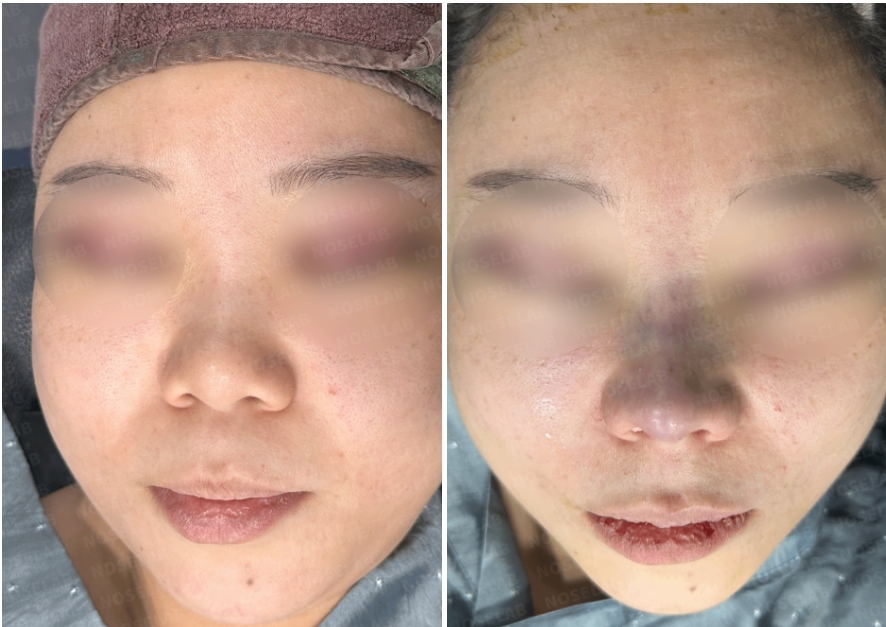
Frontal View
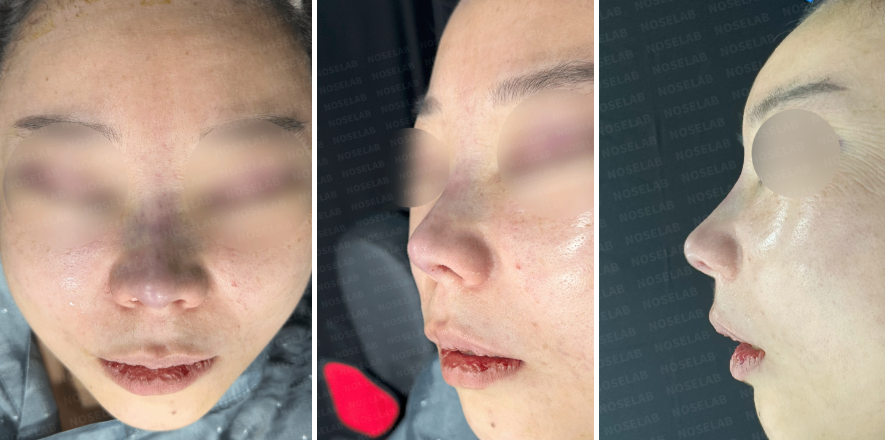
From the frontal view, nasal deviation improved, and the nasal tip appeared more balanced after structural reconstruction.

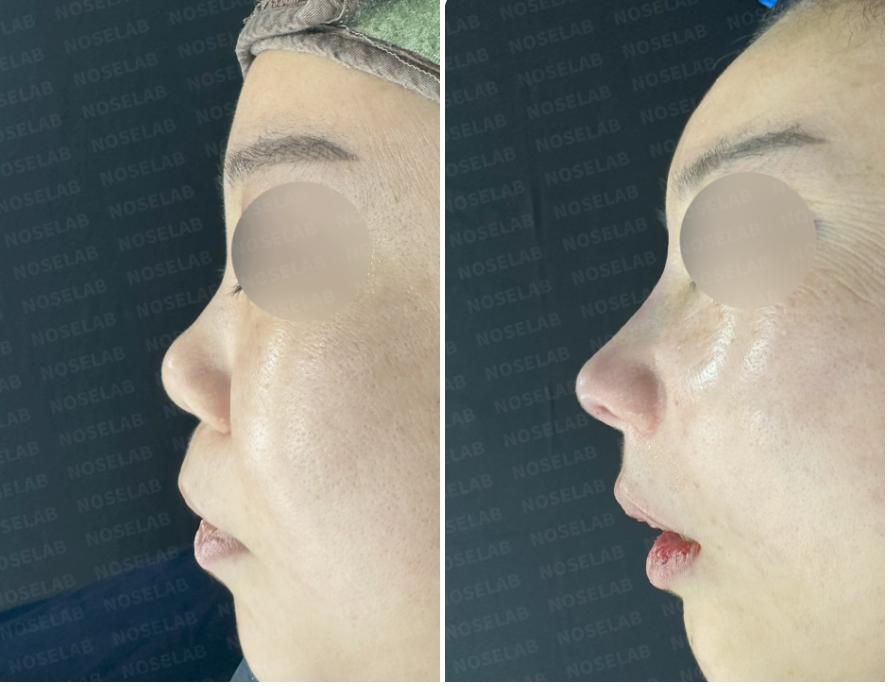
Side View
From the side view, the drooping nasal tip improved, and the nasolabial angle appeared more balanced. The profile showed a smoother relationship between the nose and upper lip.

Oblique View
The oblique view showed smoother nasal contour and improved facial balance after dorsal realignment and tip support reconstruction.

Nostril and Functional View
Internal nasal condition improved after removal of compromised material and structural correction. Functional discomfort related to internal irregularities was reduced.

Functional Outcome
The reconstructed nasal framework provided more stable internal support. The patient’s functional discomfort improved after correction of structural irregularities.
Surgeon’s Commentary
Revision rhinoplasty requires a structural approach when previous implants or cartilage grafts have compromised the nasal framework.
In this case, the problem was not limited to nasal deviation. Implant translucency, unstable support, bulbous and asymmetrical tip shape, drooping tip position, nasolabial angle imbalance, and functional discomfort were all part of the diagnosis.
Autologous rib cartilage was used because stronger support was needed to rebuild the framework. Septal extension helped stabilize the nasal tip and improve the relationship between the bridge, tip, and upper lip.
The nasolabial angle is important in facial balance. Adjusting this angle can reduce the impression of a protruding mouth, but it should not be described as directly correcting the mouth itself. The goal is to improve the nose-to-upper-lip relationship through nasal structural correction.
This case shows that deviated nose revision rhinoplasty should be planned as structural reconstruction with functional consideration, especially when previous implants, soft tissue thinning, and nasal imbalance are present.
FAQ
Q1. Why does nasal deviation occur after rhinoplasty?
Nasal deviation can occur when implant position, septal support, cartilage balance, or scar tissue changes after surgery. In revision cases, the internal framework must be evaluated before planning correction.
Q2. Why is rib cartilage used in deviated nose revision rhinoplasty?
Rib cartilage may be used when septal cartilage is insufficient or weakened by previous surgery. It can provide stronger support for septal reconstruction, dorsal alignment, and nasal tip stabilization.
Q3. Can rhinoplasty improve a protruding mouth appearance?
Rhinoplasty does not directly move the mouth. However, adjusting the nasolabial angle and nasal tip position can improve the visual relationship between the nose and upper lip, which may reduce the impression of mouth protrusion.
Q4. Why remove Gore-Tex or other implant materials in revision cases?
Implant materials may need to be removed when they are associated with translucency, instability, inflammation, or structural imbalance. Removal allows the surgeon to rebuild support on a cleaner foundation.
International Consultation
For international patients, a photo-based consultation may help clarify whether deviated nose revision rhinoplasty, implant removal, rib cartilage reconstruction, or functional correction may be needed.
WhatsApp: https://wa.me/821057360302
LINE: [LINE Link]

Home page : www.noselab.co.kr
Instagram : noselab_global
YouTube : Noselab
Email : noselab@naver.com


댓글