
Case at a glance
- Surgical plan
These details are excerpts from the original article and captions. Follow a detail to read it in context.
This case demonstrates silicone exposure rhinoplasty using a closed rhinoplasty Korea approach, focusing on implant removal, infection control, and structural reconstruction with long-term stability.
🔹 Patient Condition in Silicone Exposure Rhinoplasty
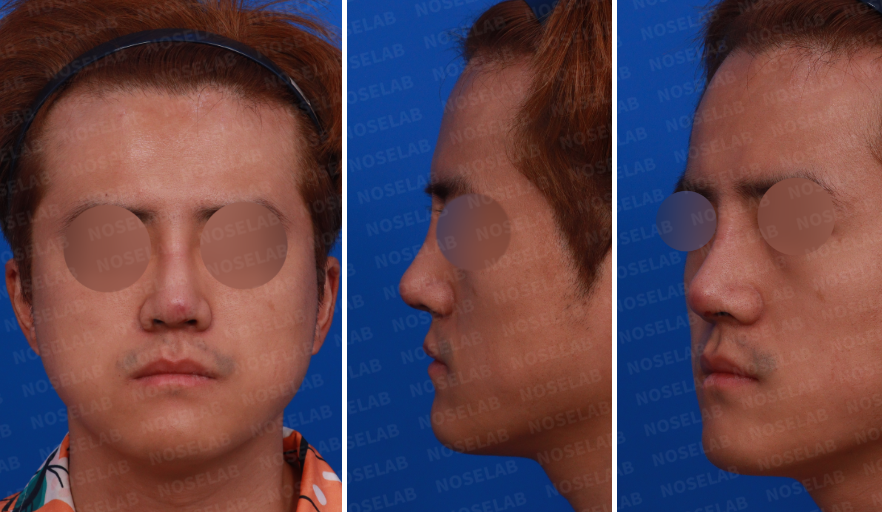
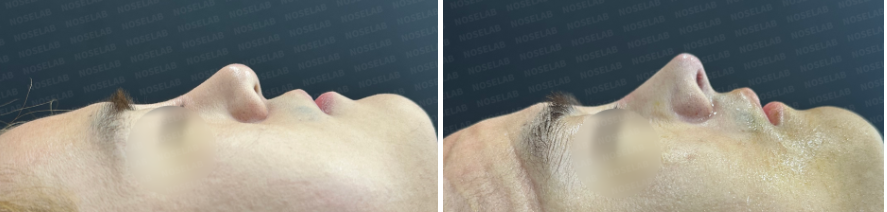
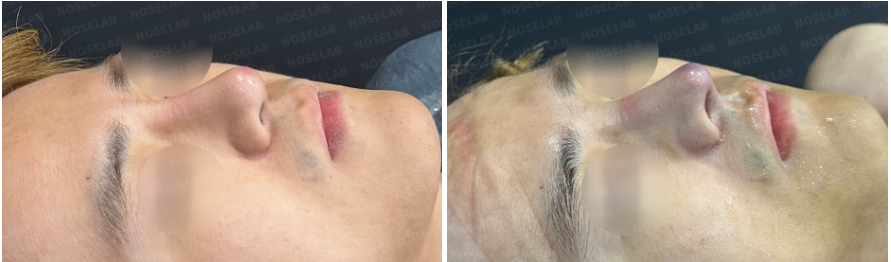
The patient presented with silicone implant exposure and nasal inflammation following rhinoplasty performed 12 years prior.
Over the past five months, progressive redness, swelling, and signs of infection developed.
Clinical findings included:
Thinning of nasal tip skin
Swelling of the nasal bridge
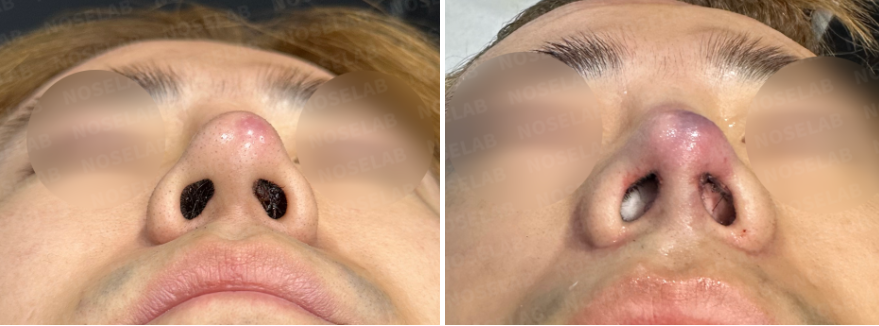
Nostril asymmetry
Bulbous nasal tip
Granulation tissue formation, especially in the left nostril
These findings indicated active inflammation and structural compromise requiring immediate intervention.
🔹 Surgical Approach Using Closed Rhinoplasty Korea
A closed rhinoplasty Korea approach was selected to perform complete internal reconstruction without external incisions.
The surgical plan included:
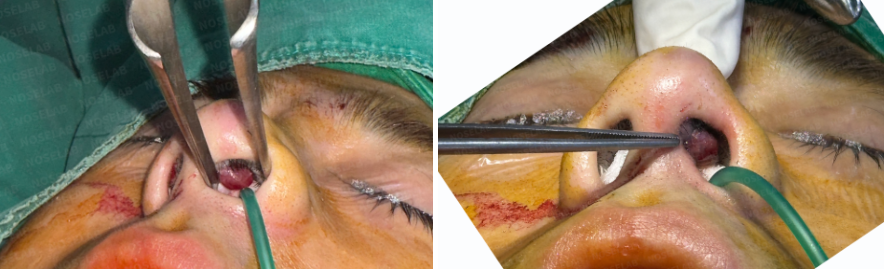
Complete removal of the silicone implant and surrounding capsule
Excision of infected granulation tissue
Septal extension graft using autologous rib cartilage
Alar cartilage reconstruction using rib cartilage
Thorough irrigation with antibiotic-infused saline
This approach allowed effective infection control while restoring structural stability and nasal function.
🔹 Pre-Surgical Structural Analysis
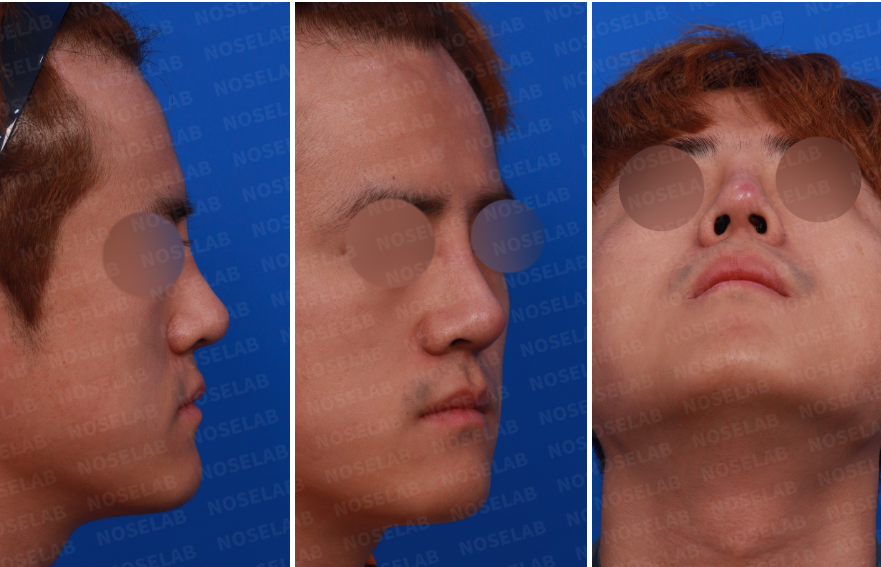
Preoperative assessment revealed:
High radix contributing to an unnatural nasal profile
Bulky nasal contour with inflammatory swelling
Asymmetry of nostrils
Localized infection and granulation tissue
These findings required both infection management and structural reconstruction.
🔹 Surgical Outcomes and Functional Improvement
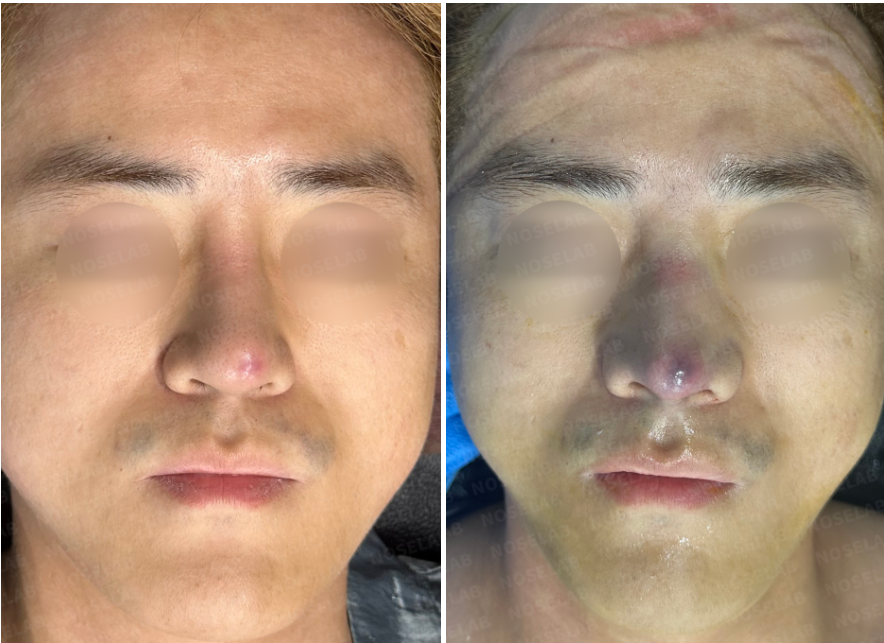
Following surgery:
The silicone implant and infected tissue were successfully removed
Nasal inflammation was controlled
Nasal tip was refined and stabilized
Radix height was lowered for a more natural profile
Nostril symmetry improved significantly
Healthy nasal lining and structure were restored
This case demonstrates the effectiveness of combining infection control with structural grafting in silicone exposure rhinoplasty.
🔹 Why Autologous Rib Cartilage is Essential
In silicone exposure rhinoplasty cases, autologous rib cartilage is essential for safe reconstruction.
It provides strong structural support and reduces the risk of recurrent infection or contracture.
Unlike artificial implants, rib cartilage integrates with the body and maintains long-term stability.
🔹 Surgeon’s Commentary
Silicone exposure is a serious complication that requires immediate and precise treatment.
At NoseLab Clinic, we focus on complete removal of foreign material and reconstruction using a closed rhinoplasty Korea approach.
Our goal is not only aesthetic improvement but also long-term functional stability.
🔹 FAQ
Q1.Why does silicone exposure occur after rhinoplasty?
Silicone exposure occurs due to long-term pressure, infection, or thinning of nasal skin over the implant.
Q2.Is immediate surgery necessary for silicone exposure?
Yes, early intervention is critical to prevent further tissue damage and infection.
Q3.Why is rib cartilage used instead of another implant?
Autologous rib cartilage provides stronger and safer structural support, especially in revision cases with infection.
🎥 YouTube Reference
If you’re curious about Dr. Cha-Young Kang’s closed rhinoplasty approach, click to watch the video.
Read the author’s background and the original case context. About these articles
Source updated .


