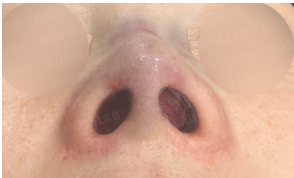
Case at a glance
Photo timing

These details are excerpts from the original article and captions. Follow a detail to read it in context.

Case Overview: Silicone Implant Calcification Correction


Hello, this is Dr. Cha-Young Kang from NOSELAB Clinic.


This revision rhinoplasty case involved a patient with a 30-year-old silicone implant that developed calcification, resulting in a dorsal hump and a crooked nose. A full silicone implant calcification correction was performed using autologous rib cartilage.


Key Symptoms and Diagnosis
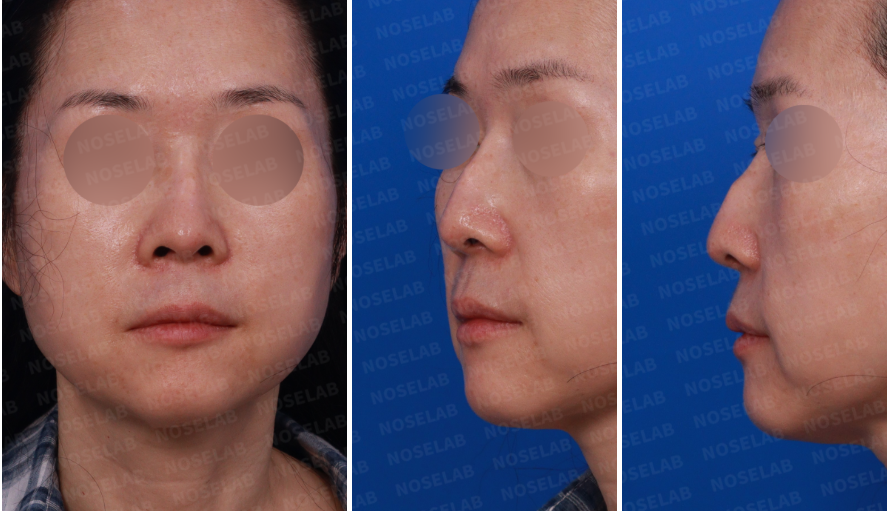
Preoperative photos before silicone implant calcification correction surgery – frontal, left oblique, and side views showing dorsal hump and nasal deviation caused by 30-year-old silicone capsule.
Preoperative design consultation photos: Frontal view, left oblique side view, and left side view.
Original image ↗

Chronic Functional and Aesthetic Issues

- Chronic rhinitis and breathing discomfort

- Dorsal hump due to calcified capsule

- Crooked nose and nasal tip drooping


Capsule Calcification Findings

- Severe hardening of the silicone capsule

- Deformation and asymmetry from long-term implant pressure


Surgical Plan for Silicone Implant Calcification Correction
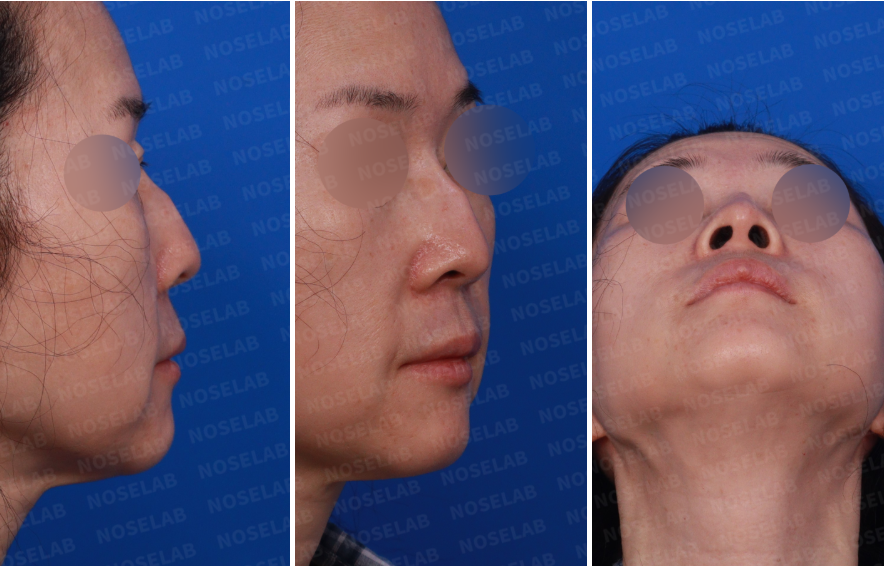
Preoperative rhinoplasty photos showing right side view, right oblique view, and nostril base view – highlighting dorsal hump and nostril asymmetry due to long-term silicone implant calcification.
Preoperative design consultation photos: Right side view, right oblique side view, and nostril view.
Original image ↗

Capsule Removal and Structural Reset

- Complete removal of the L-shaped silicone implant

- Precise dissection of calcified capsule

- Safe preservation of surrounding tissue


Rib Cartilage Reconstruction

- Full nasal framework rebuilt with autologous rib cartilage

- Correction of nasal deviation and tip refinement

- Prevention of future capsule-related complications


Surgical Outcome and Long-Term Stability

Preoperative Video / Immediate Postoperative Video
rontal view comparison of patient before and immediately after rhinoplasty — correction of dorsal hump and nasal deviation using autologous rib cartilage.
Before Surgery (Left) / Immediately After Surgery (Right)
Original image ↗

Functional Improvement

- Breathing restored

- Chronic rhinitis symptoms reduced

Side profile comparison before and after rhinoplasty – correction of dorsal hump and nasal drooping using autologous rib cartilage.
Before Surgery (Left) / Immediately After Surgery (Right)
Original image ↗

Aesthetic Results

- Smooth dorsal line

- Balanced nasal tip and facial harmony
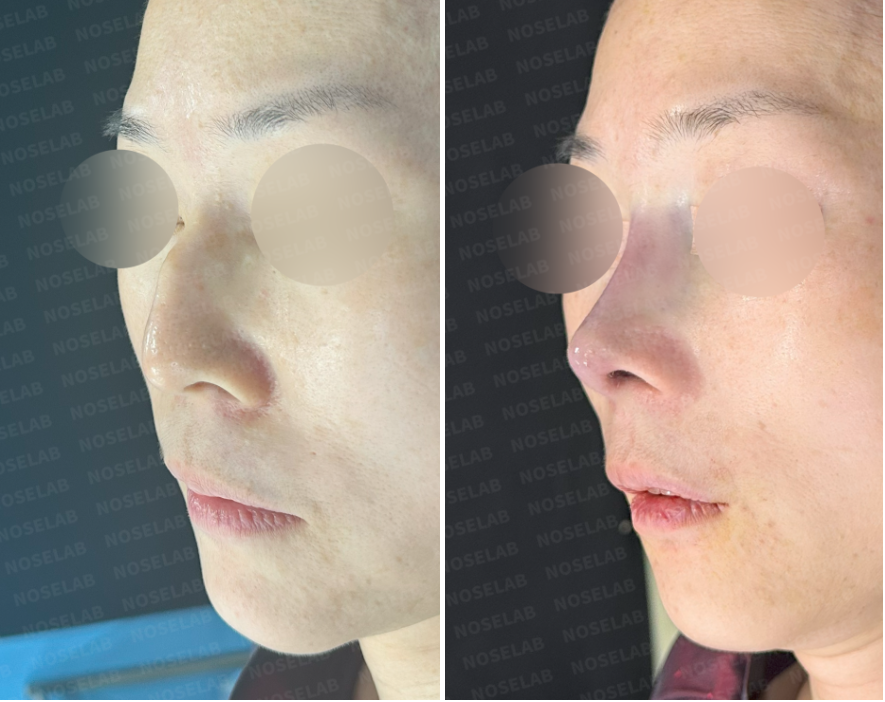
Oblique side profile comparison before and after rhinoplasty – correction of calcified silicone implant and nasal deviation using autologous rib cartilage.
Before Surgery (Left) / Immediately After Surgery (Right)
Original image ↗
Nostril view comparison before and after rhinoplasty – improved nasal symmetry and internal structure following removal of calcified silicone implant
Before Surgery (Left) / Immediately After Surgery (Right)
Original image ↗

Surgeon’s Note

Postoperative photos after rhinoplasty using rib cartilage: Frontal, side, and oblique side views showing corrected nasal contour and improved nasal projection.
Immediately after surgery: Frontal view, side view, and oblique side view photos.
Original image ↗

Postoperative nostril view showing symmetrical nasal base and improved columella alignment after rib cartilage rhinoplasty
Immediately after surgery: Nostril view photos.
Original image ↗


This silicone implant calcification correction case demonstrates how autologous cartilage ensures long-term structural stability and a natural appearance, especially when dealing with long-standing implant complications.


Rhinoplasty disclaimer outlining potential complications such as infection, bleeding, asymmetry, and allergic reactions after surgery
Case photograph 9
Original image ↗


Read the author’s background and the original case context. About these articles

Source updated .