Case at a glance
- Concerns & goals
- Surgical plan
- Graft & material details
- Photo timing
These details are excerpts from the original article and captions. Follow a detail to read it in context.
This case demonstrates Closed Rhinoplasty Korea for crooked nose correction combined with nasal bridge reconstruction. Structural realignment and functional surgery improved nasal symmetry, airflow, and long-term stability.
Author: Dr. Cha-Young Kang, Director, NoseLab Clinic
✅ Case Background
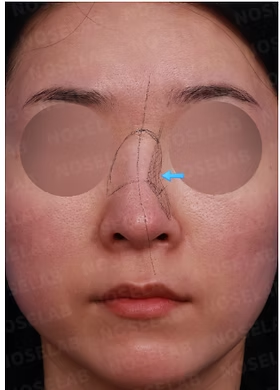
This patient presented with a crooked nose, sunken nasal bridge, and chronic nasal obstruction following previous rhinoplasty.
Crooked nose deformities are often associated with septal deviation and nasal bone asymmetry, which can affect both facial balance and breathing function.
In this Closed Rhinoplasty Korea case, the goal was to realign the nasal structure, elevate the depressed bridge, and improve airway function through structural reconstruction.
Key concerns included:
Crooked nasal alignment
Sunken nasal bridge
Nostril asymmetry
Septal deviation
Chronic rhinitis
Nasal obstruction
This case required both structural correction and functional improvement.
If you are experiencing nasal deviation or breathing difficulty, a detailed structural evaluation is essential.
📩 International Consultation
✅ Surgical Approach – Crooked Nose Correction Using Closed Rhinoplasty Korea
Crooked nose deformities are caused by asymmetry of the nasal bones and deviation of the septum.
Without correcting the internal structure, external straightening alone can lead to recurrence or imbalance.
Closed Rhinoplasty Korea allows precise realignment of both bone and cartilage structures while minimizing additional tissue trauma.
✅ Structural Problems Identified
Nasal bone asymmetry
Septal deviation
Sunken nasal bridge
Nostril asymmetry
Tip instability
Functional airway obstruction
✅ Surgical Plan
1. Septal Correction
Septoplasty to correct deviation
Restoration of airway
2. Structural Reconstruction
Septal extension graft using rib cartilage
Stabilization of nasal framework
3. Lateral Osteotomy
Realignment of nasal bones
Correction of crooked structure
4. Dorsal Augmentation
Elevation of sunken nasal bridge
Creation of smooth contour
5. Functional Surgery
Turbinate reduction
Improvement of rhinitis symptoms
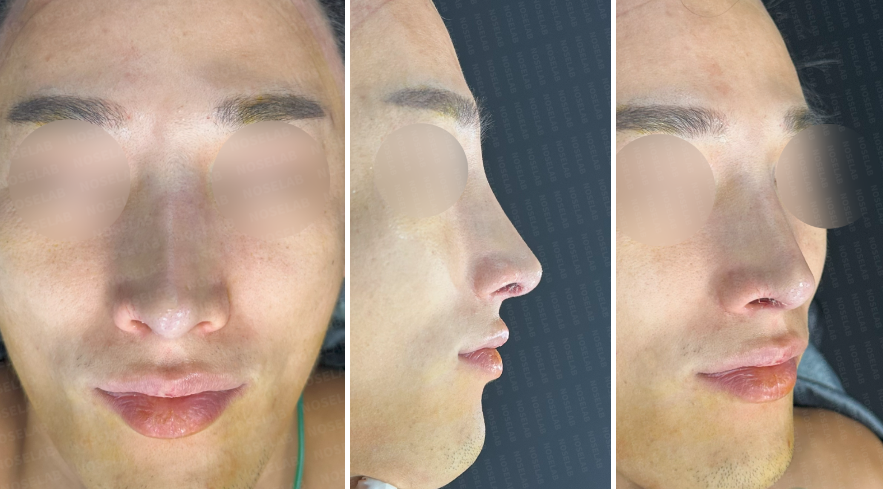
✅ Surgical Results
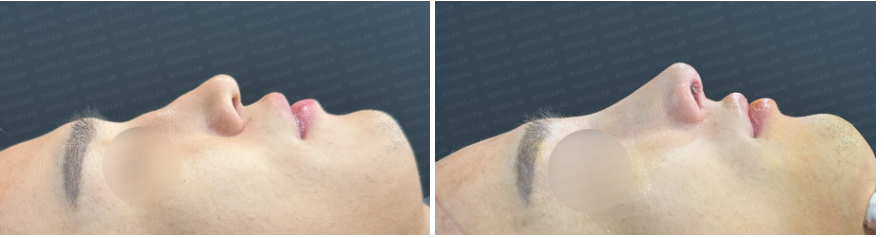
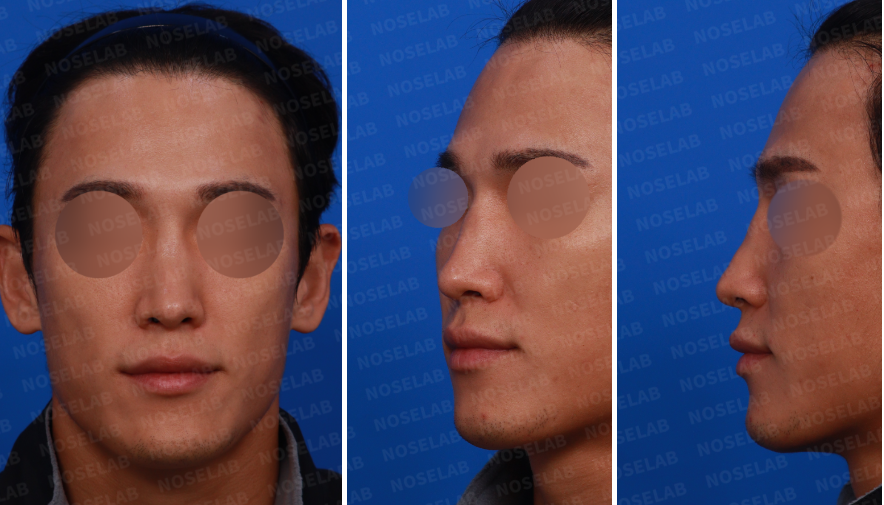
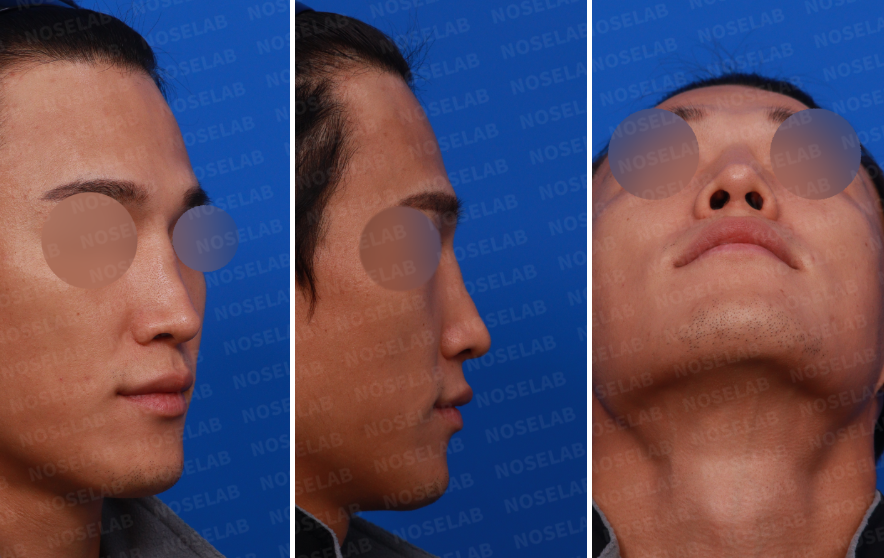
Side View:
Smooth nasal bridge contour, lowered nasion starting point, and corrected tip projection.
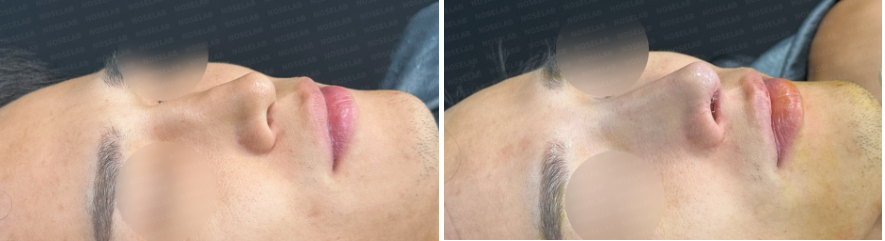
Oblique View:
Balanced profile with improved nasal tip position.
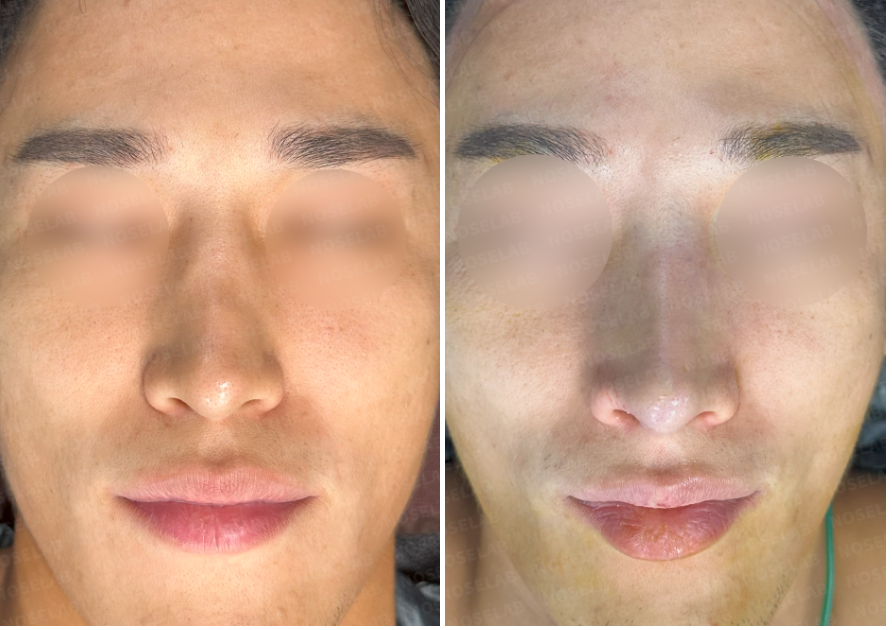
Front View:
Improved nasal symmetry and columella alignment.
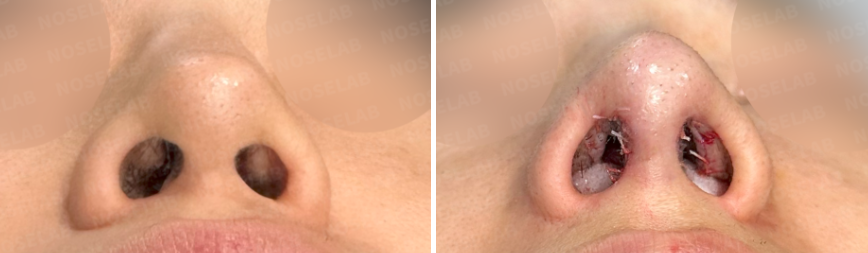
Nostril View:
Significant improvement in nostril symmetry after Crooked Nose Correction.
✅ Surgeon’s Commentary
Crooked nose correction requires precise structural realignment of both bone and cartilage.
Without addressing septal deviation, external correction alone is insufficient and may lead to recurrence.
In this case, septoplasty and rib cartilage reconstruction provided stable internal support, while lateral osteotomy corrected the external deviation.
Simultaneous functional correction ensured improved breathing and long-term patient satisfaction.
Closed Rhinoplasty Korea allows accurate structural correction while minimizing surgical trauma and recovery time.
Long-term success depends on correcting both alignment and airway function.
✅ FAQ
Q1. What causes a crooked nose after surgery?
It is usually due to septal deviation and asymmetrical bone healing.
Q2. Can crooked nose correction improve breathing?
Yes, if septal deviation is corrected simultaneously.
Q3. Why is structural reconstruction important?
It prevents recurrence and ensures long-term stability.
Read the author’s background and the original case context. About these articles
Source updated .