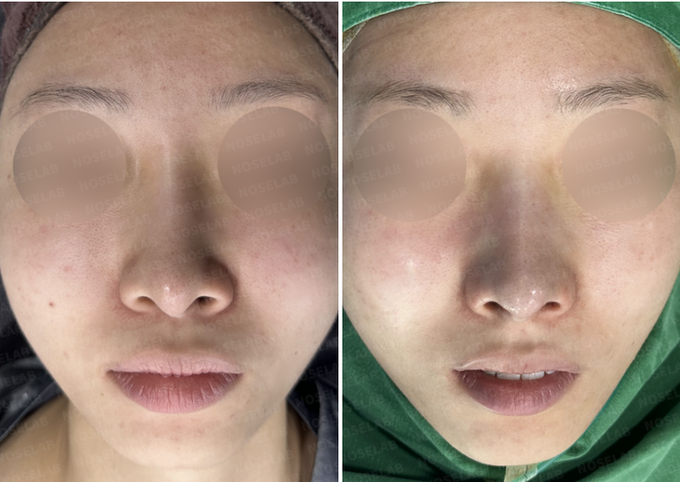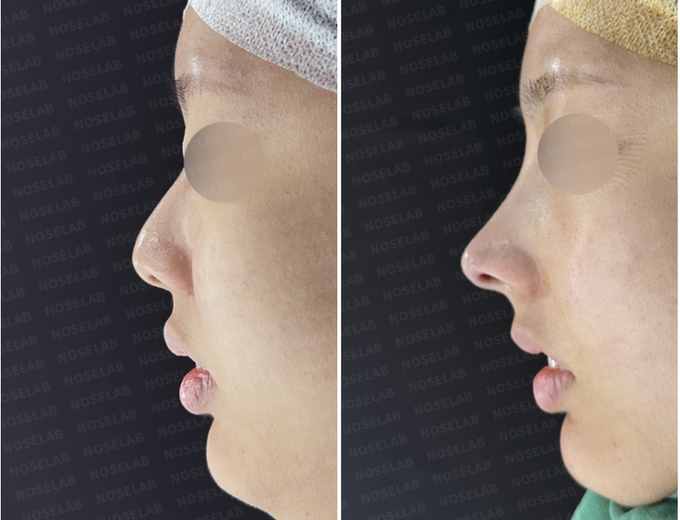
Case at a glance
- Surgical plan
- Graft & material details
- Photo timing
These details are excerpts from the original article and captions. Follow a detail to read it in context.
(Primary Rhinoplasty Case)
Implant-free rhinoplasty focuses on correcting structural nasal deformities using biological materials such as cartilage rather than synthetic implants.
In this case, a crooked nasal bridge and drooping tip were corrected using osteotomy and rib cartilage reconstruction, achieving stable alignment and natural contour through a closed rhinoplasty approach.
Author: Dr. Cha-Young Kang, Director, NoseLab Clinic
This case involves a primary rhinoplasty patient who presented with a congenitally crooked and widened nasal bridge along with a drooping nasal tip.
The patient had no prior surgical history and specifically requested an implant-free rhinoplasty approach using only biological materials, avoiding synthetic implants such as silicone.
The main concern was not excessive height but overall nasal imbalance, including asymmetry of the nasal bones and insufficient tip projection.
In this case, structural correction was achieved through closed rhinoplasty korea, focusing on internal reconstruction rather than artificial augmentation.
If you are considering implant-free rhinoplasty or have concerns about a crooked nasal bridge and structural imbalance, a detailed evaluation of your nasal framework is essential before determining the appropriate surgical plan.
📩 International Consultation
→ LINE Consultation (Japan only)
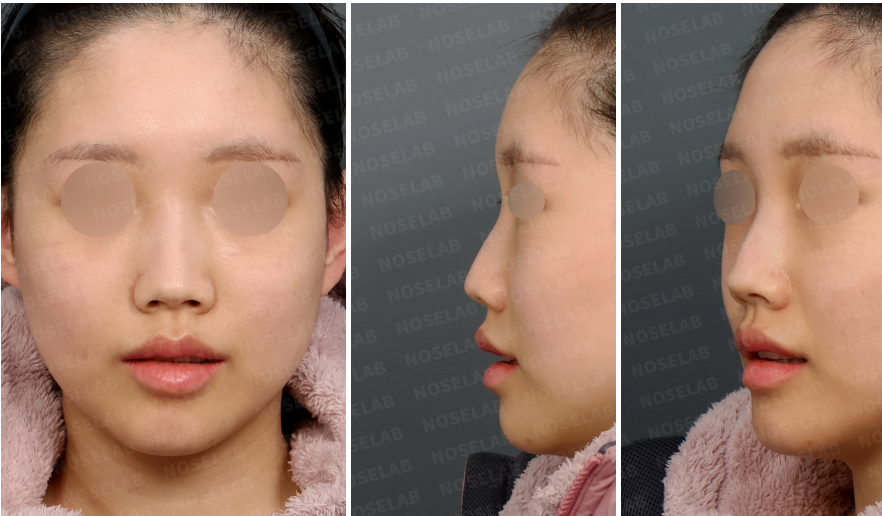
Surgical Background – Closed Rhinoplasty Korea
Implant-free rhinoplasty requires precise structural correction using cartilage rather than synthetic materials.
For this reason, closed rhinoplasty korea was selected to allow accurate internal reconstruction, cartilage shaping, and stable framework restoration without external incisions.
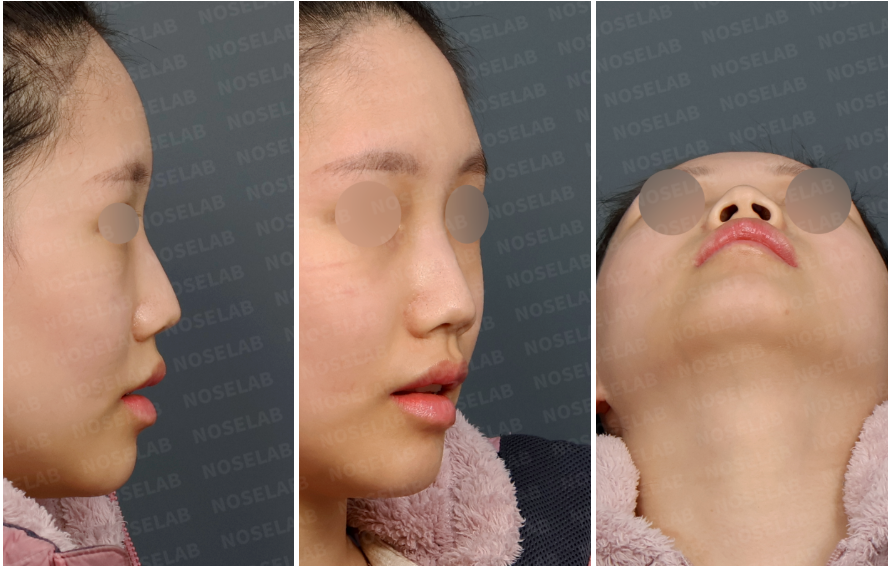
Surgical Plan – Structural Cartilage-Based Reconstruction
Lateral Osteotomy for Crooked Nasal Bone Correction
The nasal bones were asymmetrically positioned and widened.
Procedures performed:
Lateral osteotomy to correct deviation of the nasal bones
Reduction of dorsal width
Restoration of straight nasal alignment
Dorsal Reconstruction Using Donor Rib Cartilage
The nasal bridge required augmentation without synthetic implants.
Procedures performed:
Cartilage grafting using donor rib cartilage
Correction of depressed dorsal areas
Creation of a smooth and natural dorsal line
Nasal Tip Reconstruction with Septal and Rib Cartilage
The nasal tip lacked sufficient structural support.
Procedures performed:
Tip reconstruction using septal cartilage
Reinforcement with donor rib cartilage
Stable elevation of the drooping nasal tip
Adjustment of the nasolabial angle
Implant-Free Structural Strategy
All reconstruction was performed using biological tissues.
No silicone or synthetic implants were used
Emphasis on structural stability and natural integration
Focus on long-term durability rather than artificial projection
Surgical Results
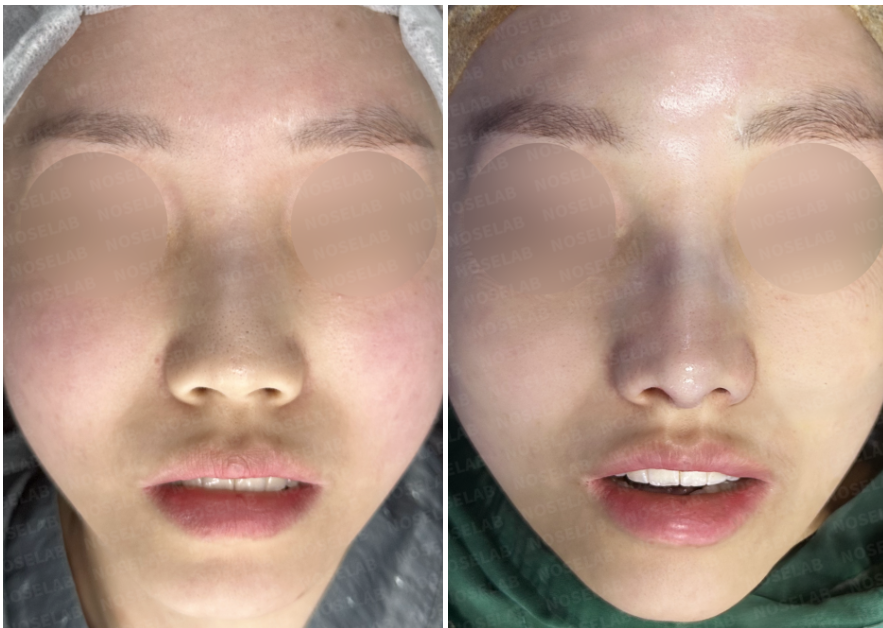
Frontal View
Crooked nasal bridge corrected to a straight alignment
Improved nasal symmetry
Narrower and more refined dorsal width
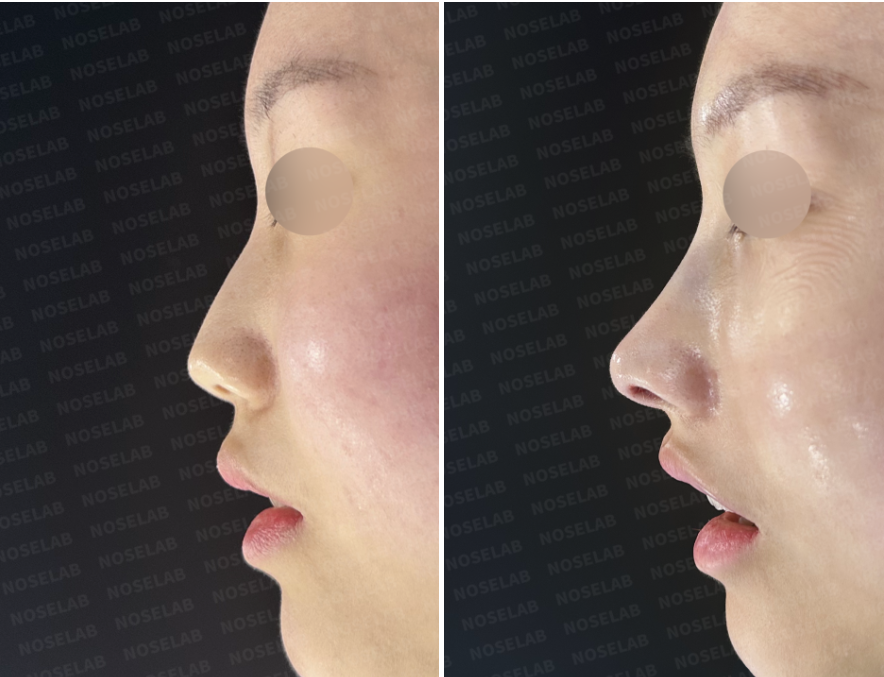
Lateral View
Natural elevation of the nasal tip
Smooth dorsal line without implant use
Balanced nasolabial angle
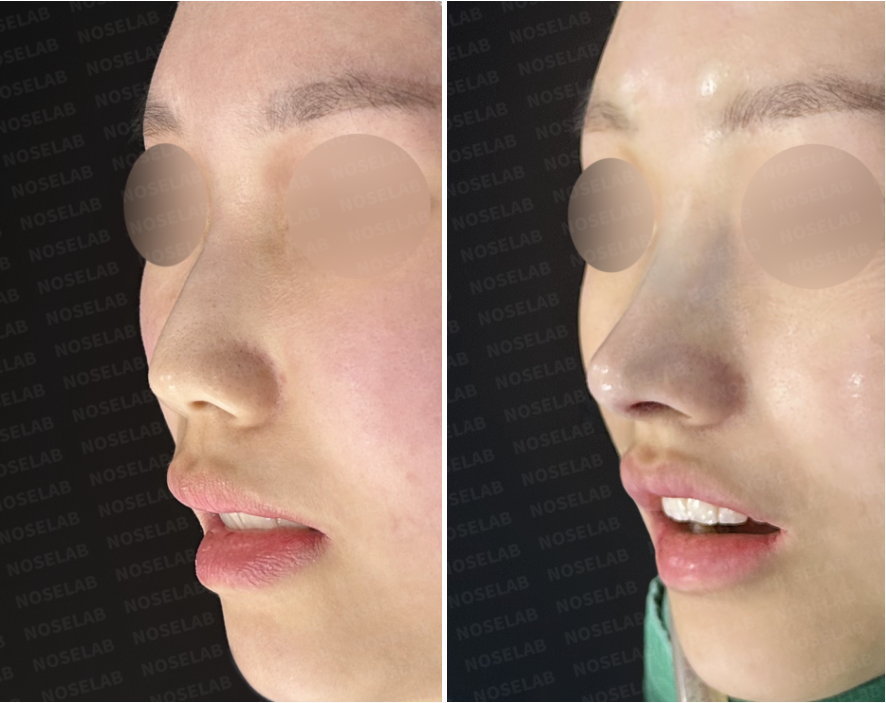
Oblique (45°) View
Natural contour from multiple angles
Harmonious transition between bridge and tip
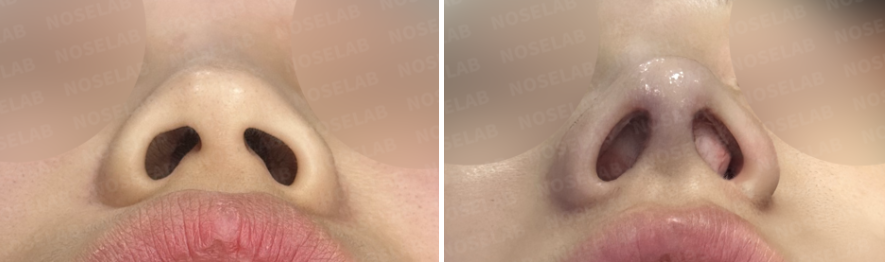
Overall Outcome
Balanced nasal proportions
Stable cartilage-based structure
Natural aesthetic result without foreign materials
Surgeon’s Commentary – Principles of Implant-Free Rhinoplasty
Implant-free rhinoplasty requires a fundamentally different structural approach compared to implant-based procedures.
In cases of a crooked nasal bridge, osteotomy is essential to correct the underlying bony deviation. Without correcting the framework, dorsal augmentation alone cannot achieve proper alignment.
In this case, donor rib cartilage was used to reconstruct the nasal dorsum. Unlike synthetic implants, cartilage must be individually carved and precisely positioned, allowing better integration with the patient’s anatomy.
The nasal tip was reconstructed using septal cartilage reinforced with rib cartilage to ensure long-term stability. This is especially important in patients with weak cartilage or drooping tip deformities.
Implant-free rhinoplasty is suitable for patients who wish to avoid foreign materials, but it requires advanced surgical planning and precise execution to achieve stable and natural results.
Because implant-free rhinoplasty relies entirely on structural reconstruction using biological tissues, surgical planning must be based on precise anatomical analysis rather than a standardized approach.
If you are considering surgery without implants or have concerns about long-term stability and natural integration, a comprehensive evaluation is essential to determine the most appropriate structural strategy.
📩 International Consultation
→ LINE Consultation (Japan only)
Frequently Asked Questions (FAQ)
Q1. Is implant-free rhinoplasty less stable than implant-based surgery?
No. When performed with proper structural reconstruction using rib cartilage, implant-free rhinoplasty can provide strong and durable support.
Q2. Why is rib cartilage used instead of silicone implants?
Rib cartilage allows biological integration and reduces the risk of foreign body-related complications.
Q3. Can a crooked nose be corrected without implants?
Yes. Through osteotomy and cartilage-based reconstruction, nasal alignment can be corrected without synthetic implants.
🎥 YouTube Reference
If you’re curious about Dr. Cha-Young Kang’s closed rhinoplasty approach, click to watch the video.
Read the author’s background and the original case context. About these articles
Source updated .