Male Revision Rhinoplasty Korea for Contracted Nose Reconstruction
- Dr. Chayoung Kang
- 2024년 10월 18일
- 5분 분량
최종 수정일: 5월 19일
This case reviews male revision rhinoplasty Korea for a patient with contracted nasal structure, upturned nasal tip, shortened nasal length, nostril asymmetry, scar tissue, and nasal obstruction after multiple previous rhinoplasty procedures. Reconstruction focused on rib cartilage support, septal reconstruction, tip repositioning, nostril correction, and functional airway improvement.
Author: Dr. Cha-Young Kang, Director, NoseLab Clinic
Author: Dr. Cha-Young Kang
Clinic: NoseLab Clinic
Published: 2024
Last Updated: 2026
Introduction
Hello, this is Dr. Cha-Young Kang of NoseLab Clinic.
This case involves male revision rhinoplasty Korea in a patient who developed contracted nasal structure, an upturned and shortened nasal tip, nostril asymmetry, and intermittent nasal obstruction after multiple previous surgeries.
The surgery was performed using a closed rhinoplasty / endonasal approach with autologous rib cartilage reconstruction. The goal was not simple cosmetic change, but structural rebuilding of the nasal framework, correction of tip position, improvement of nostril balance, and functional airway correction.
Case Background
The patient presented for male revision rhinoplasty after multiple previous nasal surgeries, including silicone implant surgery and rib cartilage grafting.
Repeated operations led to scar formation, contracture, shortened nasal length, and weakened structural support. The nasal tip rotated upward, the nostrils became asymmetrical, and nasal obstruction developed due to septal deviation.
Key Concerns
The key concerns included:
Contracted nasal structure after repeated surgeries
Upturned and shortened nasal tip
Nostril asymmetry
Excessive nostril show
Scar tissue affecting the nasal tip and columella
Nasal obstruction caused by septal deviation
Surface irregularities from previous procedures
This case required structural reconstruction rather than surface-level correction because the nasal framework and airway function were both affected.
Preoperative Design and Structural Assessment
Preoperative design consultation photos were reviewed from the frontal, side, oblique, and nostril views.

Frontal View
The frontal view showed nasal imbalance, nostril asymmetry, and contracture-related distortion of the lower nasal structure.
Side View
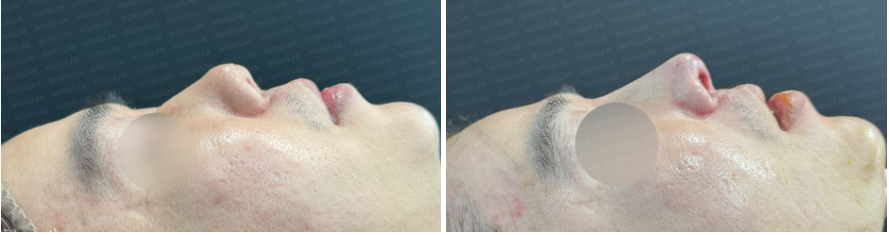
The side view showed shortened nasal length and an upturned nasal tip. The nasolabial angle was affected by the contracted tip position.
Oblique View
The oblique view showed contour irregularity and reduced structural definition after previous surgeries.
Nostril View
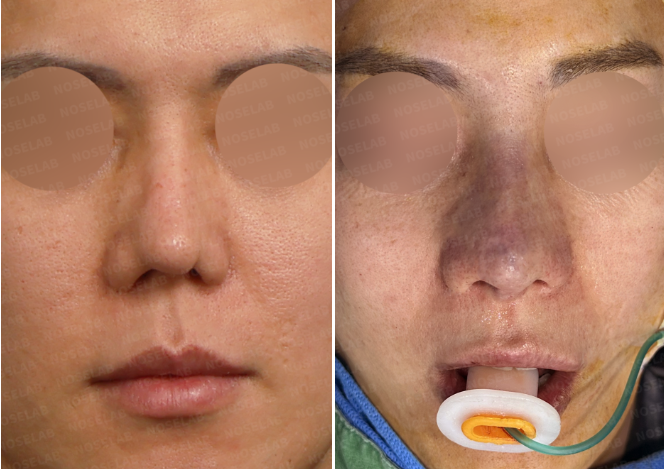
The nostril view showed nostril asymmetry, columellar irregularity, and excessive nostril exposure.
These findings indicated that the patient needed full structural reconstruction, septal correction, and nasal base adjustment.

Surgical Background – Closed Rhinoplasty and Male Revision Cases
In male revision rhinoplasty, the surgical plan must consider facial proportion, nasal strength, and functional support. In contracted nose cases, simply raising or reshaping the nose is not enough.
A closed rhinoplasty Korea approach was selected to allow internal reconstruction without adding an external columellar incision. In revision cases with scar tissue, preserving soft tissue integrity is especially important.
The main surgical priority was to rebuild the nasal framework using stable autologous support while improving nasal airflow.
Structural Problems Identified
Preoperative analysis revealed structural problems caused by repeated surgeries, scar formation, and septal deviation.
Main Structural Findings
The main findings included:
Contracted nasal framework due to scar formation
Upturned nasal tip with insufficient support
Shortened nasal length
Nostril asymmetry and columellar irregularity
Residual septal deviation causing airway obstruction
Surface irregularities from previous surgeries
Compromised nasal tip and columellar support
These findings confirmed that the case required reconstruction of the septum, nasal tip, nostrils, columella, and airway rather than isolated contour correction.
Surgical Plan
Preoperative Tissue Preparation
Preoperative regenerative treatment was performed to improve tissue condition before reconstruction. In contracted revision cases, improving soft tissue quality before surgery may help reduce the risk of recurrent contracture.
Structural Reconstruction with Rib Cartilage
Autologous rib cartilage was used to rebuild the nasal framework. Rib cartilage provided the support needed in a case where previous surgeries had weakened the native cartilage structure.
Septal Reconstruction and Airway Correction
Rib cartilage was used to reconstruct the septum and correct deviation. This helped improve central support and reduce airway obstruction.
Septal Extension Graft and Tip Repositioning
A septal extension graft was used to lengthen the nose, lower the upturned tip, and stabilize tip projection. This step was important for correcting the shortened and contracted appearance.
Nostril and Columella Correction
The alar base and columella were adjusted structurally to improve nostril symmetry and reduce excessive nostril exposure.
Dorsal Line Reconstruction
The nasal bridge was reconstructed into a straighter and more balanced line using appropriate structural support. In male revision rhinoplasty, dorsal contour must be planned in relation to the entire facial profile.
Scar Tissue Management
Dermis and cartilage grafts were used to correct depressed scar tissue and improve surface contour. Scar tissue management was important because previous surgeries had affected the nasal tip and columellar area.
Surgical Results
Frontal View
From the frontal view, nostril asymmetry improved, and the contracted lower nasal structure appeared more balanced after reconstruction.

Oblique View
The oblique view showed smoother contour transition and improved structural alignment. Surface irregularities related to previous surgeries were reduced.

Side View
From the side view, nasal length increased, and the upturned nasal tip was lowered. The nasolabial angle appeared more balanced after septal extension and tip repositioning.
Nostril View
From the nostril view, nostril exposure and asymmetry improved after alar base and columellar adjustment.

Functional Outcome
Nasal obstruction improved after septal reconstruction and airway correction. Rebuilding the internal nasal structure helped provide more stable airflow support.
Surgeon’s Commentary

Revision rhinoplasty in contracted nose cases is primarily a structural reconstruction procedure. Repeated surgeries can lead to scar formation, shortened nasal length, weakened cartilage support, and functional nasal obstruction.
In this case, the patient had a contracted nose, upturned tip, nostril asymmetry, columellar irregularity, and septal deviation. These problems could not be corrected by external contour adjustment alone.
Autologous rib cartilage was used because the nasal framework required strong support for septal reconstruction, tip repositioning, and nasal length restoration. The septal extension graft helped lower the upturned tip and stabilize projection.
Functional correction was also important. Septal deviation and airway obstruction were addressed together with structural reconstruction because nasal shape and breathing function are closely connected in complex revision cases.
This case shows that male revision rhinoplasty Korea for contracted nose correction should focus on structural support, nasal base balance, and airway function rather than surface-level reshaping.
FAQ
Why is rib cartilage used in male revision rhinoplasty?
Rib cartilage may be used when previous surgeries have weakened the septum or nasal tip support. It provides stronger structural support for nasal framework reconstruction, tip repositioning, and contracted nose correction.
Can contracted nose be fully corrected after multiple surgeries?
Contracted nose can often be improved through structural reconstruction, but the degree of correction depends on scar tissue, skin flexibility, cartilage loss, and prior surgical history. The goal is stable improvement within safe tissue limits.
Does revision rhinoplasty improve breathing?
Breathing can improve when septal deviation, nasal valve weakness, or airway narrowing is corrected during surgery. In this case, septal reconstruction and airway correction were included in the surgical plan.
Why is a closed rhinoplasty approach used in revision cases?
A closed rhinoplasty / endonasal approach can allow internal reconstruction without adding an external columellar incision. It may be useful in selected revision cases where soft tissue preservation is important.
International Consultation
For international patients, a photo-based consultation may help clarify whether male revision rhinoplasty, contracted nose reconstruction, rib cartilage support, or functional correction may be needed.
WhatsApp: https://wa.me/821057360302
LINE: [LINE Link]

Home page : www.noselab.co.kr
Instagram : noselab_global
YouTube : Noselab
Email : noselab@naver.com


댓글