Case at a glance
- Surgical plan
These details are excerpts from the original article and captions. Follow a detail to read it in context.
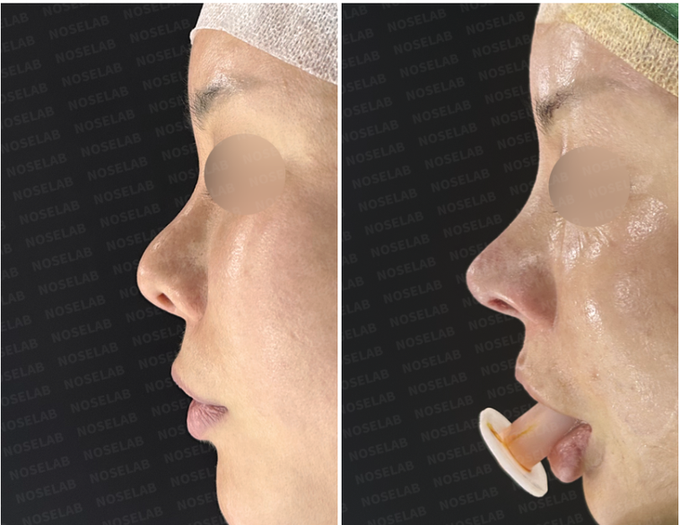
This case demonstrates closed rhinoplasty Korea for correcting complications caused by philtrum reduction surgery, including nostril asymmetry, nasal deviation, and structural instability. Reconstruction using rib cartilage and structural realignment restored nasal balance, improved function, and achieved long-term stability.
✅ Author / Published / Updated
Dr. Cha-Young Kang
NoseLab Clinic
Published: 2024
Last Updated: 2026
This patient presented after multiple previous surgeries, including philtrum reduction, nostril reduction, and rhinoplasty using autologous dermis.
The patient experienced progressive nasal deformity, asymmetry, and structural instability following these procedures.
In this closed rhinoplasty Korea case, the goal was not only aesthetic correction but reconstruction of the nasal framework affected by prior surgeries.
Key concerns included:
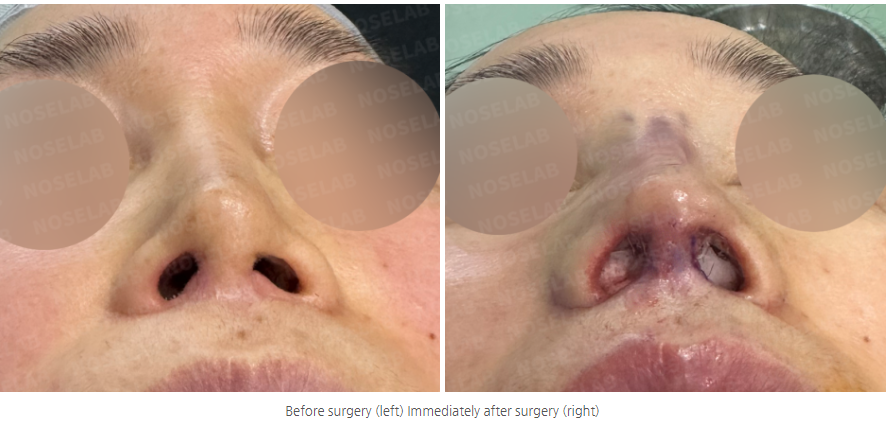
Severe nostril asymmetry
Crooked nasal structure
Short and drooping nasal tip
High nasal bridge with poor tip support
Structural collapse of nasal bones
Deformity caused by improper philtrum reduction suturing
This case required full structural reconstruction rather than cosmetic adjustment.
If you are experiencing complications after philtrum reduction or rhinoplasty, a structural evaluation is essential.

✅ Surgical Background – Closed Rhinoplasty Korea
Closed rhinoplasty Korea allows internal structural correction without external scars.
In complex revision cases involving philtrum surgery complications, both nasal structure and surrounding soft tissue relationships must be carefully reconstructed.
This approach enables precise correction while minimizing further tissue damage.

✅ Structural Problems Identified
Preoperative analysis revealed:
Severe nostril asymmetry due to incorrect columella positioning
Nasal deviation and structural imbalance
Collapse of nasal bone structure from prior osteotomy
Weak nasal tip support
Scar tissue and deformity from repeated surgeries
Disruption of nasal base symmetry due to philtrum reduction
These findings indicated the need for complete structural reconstruction.

✅ Surgical Plan
1. Removal of Autologous Dermis and Previous Materials
Previously inserted dermis and cartilage were removed and selectively reused where appropriate.

2. Nasal Bone Reconstruction
Collapsed nasal bones were repositioned, and structural gaps were filled using rib cartilage.
3. Structural Reinforcement with Rib Cartilage
Autologous rib cartilage was used to rebuild the nasal framework and ensure long-term stability.
4. Nasal Tip Reconstruction
Cartilage was repositioned and reinforced to correct drooping and asymmetry.
5. Nostril Asymmetry Correction (Rotational Flap)
Rotational flap technique was used to correct severe nostril asymmetry and expand the narrowed nasal base.
6. Nasal Bridge Reconstruction
The dorsal structure was stabilized and reshaped to achieve a balanced nasal profile.
✅ Surgical Results
Frontal View
Significant improvement in nostril symmetry
Correction of nasal deviation
Balanced nasal structure

Lateral View
Drooping tip corrected
Nasolabial angle improved
Harmonized profile

Oblique View
Improved structural alignment
Natural contour restored

Functional Outcome
Improved nasal airflow
Reduced structural instability
Enhanced breathing function
✅ Surgeon’s Commentary
Philtrum reduction surgery can significantly affect nasal structure if not performed with precise anatomical consideration.
The relationship between the columella, nasal base, and philtrum is critical. Improper suturing can lead to asymmetry and structural distortion.
In this case, reconstruction required not only correction of the nose but also restoration of the nasal base relationship.
Rib cartilage provided the structural strength needed to rebuild a stable nasal framework.
Closed rhinoplasty Korea allows precise correction of complex deformities while preserving soft tissue, which is essential in revision cases.
If you are considering rhinoplasty after philtrum surgery, careful structural planning is critical.
📩 International Consultation
✅ FAQ
Q1. Can philtrum reduction affect nose shape?
Yes. It can alter the relationship between the columella and nasal base, leading to asymmetry.
Q2. Can these complications be corrected?
Improvement is possible through structural reconstruction, depending on tissue condition.
Q3. Why is rib cartilage used in these cases?
Rib cartilage provides strong support necessary for rebuilding damaged nasal structures.
🎥 YouTube Reference
If you’re curious about Dr. Cha-Young Kang’s closed rhinoplasty approach, click to watch the video.
This case is for educational purposes and represents a clinical example.
Results may vary depending on individual anatomy and surgical history.
All procedures were performed by a qualified specialist.

Read the author’s background and the original case context. About these articles
Source updated .