Case at a glance
- Concerns & goals
- Surgical plan
- Graft & material details
- Photo timing
These details are excerpts from the original article and captions. Follow a detail to read it in context.
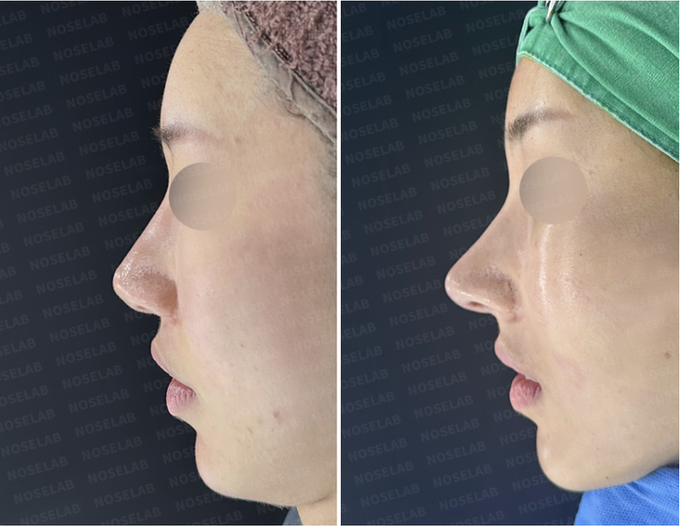
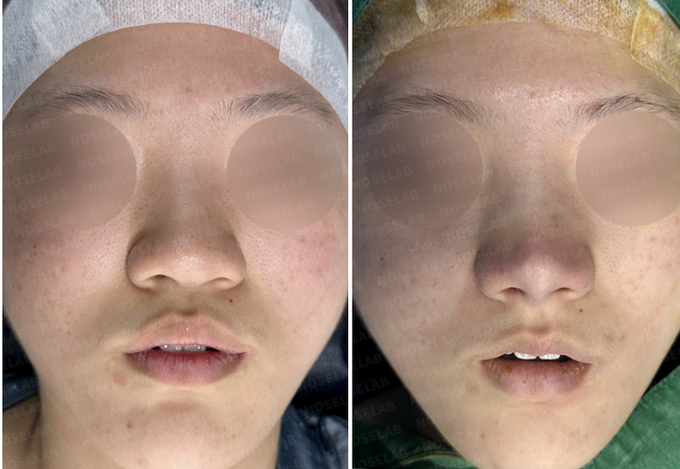
This case demonstrates closed rhinoplasty Korea for correcting a pinched nasal tip after Medpor removal. Structural reconstruction using rib cartilage restored nasal support, improved airway function, and achieved a natural, balanced result with long-term stability.
✅ Author / Published / Updated
Dr. Cha-Young Kang , NoseLab Clinic
Published: 2025
Last Updated: 2026
This patient presented with severe nasal tip pinching and structural collapse after multiple previous rhinoplasty procedures.
Over 15 years and three surgeries, excessive cartilage resection and scarring led to loss of structural support, columella retraction, and functional airway issues.
In this closed rhinoplasty Korea case, the goal was to remove foreign material, restore structural integrity, and correct both aesthetic deformity and nasal function.
Key concerns included:
Pinched nasal tip due to alar cartilage loss
Columella retraction and shortening
Drooping nasal tip
Flattened nasal bridge
Nostril asymmetry
Nasal obstruction and chronic rhinitis
Hidden Medpor implant within columella
This case required full structural reconstruction rather than simple tip refinement.
If you are experiencing similar issues after multiple surgeries, a structural approach is essential.
📩 International Consultation

✅ Surgical Background – Closed Rhinoplasty Korea
Closed rhinoplasty Korea enables precise internal reconstruction without external incision.
In revision cases with cartilage depletion, restoring structural support is critical to prevent recurrence.
This approach allows removal of foreign materials and reconstruction of the nasal framework while minimizing additional tissue damage.

✅ Structural Problems Identified
Preoperative evaluation revealed:
Severe pinching of nasal tip due to alar cartilage loss
Columella retraction and poor projection
Scar contracture from previous surgeries
Flattened dorsal structure
Hidden Medpor implant within columella
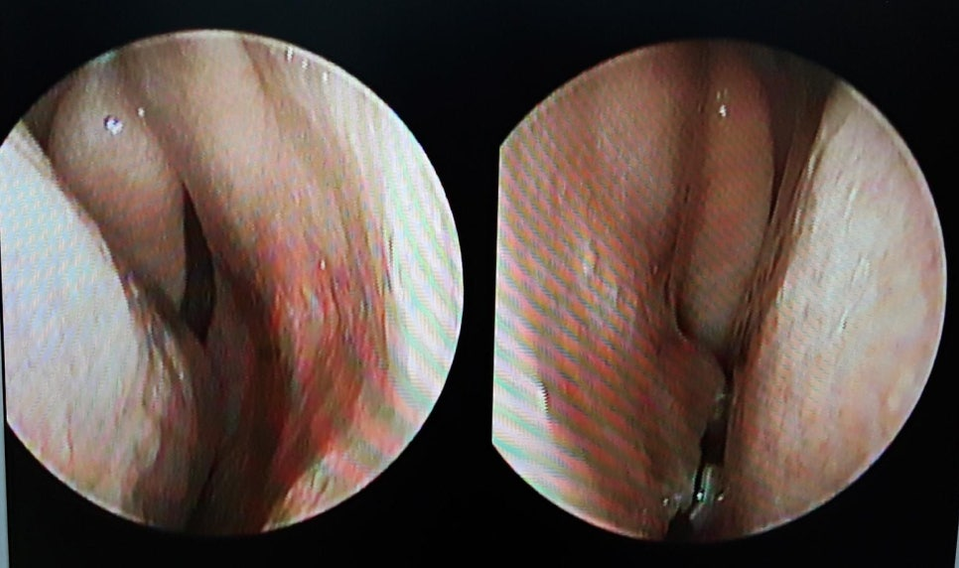
Deviated septum and airway obstruction
Inferior turbinate hypertrophy
These findings required both structural and functional reconstruction.
✅ Surgical Plan
1. Removal of Medpor and Foreign Materials
Medpor implant and residual materials were completely removed to eliminate sources of inflammation.

2. Scar Tissue Release
Contracted scar tissue around the nasal tip was excised to restore flexibility.
3. Rib Cartilage Harvesting
Autologous rib cartilage was used due to insufficient native cartilage.
4. Septal Reconstruction
Reconstruction of septal framework to re-establish central support.
5. Alar Cartilage Reconstruction
Rebuilding alar structure to correct pinched nasal tip and restore width.
6. Columella Lengthening and Support
Septal extension graft used to improve projection and nasal length.
7. Functional Correction
Septal deviation correction and turbinate reduction to improve airflow.
✅ Surgical Results
Frontal View
Improved alar base width
Reduced pinching
Balanced nasal shape

Lateral View
Improved tip projection
Natural nasolabial angle
Balanced profile

Oblique View
Smooth contour
Restored structural harmony

Nasal Base View
Improved nostril symmetry
Restored alar support
Stable columella

Functional Outcome
Improved nasal airflow
Reduced obstruction
Stabilized airway structure
✅ Surgeon’s Commentary
Pinched nasal tip deformity is typically caused by over-resection of cartilage during previous surgeries.
Simply reshaping the tip is not sufficient in these cases.
Structural reconstruction using rib cartilage is essential to restore both form and function.
In this case, removal of Medpor was critical, as foreign materials can lead to long-term complications and instability.
Rebuilding the alar and septal framework allowed us to correct the deformity while ensuring long-term stability.
Closed rhinoplasty Korea provides a controlled environment for precise reconstruction with minimal additional trauma.
If you are considering revision rhinoplasty after complications, structural reconstruction is the key to achieving stable results.
📩 International Consultation
✅ FAQ
Q1. Why does a pinched nasal tip occur after surgery?
It is usually caused by excessive cartilage removal and scar contracture.
Q2. Can pinched nose be fully corrected?
Yes, but it requires structural reconstruction rather than simple reshaping.
Q3. Why is rib cartilage used in revision cases?
It provides strong support when native cartilage is insufficient.
✅ Mandatory Disclosure
This case is for educational purposes and represents a clinical example.
Results may vary depending on individual anatomy and surgical history.
All procedures were performed by a qualified specialist.

Read the author’s background and the original case context. About these articles
Source updated .