Case at a glance
- Concerns & goals
- Surgical plan
- Graft & material details
- Photo timing
These details are excerpts from the original article and captions. Follow a detail to read it in context.
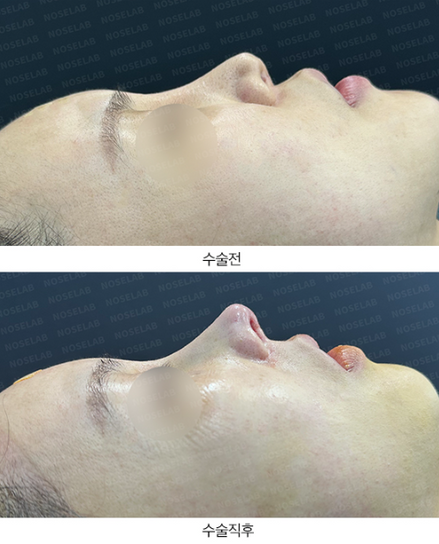
This case demonstrates closed rhinoplasty Korea for correcting a pinched nose with deviation, upturned tip, and nostril asymmetry. Structural reconstruction using rib cartilage restored nasal stability, improved airway function, and achieved a natural, balanced result.
✅ Author / Published / Updated
Dr. Cha-Young KangNoseLab Clinic
Published: 2024
Last Updated: 2026
✅ Case Background
This patient presented with a complex nasal deformity including a pinched nasal tip, deviation, upturned nose, and significant nostril asymmetry.
The patient had undergone multiple previous surgeries, resulting in structural weakness and compromised nasal function.
In this closed rhinoplasty Korea case, the goal was to restore structural stability, correct deviation, and improve both aesthetic balance and nasal airway function.
Key concerns included:
Pinched nasal tip with asymmetry
Upturned nose with excessive nostril exposure
Deviated nasal structure
Wide glabella and nasal bridge
Weak septal support
Nasal congestion and rhinitis
This case required structural reconstruction rather than simple reshaping.
If you are experiencing similar nasal problems or considering revision rhinoplasty, a detailed structural evaluation is important.
📩 International Consultation

✅ Surgical Approach – Pinched Nose Corrective Rhinoplasty Using Closed Rhinoplasty Korea
A pinched nose is typically caused by structural collapse or damage to the alar cartilage and septal support.
In revision cases, repeated surgeries often result in weakened cartilage and scar tissue, requiring full structural reconstruction.
Closed rhinoplasty Korea allows precise correction of these deformities while minimizing additional tissue trauma.


✅ Structural Problems Identified
Severe pinching of the nasal tip due to cartilage collapse
Deviation of nasal septum and bridge
Upturned nasal tip with excessive nostril exposure
Nostril asymmetry due to alar cartilage imbalance
Weak septal support
Functional airway obstruction
Inferior turbinate hypertrophy

✅ Surgical Plan
1. Septal Reconstruction
Reinforcement of weakened septal structure using rib cartilage
2. Septal Extension Graft
Correction of deviation and stabilization of nasal tip
3. Alar Cartilage Reconstruction
Rebuilding of collapsed alar cartilage to correct pinching
4. Nostril Correction
Lowering of nostrils and correction of asymmetry
5. Dermal Graft Reinforcement
Improvement of depressed nasal areas and contour
6. Functional Correction
Septoplasty and turbinate reduction to improve airflow
✅ Surgical Results
Frontal View
Reduced nostril exposure
Improved symmetry
Straightened nasal structure

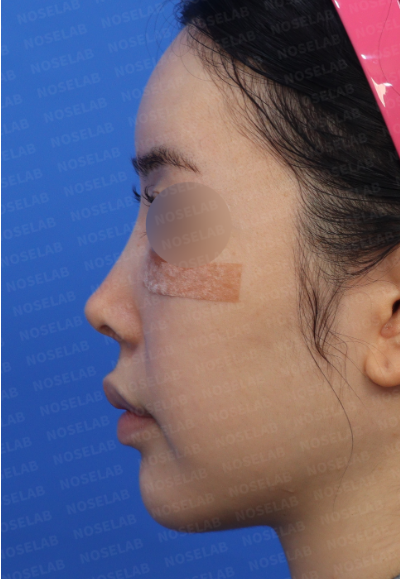
Lateral View
Lowered starting point
Improved tip projection
Balanced nasolabial angle

Oblique View
Reduced pinching
Improved contour

Nasal Base View
Improved nostril symmetry
Correction of columella deviation

Functional Outcome
Improved nasal airflow
Reduced congestion
Stabilized airway structure
✅ Surgeon’s Commentary

A pinched nose is not only an aesthetic issue but a structural problem caused by cartilage weakness and collapse.
In revision cases, the loss of cartilage and repeated surgical damage make reconstruction significantly more complex.
In this case, rib cartilage was essential to rebuild the nasal framework and restore stable support.
Alar cartilage reconstruction and septal reinforcement were critical in correcting both the pinched appearance and nostril asymmetry.
Closed rhinoplasty Korea allows precise correction while minimizing additional trauma.
Achieving long-term stability requires restoring the underlying structure rather than focusing only on appearance.
If you are considering revision rhinoplasty after multiple surgeries, a structural approach is essential.
📩 International Consultation
✅ FAQ
Q1. What causes a pinched nose?
It is usually caused by collapse or over-resection of nasal cartilage.
Q2. Why is rib cartilage used in revision cases?
It provides strong structural support when native cartilage is insufficient.
Q3. Can breathing improve after surgery?
Yes, structural correction improves nasal airflow and function.

Read the author’s background and the original case context. About these articles
Source updated .