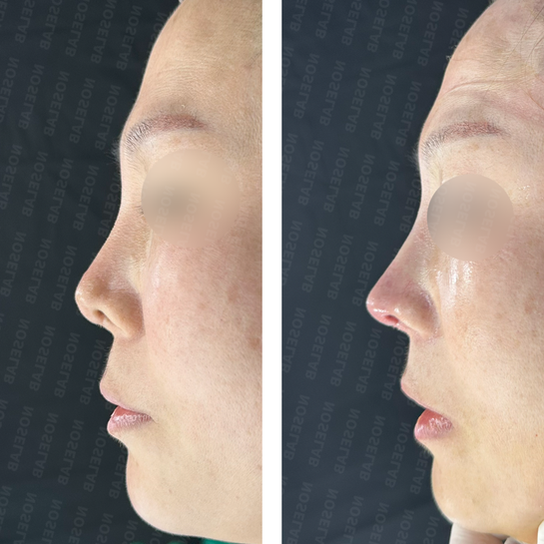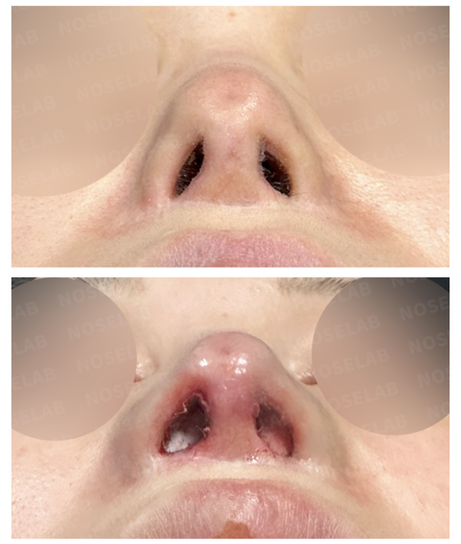
Case at a glance
- Concerns & goals
- Previous treatment
- Surgical plan
- The surgery included foreign material removal, total septal reconstruction, septal extension, alar cartilage reconstruction, nasal bridge reconstruction, and airway correction.
- During surgery, unexpected mesh fragments were found in the nasal tip area. These fragments were carefully removed along with absorbed donor rib cartilage fragments.
- Residual mesh or foreign material can contribute to stiffness, distortion, inflammation, or nasal obstruction. For this reason, removal was an important part of the reconstruction plan.
- Graft & material details
- Photo timing
These details are excerpts from the original article and captions. Follow a detail to read it in context.
This case reviews mesh removal revision rhinoplasty in a patient with contracted nose deformity, upturned nasal tip, short nasal length, nostril asymmetry, columella tilt, nasal obstruction, and residual foreign materials after multiple previous procedures. Surgery focused on mesh removal, donor rib cartilage fragment removal, total septal reconstruction with autologous rib cartilage, septal extension, alar cartilage reconstruction, nostril reshaping, nasal bridge reconstruction, and airway correction.
Author: Dr. Cha-Young Kang
Clinic: NoseLab Clinic
Published: 2024
Last Updated: 2026
Introduction
Hello, this is Dr. Cha-Young Kang of NoseLab Clinic.
This case involves mesh removal revision rhinoplasty in a patient with a contracted and upturned nose after multiple previous surgeries, inflammation, and injected or implanted materials.
The patient had a short nasal length, excessive nostril exposure, nostril asymmetry, tilted columella, high nasal bridge starting point, and breathing discomfort.
The surgery was performed using a closed rhinoplasty / endonasal approach. The goal was to remove residual mesh and foreign materials, reconstruct the septum with autologous rib cartilage, lengthen the shortened nose, improve nostril symmetry, and address nasal obstruction.
Patient Background and Surgical History
The patient had a complex surgical history involving several materials and procedures.
Previous Surgical History
The past surgical history included:
Silicone implant insertion and removal
PRP injections
Ear cartilage grafting
AlloDerm use
Donor rib cartilage grafting
Philtrum reduction
Alar base reduction
Stem cell treatments
After repeated procedures and inflammation, the nose became contracted and shortened. The nasal tip was upturned, and the nostrils became asymmetric.
Because multiple materials had been used previously, the revision plan needed to include careful exploration for residual foreign materials and structural reconstruction.

Preoperative Design Consultation
Preoperative design consultation photos were reviewed from the frontal, side, oblique, and nostril views.
Frontal View
The frontal view showed a short and upturned nose with excessive nostril exposure. The nasal base was asymmetric, and the columella was tilted.
Oblique View
The oblique view showed a flat nasal bridge with a high starting point and imbalance between the bridge and nasal tip.
Side Profile View
The side view showed a large nasolabial angle and a nasal tip that appeared both shortened and poorly supported.
Nostril View
The nostril view showed nostril asymmetry, columella tilt, and lower nasal imbalance related to contracture and previous surgery.
These findings suggested that the surgery needed to address the nasal bridge, septum, tip support, nostrils, columella, and airway together.
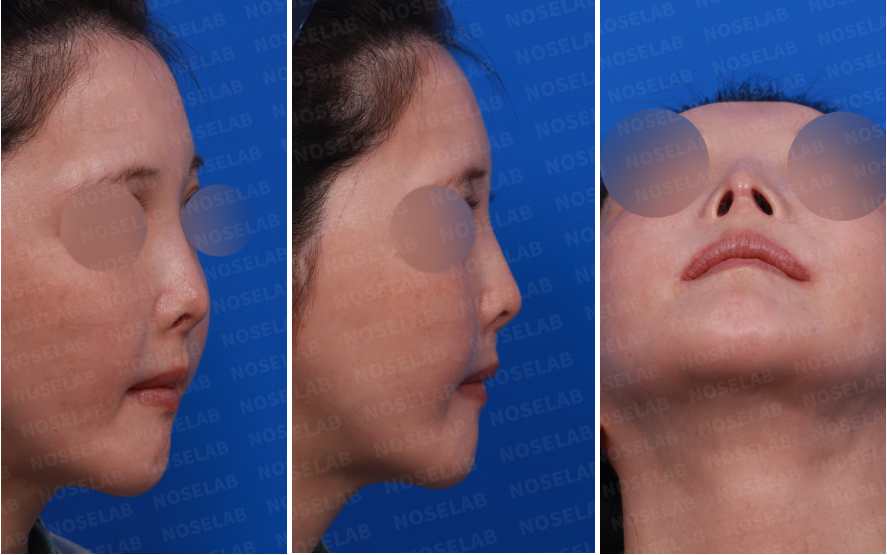
Patient Concerns and Goals
The patient wanted correction of the contracted and upturned nasal shape, improvement of nostril asymmetry, and a more balanced nasal profile.
Main Goals
The main goals included:
Correct the upturned nasal tip
Lengthen the shortened nose
Lower the high nasal bridge starting point
Improve nostril asymmetry
Correct columella tilt
Remove residual mesh or foreign material
Reconstruct weakened nasal support
Improve nasal breathing
Because this was a complex contracted nose case, the surgical plan had to prioritize stable reconstruction before cosmetic refinement.
Surgical Procedure in Mesh Removal Revision Rhinoplasty
The surgery included foreign material removal, total septal reconstruction, septal extension, alar cartilage reconstruction, nasal bridge reconstruction, and airway correction.
Mesh Removal and Foreign Material Management
During surgery, unexpected mesh fragments were found in the nasal tip area. These fragments were carefully removed along with absorbed donor rib cartilage fragments.
Artificial dermis and other previously used materials were also evaluated during dissection.
Residual mesh or foreign material can contribute to stiffness, distortion, inflammation, or nasal obstruction. For this reason, removal was an important part of the reconstruction plan.

Total Septal Reconstruction with Autologous Rib Cartilage
Autologous rib cartilage was used for total septal reconstruction.
The septal framework needed to be rebuilt because the nose had become shortened, contracted, and structurally unstable after previous procedures.

Septal Extension with Rib Cartilage
Septal extension was performed using rib cartilage to lengthen the shortened nose and reposition the upturned nasal tip.
This helped improve the nasolabial angle and provide stronger support for tip correction.
Alar Cartilage Reconstruction
Both sides of the collapsed alar cartilage were reconstructed with rib cartilage.
This step was important for improving nostril symmetry and correcting lower nasal imbalance.
Correction of Septal Deviation and Airway Narrowing
Internal narrowing caused by mesh, deformed cartilage, and structural distortion was corrected during surgery.
This helped improve the internal nasal airway and reduce obstruction related to the previous materials and deformity.
Paranasal Augmentation
Rib cartilage grafting was used for paranasal augmentation to support the nasolabial fold area.
This step was planned to improve midface and nasal base balance.
Nasal Bridge Line Formation
The nasal bridge line was reconstructed using rib cartilage.
The goal was to create a smoother dorsal line while avoiding excessive tension on the contracted soft tissue.
Before and After Results
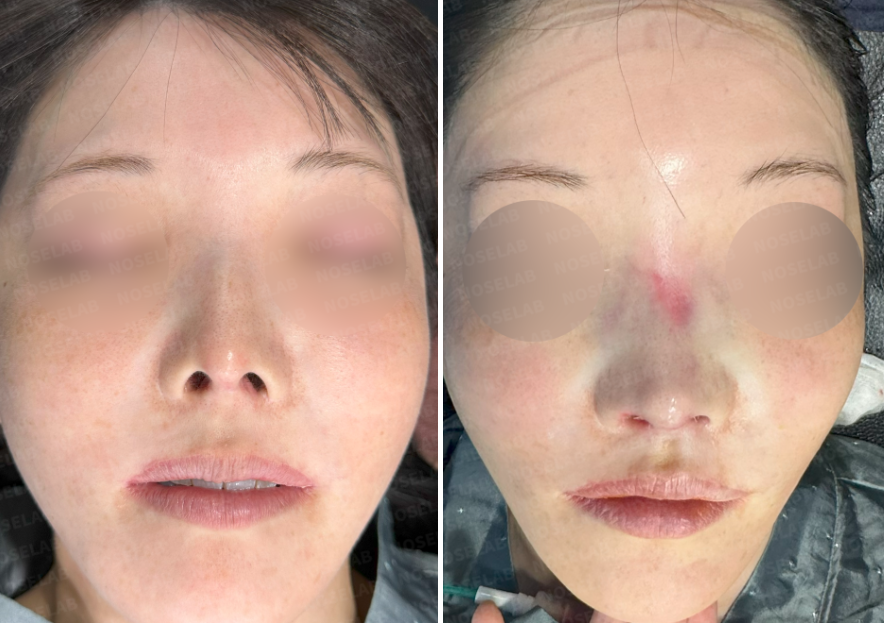
Frontal View
From the frontal view, nasal length improved, and the upturned nasal tip appeared lower. Nostril asymmetry also improved after septal and alar cartilage reconstruction.
Oblique View
From the oblique view, the nasal bridge starting point appeared lower and more balanced. The nasolabial angle improved after nasal lengthening and tip repositioning.

Side Profile View
From the side view, the high nasal bridge starting point improved, and the nasal line appeared smoother after rib cartilage reconstruction.

Nostril View
From the nostril view, nostril asymmetry improved, and the columella appeared more aligned after lower nasal reconstruction.

Functional Outcome
Nasal breathing improved after removal of residual mesh and correction of internal narrowing. The airway improvement was planned together with structural reconstruction.
Because this was a multiple revision case, the outcome was planned within the limits of scar tissue, previous inflammation, foreign material adhesion, and soft tissue condition.
Surgeon’s Commentary
This case involved a contracted nose after multiple previous procedures and inflammation. The patient had undergone silicone insertion and removal, PRP injections, ear cartilage grafting, AlloDerm, donor rib cartilage grafting, philtrum and alar base reduction, and stem cell treatments.
During surgery, mesh fragments were unexpectedly found in the nasal tip area. These fragments, along with absorbed donor rib cartilage fragments, were carefully removed before reconstruction.
In contracted nose revision, residual foreign material can interfere with nasal tip movement, nostril shape, and airway space. Removing these materials can be necessary before rebuilding the nasal framework.
Autologous rib cartilage was used for total septal reconstruction, septal extension, alar cartilage reconstruction, and nasal bridge reconstruction. This allowed the shortened and contracted nasal structure to be rebuilt with stronger support.
The nostril asymmetry and columella tilt were addressed by reconstructing the lower nasal framework, including the septum and alar cartilage.
This case shows that mesh removal revision rhinoplasty should be planned as a combined foreign material removal, septal reconstruction, alar reconstruction, nasal lengthening, and airway correction procedure.
FAQ
Why can mesh cause problems in revision rhinoplasty?
Mesh or other foreign material can sometimes contribute to stiffness, inflammation, tissue adhesion, distortion, or airway narrowing. The effect depends on the material, location, tissue reaction, and previous surgical history.
Can mesh be removed during revision rhinoplasty?
Mesh may be removed when it is identifiable and safely accessible. The extent of removal depends on how strongly the material adheres to surrounding tissue and whether removal could damage important structures.
Why is rib cartilage used after mesh removal?
Rib cartilage may be used when stronger support is needed after removal of foreign material or weakened grafts. It can help reconstruct the septum, support the nasal tip, and rebuild the nasal bridge.
How is a contracted and upturned nose corrected?
A contracted and upturned nose may require septal reconstruction, septal extension, nasal tip repositioning, alar cartilage reconstruction, and soft tissue release. The exact plan depends on scar tissue and available support.
Can nostril asymmetry improve after contracted nose revision?
Nostril asymmetry can improve when the septum, nasal tip support, alar cartilage, and columella position are corrected together. The degree of improvement depends on scar tissue and previous surgical changes.
International Consultation
For international patients, a photo-based consultation may help clarify whether mesh removal revision rhinoplasty, contracted nose reconstruction, rib cartilage septal reconstruction, nostril reshaping, or airway correction may be needed.

Read the author’s background and the original case context. About these articles