Structural Restoration in Revision Rhinoplasty Korea Using Donated Rib Cartilage and Alar Rim Lengthening
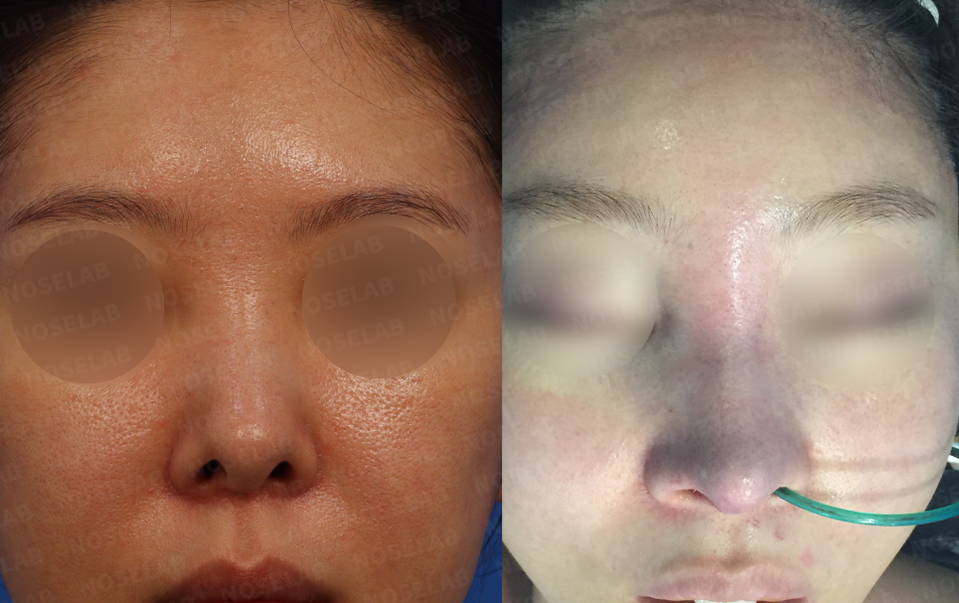
This patient visited our clinic for a revision rhinoplasty in Korea due to a deviated nose and asymmetric nostrils that were overly visible.
In the preoperative design, I planned to lower the tip of the nose, align the starting point with the pupil line, and reposition the silicone implant to create a straight nasal bridge.

During the design consultation, the patient’s tip appeared upturned, and filler in the glabellar area had spread out excessively, distorting the natural line. The existing silicone implant was also curved, contributing to an overall deviated appearance.

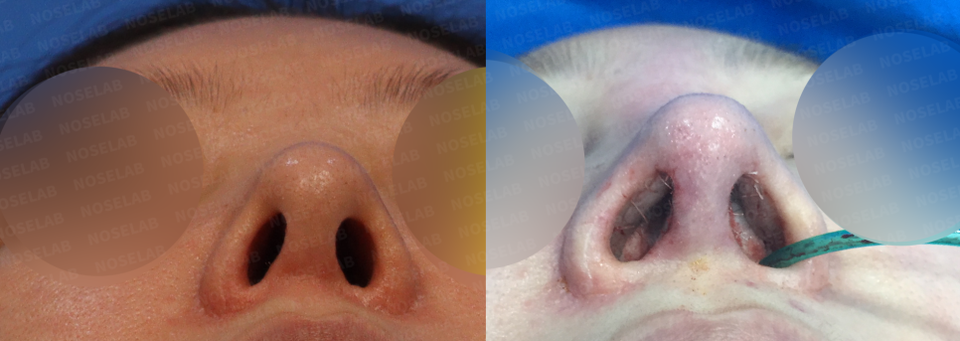
The most significant concern was nostril asymmetry and the leftward tilt of the nasal tip. Septal reconstruction using donated rib cartilage and septoplasty were planned due to suspected septal damage. Since the asymmetry originated from a twisted tip, correcting its alignment was expected to greatly improve the shape.

Surgical Findings and Reconstruction Process in Revision Rhinoplasty Korea
Intraoperatively, approximately 7–8mm of the anterior septal cartilage had been resected at another clinic and used as graft material, which weakened structural support and caused tip deviation to the left.
To restore support, I reconstructed the front septum using donated rib cartilage and residual septal cartilage. Because the right nostril was more upturned, I reinforced the right alar cartilage using previously harvested ear cartilage.
The bulbous and blunt nasal tip improved significantly. The columella, which had been excessively lowered, was slightly reduced to achieve a more natural and balanced nasal contour.
The deviation from the frontal view was corrected through cartilage reinforcement and removal of filler residues in the glabella, and the silicone implant was replaced with a new one to ensure a smoother dorsal contour.
The key objective of this operation was nostril asymmetry correction. I had explained to the patient that the size difference was due to over-resection during a previous alar reduction surgery. By reconstructing the columella rather than trimming more alar tissue, I achieved a much better nostril balance.
Postoperative Results and Review of Revision Rhinoplasty Korea
Immediately after surgery, the nostril asymmetry and deviation improved remarkably.
The new nasal bridge and tip achieved symmetry and smooth flow without excessive height.
The patient was advised to avoid trauma and manage swelling carefully to maintain stable healing.


General Review:
Despite multiple prior surgeries and severe cartilage loss, the revision rhinoplasty in Korea successfully corrected asymmetry caused by excessive alar resection.
Structural stability was restored through septal reconstruction using donated rib cartilage, and both nasal function and aesthetics improved significantly.

Messenger(WhatsApp) : +82 1057360302
Read the author’s background and the original case context. About these articles
Source updated .


