Short Upturned Nose Revision Rhinoplasty with Rib Cartilage
- Dr. Chayoung Kang
- 2024년 10월 24일
- 5분 분량
This case reviews short upturned nose revision rhinoplasty in a patient who had undergone multiple previous nasal surgeries and developed progressive nasal obstruction, shortened nasal length, upturned nasal tip, excessive nostril exposure, nostril asymmetry, tilted columella, high radix, and bulbous nasal tip. Surgery focused on donor rib cartilage septal extension, reuse of available septal and ear cartilage, implant replacement, radix lowering, septoplasty, turbinate reduction, nasolabial angle correction, and nostril symmetry correction.
Author: Dr. Cha-Young Kang
Clinic: NoseLab Clinic
Published: 2024
Last Updated: 2026
Introduction
Hello, this is Dr. Cha-Young Kang of NoseLab Clinic.
This case involves short upturned nose revision rhinoplasty in a patient who had undergone multiple previous nasal surgeries. Over the previous two years, the patient experienced worsening nasal obstruction along with a progressively shortened and upturned nasal appearance.
The patient showed excessive nostril exposure, nostril asymmetry, tilted columella, high radix, bulbous tip, and short nasal length.
The surgery was performed using a closed rhinoplasty / endonasal approach. The goal was to lengthen the shortened nose, correct the upturned nasal tip, improve nostril balance, lower the radix, and address nasal obstruction through functional correction.

Pre-Surgery Analysis of Short and Upturned Nose
Preoperative design consultation photos were reviewed from the frontal, side, oblique, and nostril views.
Main Findings
The main findings included:
Excessive nostril exposure from the frontal view
Small and shortened nasal appearance
Drooping yet upturned nasal tip
High radix
Bulbous nasal tip
Short nasal length on side and oblique views
Nostril asymmetry
Tilted columella
Progressive nasal obstruction
These findings suggested that the revision plan needed to address nasal length, nasal tip support, implant position, columella alignment, nostril balance, and internal airway function together.

Surgical Plan for Revision Rhinoplasty
The surgical plan focused on structural lengthening, implant replacement, functional airway correction, and lower nasal symmetry correction.
Reuse of Previous Cartilage
Previously available septal cartilage and ear cartilage were reused where possible.
In revision rhinoplasty, available autologous cartilage may be reused when the condition of the tissue is appropriate. This can help reduce unnecessary additional tissue harvesting.
Donor Rib Cartilage Septal Extension
Donor rib cartilage was used for septal extension to lengthen the shortened nose and correct the upturned nasal tip.
This step provided support for tip repositioning and helped improve the relationship between the nasal tip, columella, and upper lip.
Implant Replacement and Radix Lowering
The previous nasal implant was removed. A new silicone implant was placed at a lower starting point to reduce the high radix appearance.
The goal was to improve the nasal bridge transition while avoiding excessive height at the nasal starting point.
Septoplasty
Septoplasty was performed to correct the deviated septum and improve the internal nasal passage.
Turbinate Reduction
Radiofrequency turbinate reduction was performed to address enlarged turbinates and improve nasal airflow.
Tip Angle and Nasolabial Angle Correction
The nasal tip angle and nasolabial angle were adjusted to reduce the over-rotated appearance and improve the side profile.
This also helped reduce the visual impression of upper lip protrusion by improving the nasal tip and columella relationship.
Nostril and Columella Asymmetry Correction
Nostril asymmetry and columella tilt were corrected by adjusting nasal tip support, septal extension, and lower nasal alignment.
Closed Rhinoplasty Procedures with Donor Rib Cartilage
The surgery included structural reconstruction, implant replacement, and functional correction.
Septal Extension Graft
Donor rib cartilage was combined with available septal cartilage to create a septal extension graft.
This graft helped support the nasal tip and lengthen the shortened nasal structure.
Nasal Tip Support
Ear cartilage was reused for nasal tip support where appropriate.
The nasal tip was refined while correcting the upturned and shortened appearance.
New Dorsal Implant Placement
The previous implant was removed, and a new silicone implant was placed at a lower starting point.
This helped lower the radix and improve bridge-tip balance.
Functional Correction
The deviated septum was corrected, and enlarged turbinates were reduced.
These procedures were included because the patient had progressive nasal obstruction.
Closed Rhinoplasty Approach
The surgery was performed using a closed rhinoplasty / endonasal approach without an external columellar incision.
This approach was used to perform structural correction through internal incisions.
Before-and-After Results
Frontal View
From the frontal view, visible nostril exposure was reduced, and the overall nasal proportions appeared more balanced after nasal lengthening and tip repositioning.

Side View
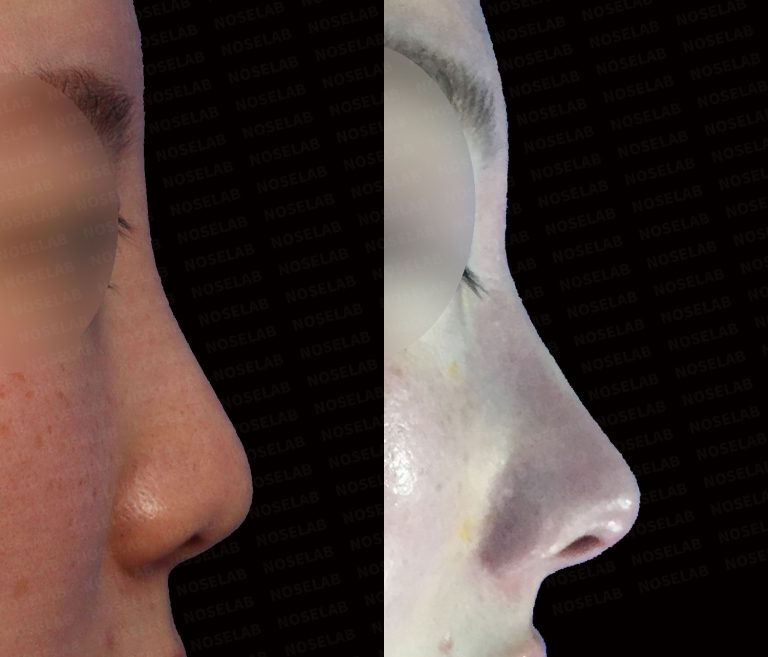
From the side view, the drooping and upturned tip appearance improved. The radix appeared lower, and the bulbous tip was refined after structural correction.

Oblique View
From the oblique view, nasal length improved, and the profile appeared more proportional after septal extension and implant repositioning.

Nostril View
From the nostril view, nostril asymmetry improved, and the columella appeared more aligned.

Functional Outcome
Nasal airflow improved after septoplasty, turbinate reduction, and structural support correction.
Because this was a multiple revision case, the outcome was planned within the limits of scar tissue, previous cartilage use, implant history, airway condition, and healing response.
Surgeon’s Commentary

Short and upturned nose revision rhinoplasty after multiple previous surgeries requires careful evaluation of the remaining support structures. In this case, the patient had progressive nasal obstruction and a shortened, upturned nasal shape.
The main structural issue was insufficient nasal length and tip support. Donor rib cartilage was used for septal extension to lengthen the nose and stabilize the nasal tip position.
Previously available septal and ear cartilage were reused where possible. This helped support reconstruction while reducing unnecessary additional tissue use.
The previous implant was removed and replaced with a new silicone implant at a lower starting point to reduce the high radix appearance.
Septoplasty and turbinate reduction were performed together to address nasal obstruction. In revision rhinoplasty, functional correction should be considered when breathing symptoms are present.
This case shows that short upturned nose revision rhinoplasty should be planned as a combined nasal lengthening, tip support, implant adjustment, nostril correction, and functional airway procedure.
FAQ
Why can the nose become short and upturned after previous rhinoplasty?
A nose can become short and upturned due to scar contracture, weak septal support, implant-related changes, cartilage deficiency, or repeated surgical alteration of the nasal framework.
How is a short upturned nose corrected in revision rhinoplasty?
Correction may involve septal extension, nasal tip repositioning, cartilage support, implant adjustment, nostril correction, and soft tissue release. The exact plan depends on previous surgery and tissue condition.
Why is donor rib cartilage used for septal extension?
Donor rib cartilage may be used when additional structural support is needed and available septal or ear cartilage is insufficient. It can help lengthen and support the nasal tip.
Can breathing problems be improved during short nose revision?
Breathing may improve when septal deviation, turbinate hypertrophy, or structural narrowing is corrected. Septoplasty and turbinate reduction may be included when nasal obstruction is present.
Can nostril exposure improve after short upturned nose correction?
Nostril exposure can improve when nasal length, tip position, columella alignment, and nostril balance are corrected together. The degree of improvement depends on scar tissue and tissue flexibility.
International Consultation
For international patients, a photo-based consultation may help clarify whether short upturned nose revision rhinoplasty, donor rib cartilage septal extension, implant replacement, nostril correction, or functional airway surgery may be needed.
WhatsApp: https://wa.me/821057360302

Home page : www.noselab.co.kr
Instagram : noselab_global
YouTube : Noselab
Email : noselab@naver.com


댓글