Case at a glance
- Concerns & goals
- Previous treatment
- Surgical plan
- Graft & material details
- Photo timing
These details are excerpts from the original article and captions. Follow a detail to read it in context.
This case reviews upturned nose correction Korea in a patient with a history of multiple revision rhinoplasties, previous silicone implant use, auricular cartilage grafting, septal cartilage grafting, donor rib cartilage grafting, thread lifting, foreign body reaction, autologous rib cartilage reconstruction, wide nasal bridge, over-rotated nasal tip, elevated nasal dorsum, right-sided nasal obstruction, collapsed septal support, residual foreign material, and functional-aesthetic concerns. Surgery focused on CT-based evaluation, removal of residual foreign material, wide nasal bridge refinement, osteotomy, donor rib cartilage grafting, tip rotation correction, septal reconstruction, and closed rhinoplasty structural support.
Author: Dr. Cha-Young Kang
Clinic: NoseLab Clinic
Published: 2025
Last Updated: 2026
Introduction
Hello, this is Dr. Cha-Young Kang of NoseLab Clinic.
This case involves upturned nose correction Korea in a patient who had undergone several previous rhinoplasty procedures and later presented with an upturned nasal tip, wide nasal bridge, functional nasal obstruction, and concerns related to previous foreign body reaction.
The patient had a complex surgical history involving silicone implants, auricular cartilage, septal cartilage, donor rib cartilage, thread lifting, implant removal, and autologous rib cartilage reconstruction.
Because the patient wanted to avoid synthetic implants and preferred donor rib cartilage rather than harvesting additional autologous rib cartilage, the surgical plan required careful evaluation of remaining structure, previous materials, scar tissue, and nasal airway condition.
The surgery was performed using a closed rhinoplasty / endonasal approach. The goal was to reduce the broad nasal bridge, correct the over-rotated upturned tip, reinforce weakened septal support, remove remaining foreign material, and address functional nasal obstruction factors.
Surgical History Before Upturned Nose Correction Korea
The patient had undergone multiple previous nasal procedures before visiting NoseLab Clinic.
10 years ago: Rhinoplasty using auricular cartilage and silicone implant
2 months later: Implant removal due to foreign body reaction
5 years ago: Rhinoplasty using silicone implant and septal cartilage graft
3 years ago: Rhinoplasty using silicone implant and donor rib cartilage graft
Thread lifting: Later associated with foreign body reaction
6 months ago: Complete removal of previous materials and autologous rib cartilage reconstruction
Because of this history, the case required careful planning for scar tissue, foreign body reaction history, cartilage condition, septal support, and remaining nasal framework.
Initial Evaluation Before Upturned Nose Correction Korea
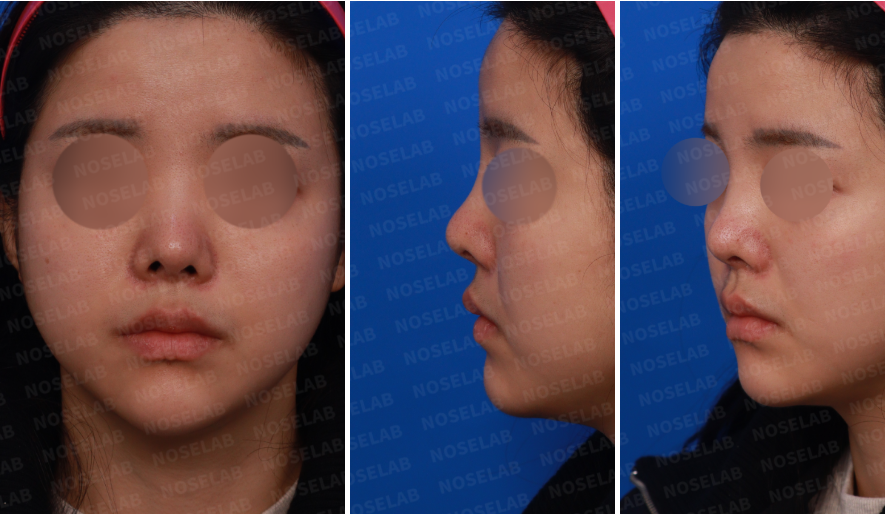
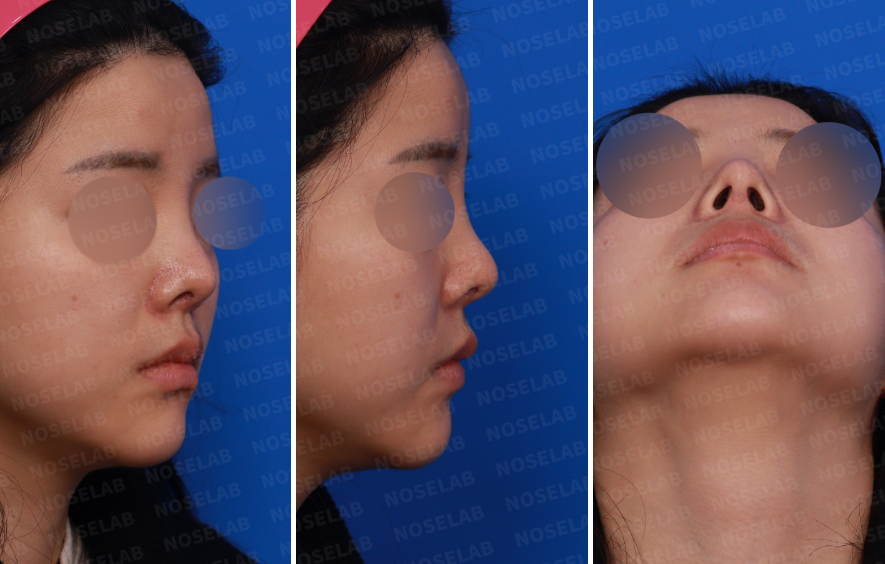
Preoperative design consultation photos and CT findings were reviewed together.
Functional Concerns: Nasal Obstruction and Septal Weakness
The patient reported right-sided nasal obstruction.
The septal support appeared weakened and partially collapsed, which may contribute to structural instability and airway narrowing.
Because this was a multiple revision case, nasal airflow needed to be evaluated together with septal position, scar tissue, previous graft material, and internal nasal support.
Aesthetic Concerns: Wide Nasal Bridge and Upturned Tip
The nasal bridge appeared broad and wide.
The nasal tip appeared over-rotated and upturned, which affected the balance between the bridge, tip, columella, and upper lip.
CT evaluation also showed that the nasal dorsum was excessively elevated, which was considered during dorsal contour planning.
Material-Related Concerns After Previous Surgery
Because the patient had a history of silicone implant use, thread lifting, and foreign body reaction, residual material needed to be checked before revision planning.
CT-based assessment was used to evaluate possible remaining foreign bodies, filler, thread material, or synthetic remnants.
Patient Goals for Upturned Nose Correction Korea
The patient’s main goals were:
To reduce the broad nasal bridge
To correct the upturned nasal tip
To avoid synthetic implants
To use donor rib cartilage rather than harvesting additional autologous rib cartilage
To improve functional nasal obstruction factors where possible
Because the patient had already undergone multiple surgeries, the treatment goal was not an exaggerated change. The priority was structural support, safer material selection, and a more balanced nasal contour.
Surgical Plan for Upturned Nose Correction Korea
The surgical plan included foreign body evaluation, wide nasal bridge refinement, donor rib cartilage grafting, tip rotation correction, and septal reconstruction.
Step 1: CT-Based Evaluation and Foreign Body Removal
Preoperative CT evaluation was performed to check for residual foreign material from previous procedures.
During surgery, remaining thread material, filler-related material, or synthetic remnants were removed when identified.
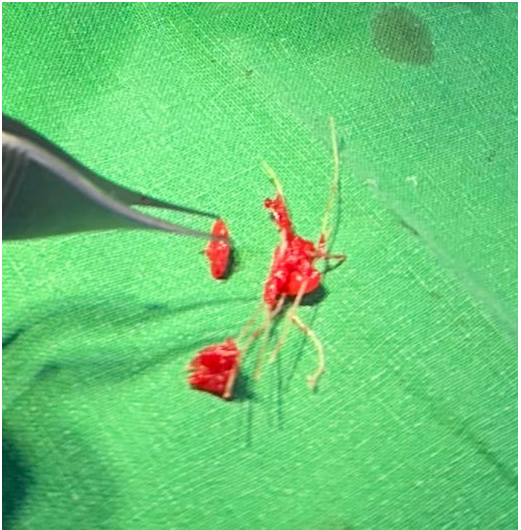
This step was important because residual foreign material can affect tissue reaction, contour irregularity, inflammation risk, and revision planning.
Step 2: Wide Nasal Bridge Refinement
Osteotomy was performed to refine the broad nasal bridge.
The nasal dorsum was sculpted to create a smoother and more balanced contour.
Donor rib cartilage was used to support dorsal contour refinement without placing a synthetic implant.
Step 3: Upturned Nasal Tip Correction
The over-rotated nasal tip was adjusted to a more balanced position.
Because the patient had previous autologous rib cartilage reconstruction, the existing autologous rib cartilage was preserved where appropriate.
Additional donor rib cartilage grafting was used to reinforce the tip and support the lower nasal framework.
Step 4: Septal Reconstruction for Functional Support
Septal reconstruction was performed to strengthen central nasal support.
This step was important because a weakened or collapsed septal structure can contribute to both nasal shape problems and airway narrowing.
Functional changes should be evaluated over time because nasal obstruction can be influenced by septal position, mucosal swelling, scar tissue, turbinate condition, and healing response.
Surgical Results After Upturned Nose Correction Korea
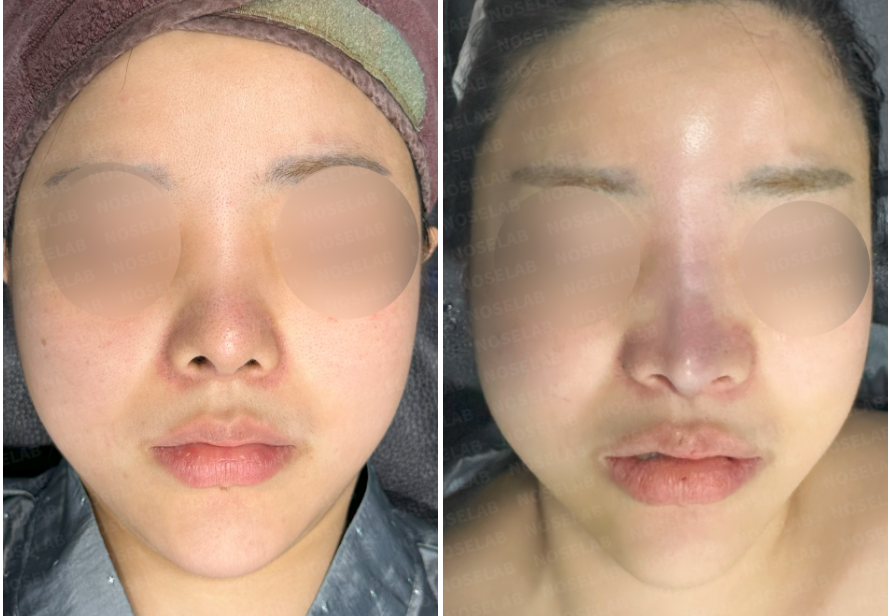
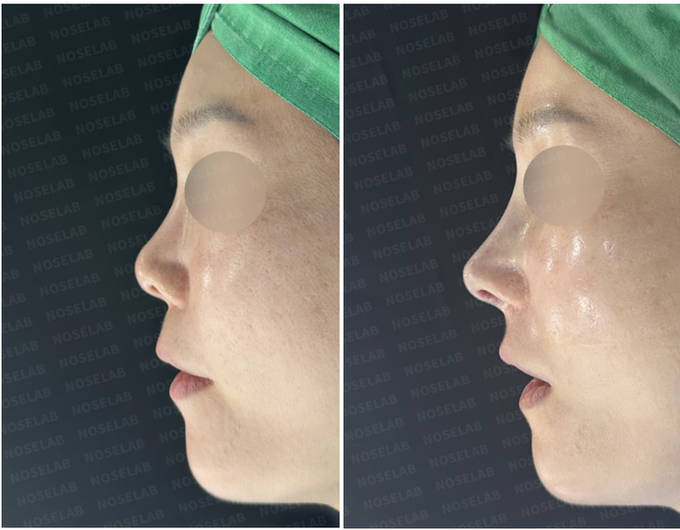
Frontal View: Wide Nasal Bridge and Proportion
From the frontal view, the nasal bridge appeared narrower and more refined after osteotomy and dorsal contour adjustment.
Overall nasal proportions appeared more balanced after bridge refinement and structural support.
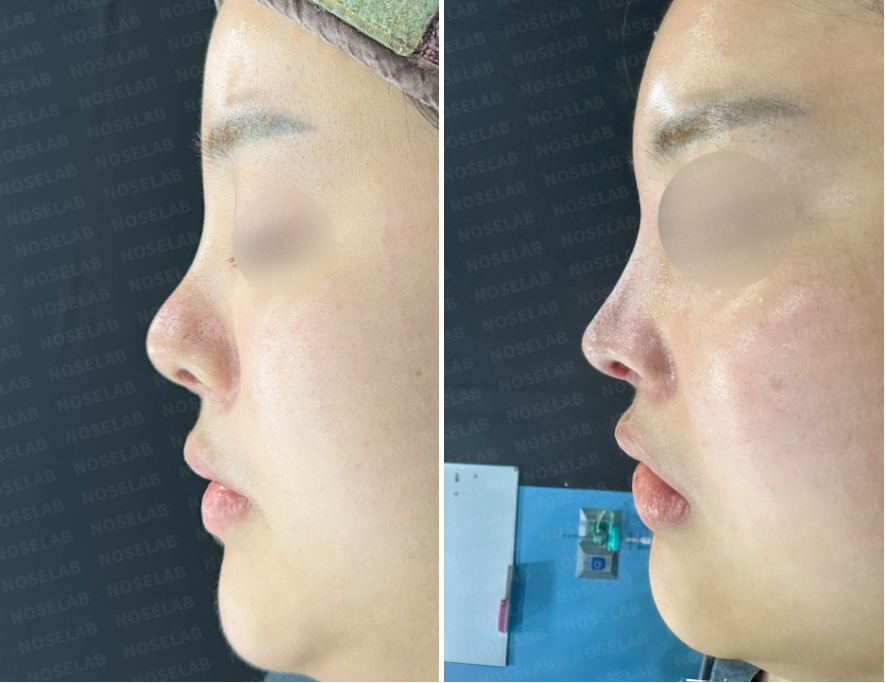
Side Profile: Tip Rotation and Dorsal Height
From the side profile, the nasal tip appeared less upturned after tip rotation correction and support reinforcement.
The dorsal height appeared more balanced with the revised tip position.
The tip projection appeared more harmonious in relation to the bridge and lower face.
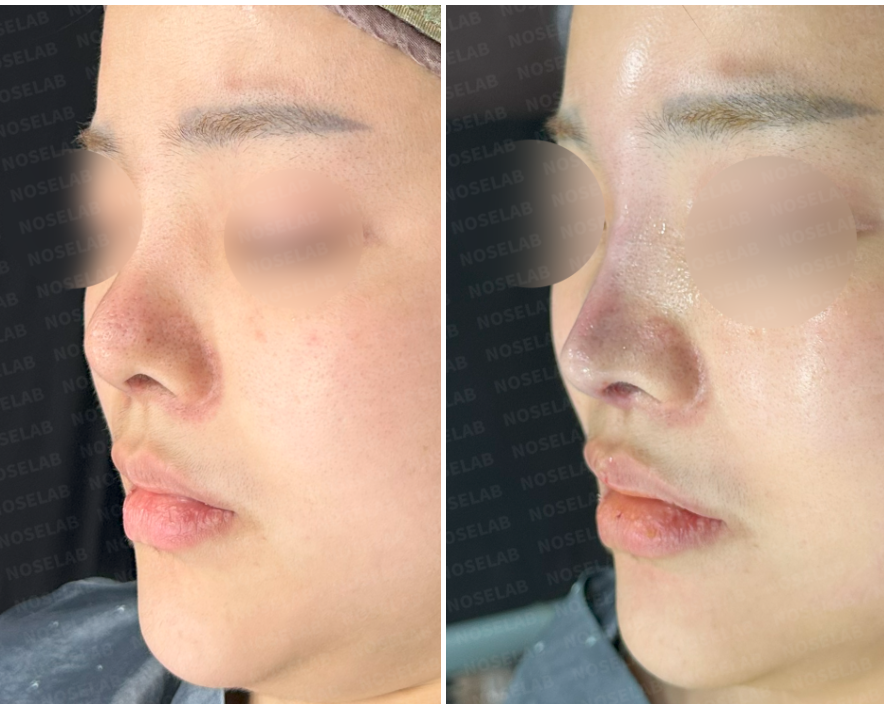
Functional Changes After Septal Reconstruction
Nasal obstruction factors were addressed by reinforcing septal support and correcting structural weakness.
Because this was a multiple revision case with previous foreign body reaction and scar tissue, functional changes should be followed over time.
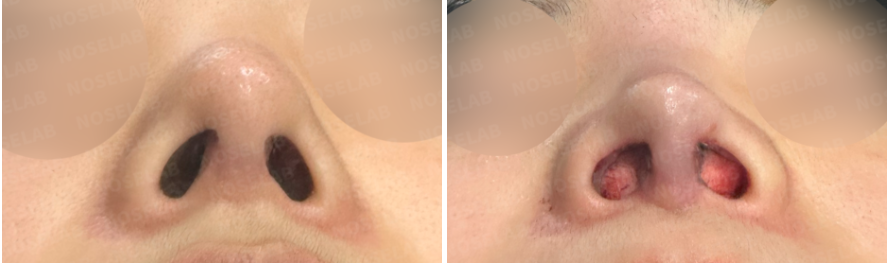
Material Choice Without Synthetic Implant
Because the patient wished to avoid synthetic implants, donor rib cartilage was used as the main graft material.
The absence of a new synthetic implant may be considered when planning revision cases with prior implant-related concerns, but tissue response and healing still need to be monitored individually.
Surgeon’s Commentary
This was a complex multiple revision rhinoplasty case because the patient had undergone several previous surgeries and had a history of implant-related complications, thread-related foreign body reaction, nasal asymmetry, weakened septal support, and an upturned nasal tip.
In cases like this, the surgical plan must consider not only the external shape but also internal support, residual material, scar tissue, airway structure, and available graft material.
For this patient, donor rib cartilage was selected because the patient wanted to avoid another autologous rib cartilage harvest and did not want a synthetic implant.
Wide bridge refinement required osteotomy and dorsal contour adjustment. Upturned nose correction required tip rotation control, lower nasal support, and septal reconstruction.
This case shows that upturned nose correction Korea in a multiple revision setting may require combined correction of wide nasal bridge, over-rotated tip, septal weakness, residual foreign material, and functional nasal obstruction factors.
All surgical planning should be individualized based on previous surgical history, available cartilage, scar tissue, airway structure, and healing response.
FAQ
What causes an upturned nose after multiple revision rhinoplasty?
An upturned nose after multiple surgeries may be related to scar contracture, excessive tip rotation, weakened septal support, previous graft position, implant removal, or soft tissue tension.
Can donor rib cartilage be used for revision rhinoplasty?
Donor rib cartilage may be considered in selected revision rhinoplasty cases when additional structural graft material is needed and the patient does not want another autologous rib cartilage harvest.
Can a wide nasal bridge be corrected during upturned nose correction?
A wide nasal bridge may be addressed during revision rhinoplasty through osteotomy and dorsal contour refinement, depending on the patient’s bone structure and previous surgical history.
Why is CT evaluation useful before multiple revision rhinoplasty?
CT evaluation may help identify septal deviation, airway structure, previous implant-related changes, residual foreign material, and bony framework concerns before surgery.
Can nasal obstruction improve after revision rhinoplasty?
Nasal obstruction factors may be addressed when they are related to septal weakness, structural narrowing, scar tissue, or airway imbalance. Functional changes should be evaluated over time after surgery.
International Consultation
For international patients, a photo-based consultation may help clarify whether upturned nose correction Korea, donor rib cartilage rhinoplasty, wide nasal bridge correction, septal reconstruction, foreign body removal, or functional revision rhinoplasty may be needed.
Read the author’s background and the original case context. About these articles